What You Should Pay for Quality Attic Insulation in Richmond VA
Start With the Right Attic Insulation Plan in Richmond, VA
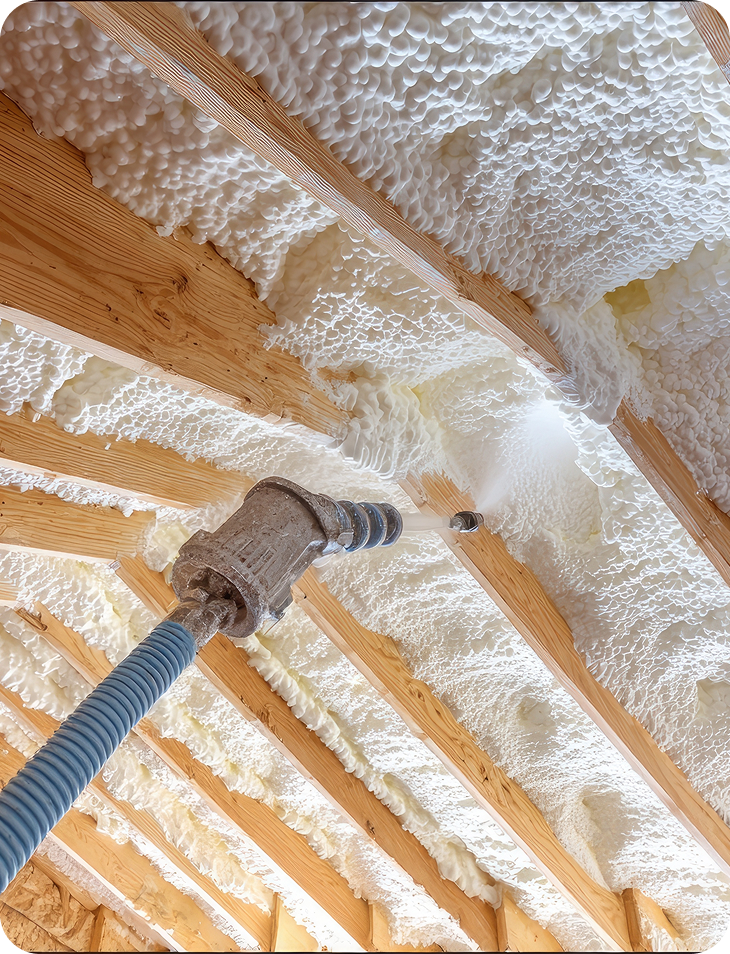
For quality attic insulation in Richmond, VA, homeowners typically pay between $2,500 and $7,000 for a standard 1,000 to 1,500-square-foot attic using spray foam, or between $1.50 and $4.50+ per square foot depending on whether open-cell or closed-cell foam is installed. Traditional materials may have lower upfront material costs ($0.40 to $0.75 per board foot) but often require separate air sealing, while old insulation removal adds $1.00 to $2.00 per square foot.
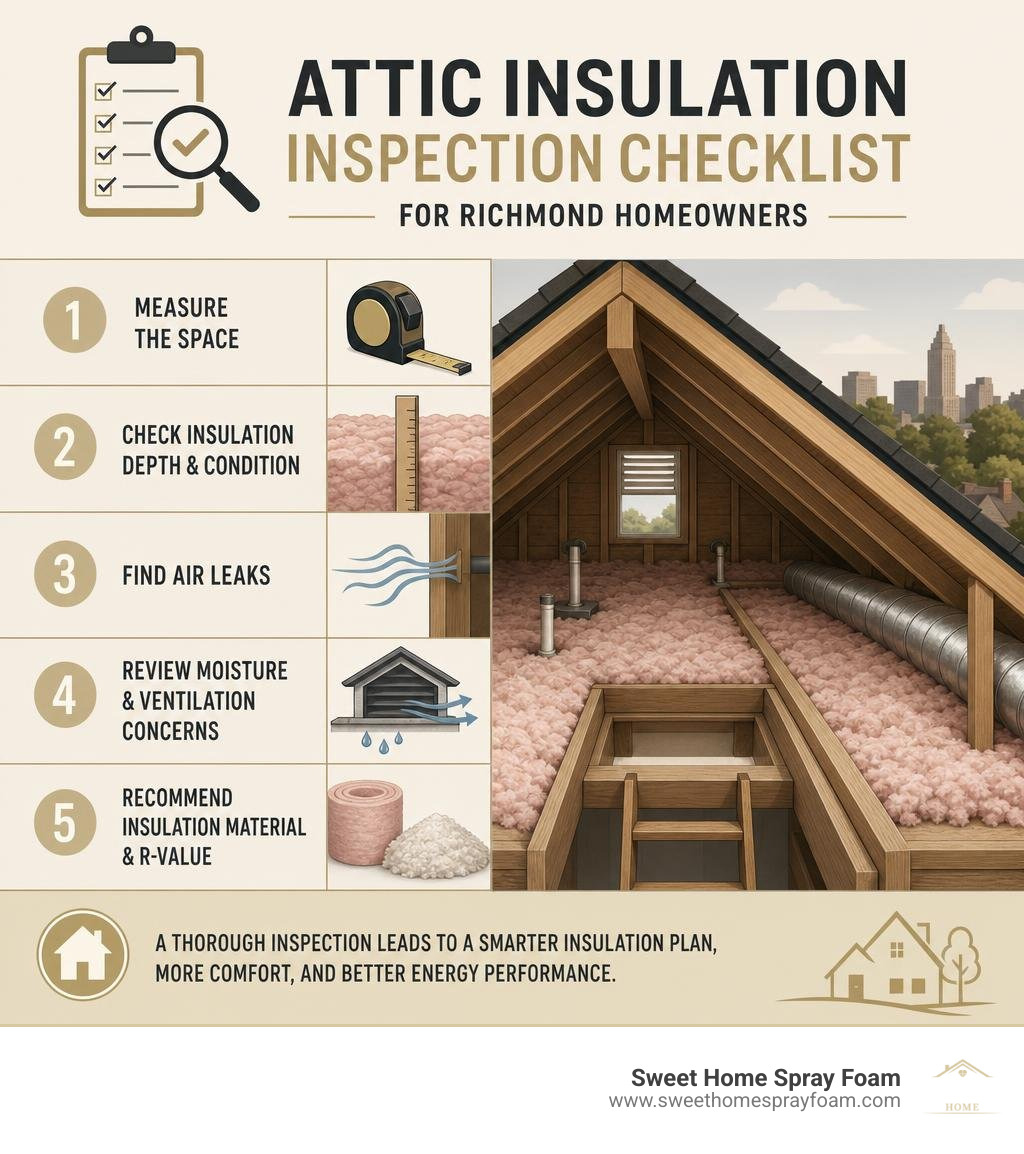
When planning your project, look for a contractor who inspects the attic first to assess air leakage, existing insulation condition, and ventilation. For most Richmond homes, achieving an R-38 to R-60 thermal boundary helps withstand hot, humid summers and chilly winters, reducing drafts, second-floor heat, and high energy bills.
5 Key Factors That Determine the Cost of Attic Insulation Richmond VA
When planning an attic insulation project, you might wonder why estimates vary widely from one house to the next. In Central Virginia, several structural and environmental variables shape the scope of work.
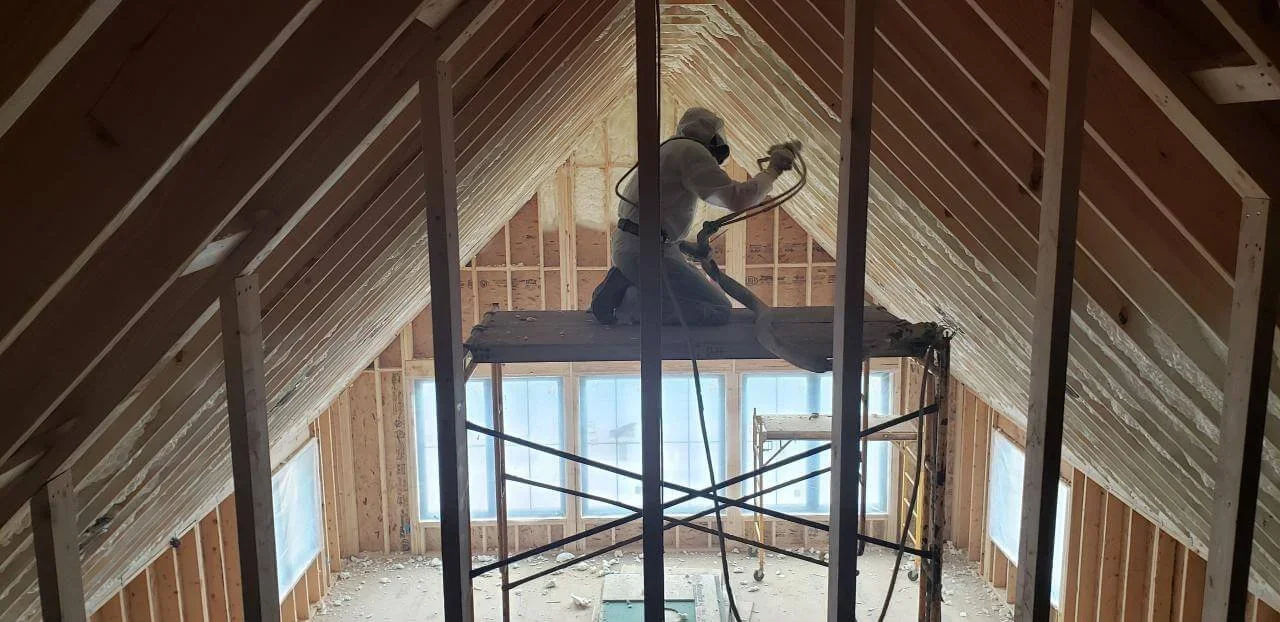
Every home has a unique thermal footprint, and pricing reflects the labor, materials, and prep work required to secure your attic boundary. Here are the five key factors that drive the total cost:
- Total Attic Square Footage: Larger footprints naturally require more material volume and installation labor.
- Condition of Existing Insulation: Compressed, mold-damaged, pest-infested, or aged insulation requires safe removal and disposal before fresh material can be installed.
- Air Sealing Complexity: Sealing hidden bypasses around electrical chases, chimneys, recessed lighting, and plumbing penetrations is vital for performance.
- Roof Accessibility and Architecture: Steep pitches, low roof decks, truss congestion, and restricted entry hatches increase the labor time required.
- Ventilation and Moisture Repairs: Addressing roof deck moisture, bathroom exhaust fans improperly venting into the attic, or baffle installations directly influences setup costs.
Attic Size and Accessibility Challenges
The usable floor area and vertical clearance of your attic dictate how seamlessly our installation team can move through the space. A sprawling 2,500-square-foot ranch home requires a different labor approach than a multi-level historic home in the Fan District or a newer build in Short Pump.
Tight crawl areas, low roof lines, and intricate framing add time to the prep and spraying phases. If our technicians need to navigate around HVAC air handlers, storage platforms, and tight eave spaces, labor duration adjusts accordingly to ensure every inch receives an airtight seal.
Material Selection and R-Value Targets
Your chosen material plays a significant role in determining upfront costs and long-term thermal performance. When evaluating traditional vs spray foam insulation, you are comparing loose-fill or batts against continuous air barriers like open-cell and closed-cell spray foam.
Open-cell foam provides high-yield expansion that fills deep cavities along rooflines at a lower cost per board foot, while closed-cell foam provides a dense moisture barrier with high R-value per inch.
| Material Type | Typical Cost per Board Foot | R-Value per Inch | Primary Advantage in Richmond |
|---|---|---|---|
| Open-Cell Spray Foam | $0.50 – $0.80 | R-3.6 to R-3.8 | Fills deep rafter bays; excellent sound dampening and thermal barrier |
| Closed-Cell Spray Foam | $1.20 – $1.75 | R-6.5 to R-7.0 | Built-in vapor barrier; adds structural strength to roof decking |
| Fiberglass Batts | $0.40 – $0.60 | R-2.9 to R-3.8 | Lower upfront cost; requires separate air sealing to prevent drafts |
| Blown-In Cellulose | $0.50 – $0.75 | R-3.2 to R-3.8 | Dense-packs flat floors; subject to settling and moisture absorption over time |
Estimated Costs for Attic Spray Foam Insulation
Investing in high-performance spray foam delivers an airtight thermal envelope that traditional blown-in materials cannot match on their own. Homeowners in Richmond can expect project totals to reflect both square footage and insulation depth.
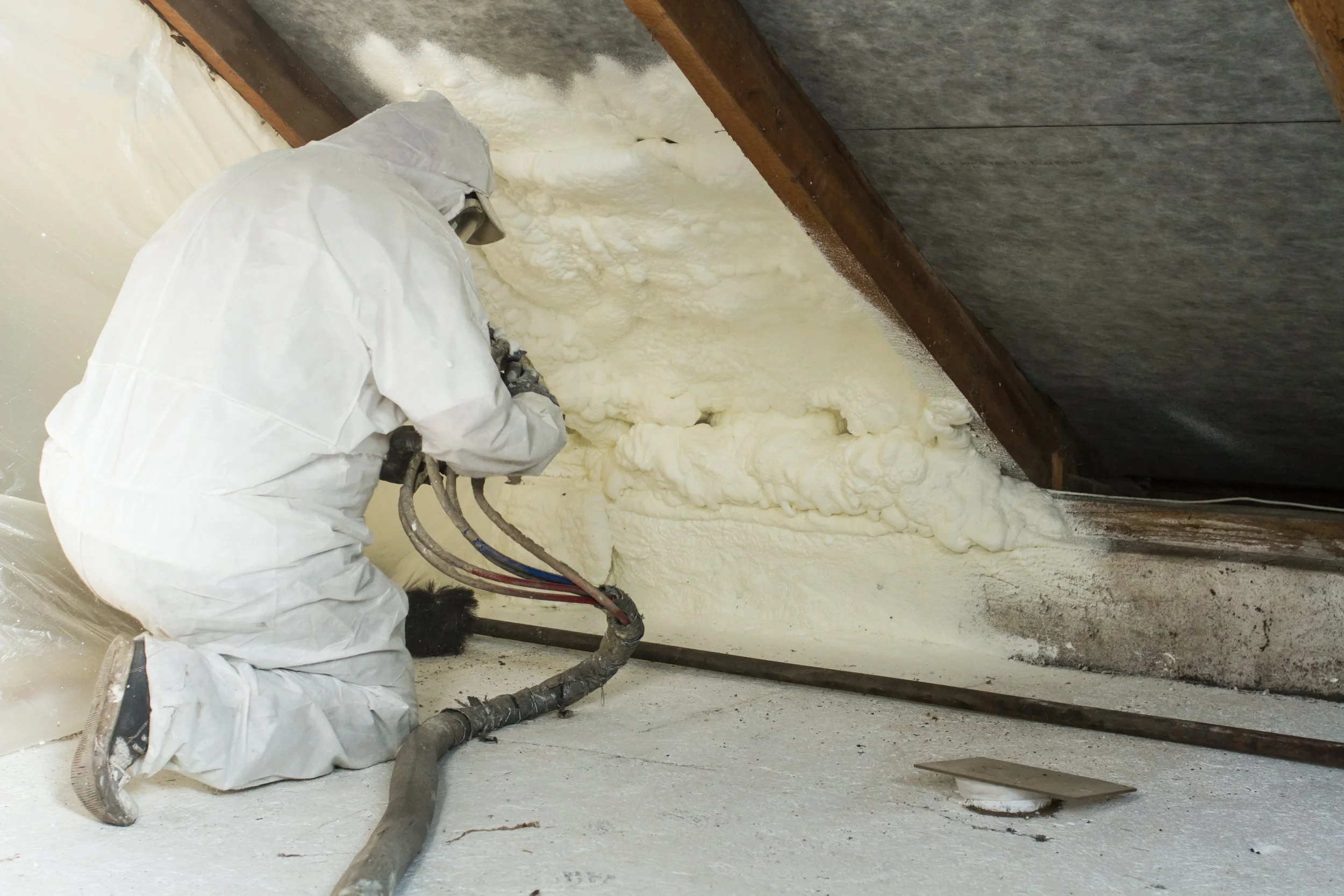
Average Pricing for Attic Insulation Richmond VA Homes Require
For a standard residential attic measuring 1,000 to 1,500 square feet, the complete investment for professional spray foam typically falls between $2,500 and $7,000, depending on whether you choose open-cell or closed-cell foam, and whether the application is placed on the attic floor or the roof deck.
- Open-Cell Attic Applications: Commonly ranges from $1.50 to $2.50 per square foot at standard R-38 performance depths along the roof rafters.
- Closed-Cell Attic Applications: Ranges from $2.50 to $4.50+ per square foot, favored for low-clearance roofs or areas needing moisture and vapor control.
- Old Insulation Removal & Disposal: If your attic contains contaminated or degrading fiberglass or cellulose, removal services typically add $1.00 to $2.00 per square foot, which covers safe vacuum extraction, bagging, and waste disposal fees.
Long-Term Value of Attic Spray Foam Insulation
Spray foam transforms your attic from an extreme temperature zone into an unvented, conditioned space. When we apply spray foam directly to the underside of the roof deck, the attic stays within 10 to 15 degrees of your living areas.
This setup provides several lasting benefits:
- HVAC Equipment Protection: Air handlers and ductwork located in the attic operate in a conditioned environment, preventing heavy thermal losses and duct sweat.
- Air Barrier Formation: Spray foam expands into cracks and gaps, stopping hot, humid summer air from infiltrating your living spaces.
- Material Durability: Spray foam does not settle, sag, or degrade over time, avoiding the recurring top-up costs associated with blown-in materials.
4 Clear Signs You Need an Attic Insulation Upgrade
If your home struggles with high electric bills or unpredictable room temperatures, your attic thermal barrier is often the underlying cause.
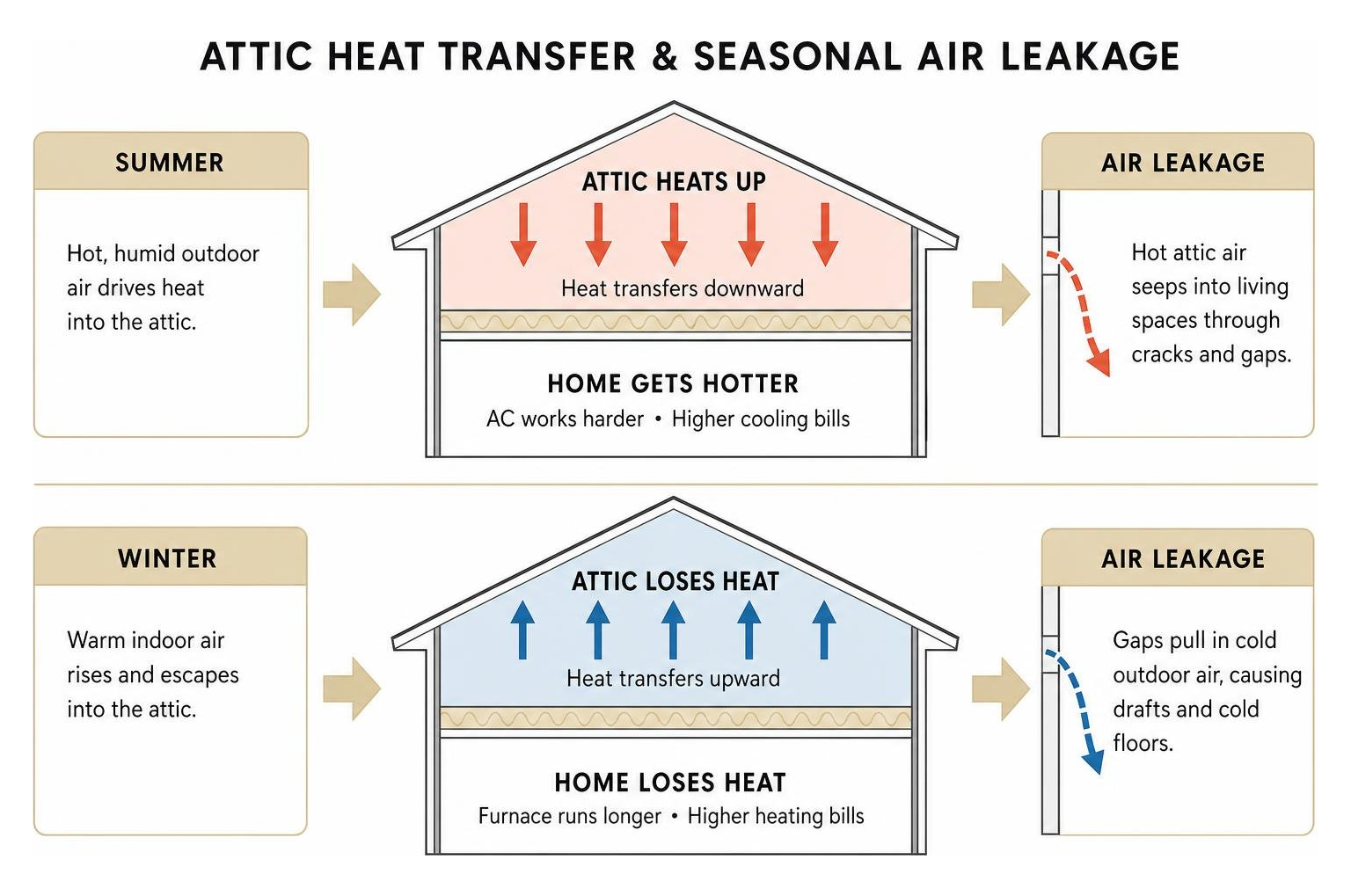
Signs You Need New Attic Insulation Richmond VA
- Uneven Second-Floor Cooling: Rooms on upper levels feel noticeably warmer in July and August despite the air conditioner running constantly.
- Drafts and Cold Floors in Winter: Heat rises and escapes rapidly through poor attic seals, pulling chilly outdoor air in through lower-level baseboards and outlets.
- Rising Energy Bills: Frequent summer spikes in cooling bills indicate your HVAC unit is overworking to counteract attic heat transfer.
- Flattened or Discolored Insulation: Aged fiberglass that appears dirty, thin, or compressed has lost its air pockets and thermal resistance, as explained in our guide to insulation performance basics.
Humidity and Moisture Problems in Central Virginia
Richmond experiences hot, humid summers. When moist exterior air enters a poorly insulated attic, it meets cooler surfaces created by air conditioning, leading to condensation. Over time, this moisture can cause wood rot, mold growth, and musty odors in your living spaces.
Installing an airtight insulation barrier prevents humid air infiltration, protecting your roof framing and improving overall indoor air quality throughout the year.
Rebates, Tax Credits, and Hiring the Right Local Contractor
Upgrading your home's thermal boundary is more affordable with available financial incentives.
Under the Federal 25C Energy Efficient Home Improvement Credit, homeowners can claim a federal tax credit of 30% of project costs for insulation and air sealing, up to a maximum of $1,200 per year. Additionally, local utility providers such as Dominion Energy offer seasonal rebates for comprehensive air sealing and insulation improvements.
When you are vetting the best spray foam insulation contractors, verify that your installer has the proper credentials and transparent practices.
Use this checklist during your contractor consultations:
- [ ] Are you licensed and insured to perform spray foam installations in Virginia?
- [ ] Do you perform comprehensive air sealing around attic bypasses prior to insulating?
- [ ] Will you provide a clear, upfront written proposal without hidden fees?
- [ ] Which spray foam formulations do you recommend for my roof design, and why?
- [ ] Do you assist homeowners with the documentation needed for federal tax credits and local utility rebates?
Frequently Asked Questions About Attic Insulation
How much can I save on energy bills with proper attic insulation?
Most Richmond homeowners see a 15% to 20% reduction in their monthly heating and cooling costs after sealing attic air leaks and adding high-performance insulation. By reducing heat transfer through the ceiling, your HVAC system runs shorter, more efficient cycles.
How long does attic insulation typically last in Richmond?
Traditional loose-fill fiberglass or cellulose can settle, absorb moisture, and lose effectiveness within 15 to 20 years. In contrast, spray foam insulation remains rigid, retains its R-value, and stays in place for decades without sagging or degrading.
Why is spray foam ideal for Richmond homes?
Central Virginia experiences wide temperature swings and high humidity. Spray foam provides both an insulation layer and an air barrier in a single step. By sealing out humid exterior air, it protects roof decks, stabilizes second-floor temperatures, and prevents condensation around attic ductwork.
Conclusion
Upgrading your attic insulation is one of the most effective investments you can make to lower monthly energy costs and maintain comfortable indoor temperatures through every Virginia season. At Sweet Home Spray Foam, we deliver upfront pricing, dependable service, and clear guidance on local energy rebates across Richmond and Central Virginia.
Ready to make your home more comfortable and energy-efficient? Contact us today to schedule a professional attic insulation consultation.