The Real Blown Bead Insulation Cost Breakdown for Homeowners
Blown Bead Insulation Cost: A Quick Homeowner Guide
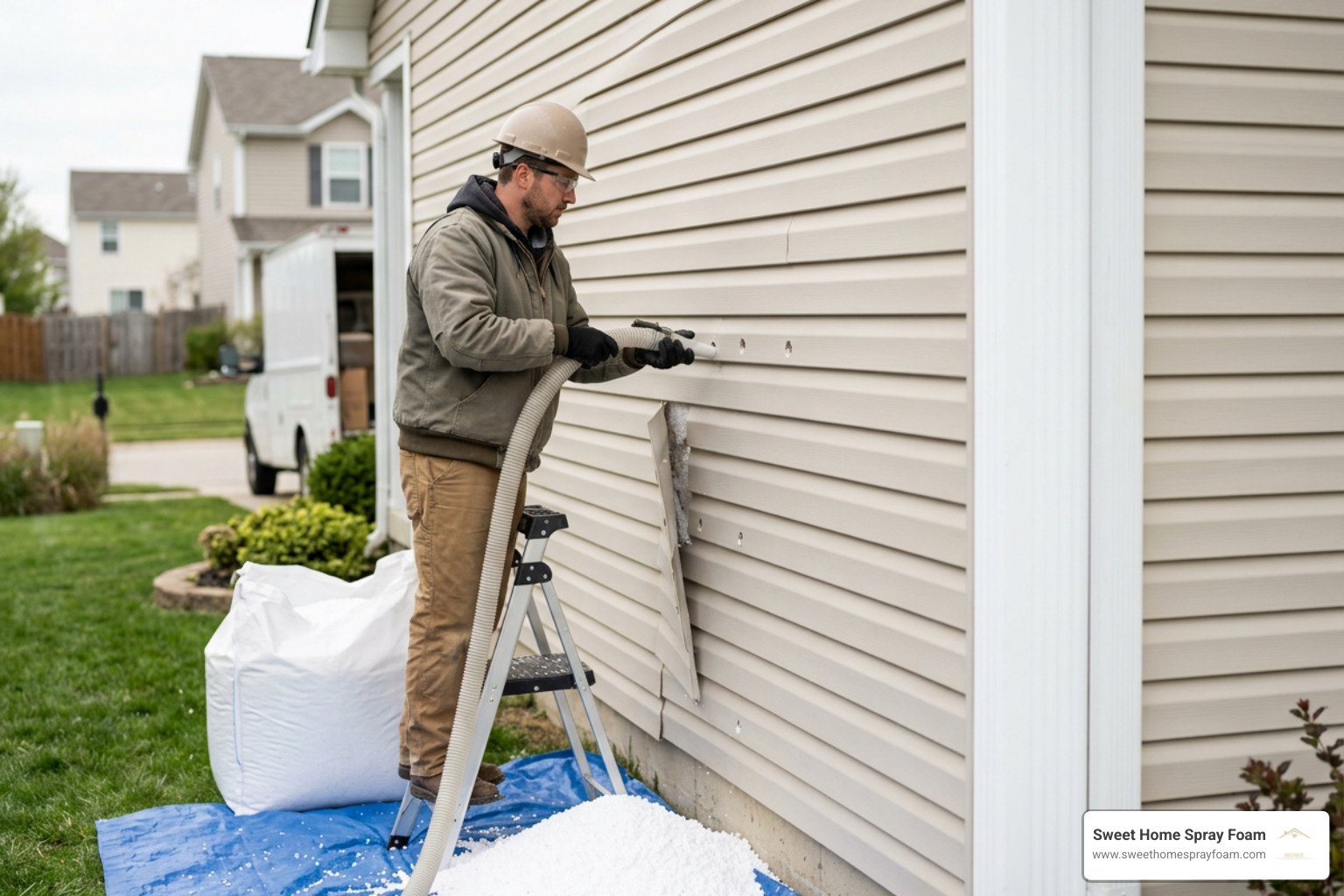
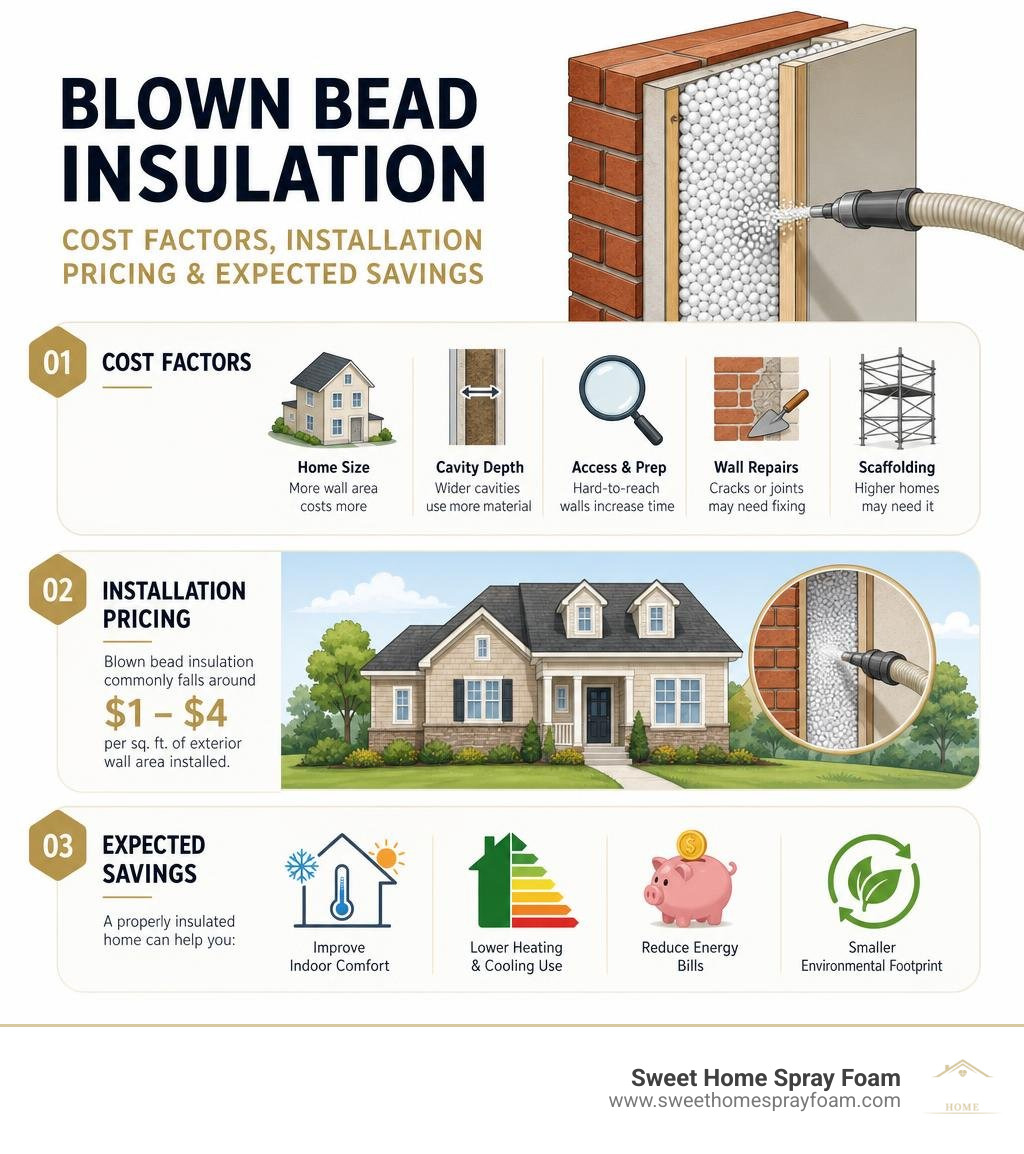
For a cavity-wall retrofit, blown bead insulation cost commonly falls around $1 to $4 per square foot of exterior wall area installed. Your final quote depends on how much wall must be filled, cavity depth, access, wall repairs, and whether scaffolding is needed. Small, simple homes tend to sit near the lower end; larger or harder-to-access homes cost more.
Blown EPS beads are injected through small holes in exterior walls, where they fill the empty cavity and help slow heat loss. For homeowners dealing with cold rooms, drafts, and high heating or cooling bills, it can be a relatively low-disruption upgrade because the work is usually done from outdoors.
The important part is the survey. A qualified installer should confirm that the cavity is clear, wide enough, dry, and suitable before any beads go into the wall. The right installation can improve comfort and lower energy use; the wrong installation can trap existing moisture problems or leave gaps.
This guide breaks down realistic pricing by home size, cost per square foot, savings, material choices, and potential rebates available in 2026.
What Is Blown Bead Cavity Wall Insulation?
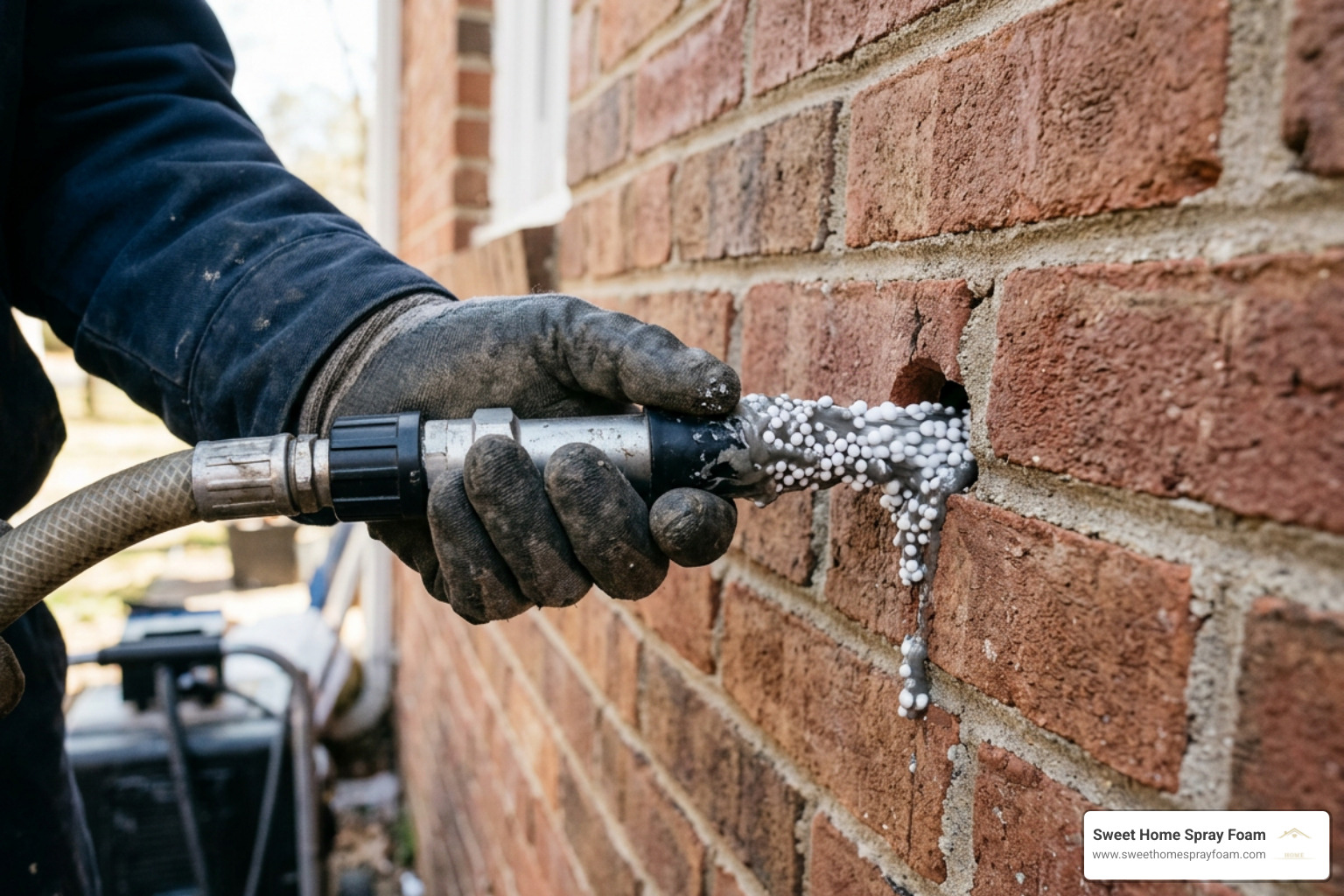
Blown bead insulation uses expanded polystyrene (EPS) beads injected directly into the empty space between your exterior brick or blockwork and the inner wall leaf. During installation, these miniature spherical beads are mixed with an adhesive bonding agent right at the nozzle tip. This light glue coats the beads as they shoot into the wall, ensuring they knit together into a continuous, stable thermal barrier rather than pouring out like dry lentils if you drill a hole for a picture frame later on.
Because roughly one-third of a home's heat escapes straight through uninsulated exterior walls, enclosing the building in this thermal envelope makes a massive difference in room comfort. The bonded matrix leaves micro-gaps that allow moisture vapor to drain naturally while stopping bulk air movement. High-performance graphite-infused beads (often labeled "carbon" or "diamond" grade) provide up to a 20% thermal performance boost over traditional loose-fill fibers.

EPS Bead Technology vs Spray Foam Insulation
While bonded beads represent a reliable, non-settling loose-fill option, many building envelopes benefit even more from advanced expanding foam. Comparing traditional vs spray foam insulation shows distinct advantages depending on cavity structure.
EPS beads resist moisture absorption and won't rot, but they rely on gravity and air pressure to fill crevices. Closed-cell expanding foam, by contrast, creates an absolute monolithic air barrier that glues inner and outer masonry leaves together, adding structural racking strength alongside higher thermal resistance per inch.
Blown Bead Insulation Cost Breakdown by Property Type and Square Footage
Understanding the comprehensive wall insulation (blown-in) cost in 2026 requires looking at exterior wall area rather than interior floor plans. Total project investments nationally range between $1,000 and $5,000, with an average project settling right around $2,500. In UK applications where cavity construction is standard across suburbs, total costs typically range from £950 to £4,600 depending on property size.
Average Blown Bead Insulation Cost by Home Size
The overall size, height, and layout of a house determine how many square feet of wall require drilling and filling. A mid-terrace home shares two party walls with neighbors, leaving far less exposed exterior masonry than a fully detached property.
| Property Type | Exterior Wall Area (Est.) | Average Installed Cost (USD / GBP) | Est. Annual Energy Savings |
|---|---|---|---|
| Ground Floor Flat / Apartment | 400 – 600 sq ft (35–55 m²) | $800 – $1,500 / £950 – £1,400 | $140 – $220 / £110 – £180 |
| Mid-Terrace House | 600 – 900 sq ft (55–85 m²) | $1,100 – $2,200 / £1,400 – £2,100 | $200 – $310 / £160 – £250 |
| End-Terrace / Semi-Detached | 900 – 1,400 sq ft (85–130 m²) | $1,800 – $3,400 / £2,200 – £3,200 | $320 – $480 / £260 – £380 |
| Detached House (2-Story) | 1,500 – 2,200 sq ft (140–205 m²) | $2,500 – $5,200 / £3,100 – £4,600 | $450 – $650 / £370 – £470 |
| Bungalow / Ranch Home | 800 – 1,300 sq ft (75–120 m²) | $1,400 – $2,800 / £1,600 – £2,600 | $260 – $400 / £210 – £320 |
Per-Square-Foot and Per-Square-Meter Blown Bead Insulation Cost
On a unit-rate basis, professional installation runs:
- $1.00 to $4.00 per square foot of wall surface (labor and materials combined)
- £20 to £35 per square meter for typical bonded bead cavity injection
Material alone generally accounts for $0.50 to $1.20 per square foot. The remainder covers specialized injection rigs, mobilization, labor, mortar color matching, and patching every 25mm drill hole across the masonry facade.
Key Factors That Influence Total Installation Pricing
No two structures present the exact same working conditions. Your final quote will reflect several on-site variables:
- Cavity Width and Depth: Standard cavities span 50mm (2 inches), but older properties can vary from 35mm to 100mm. Wider cavities consume significantly more EPS material and adhesive volume.
- Masonry and Mortar Condition: Crumbling mortar joints or damaged brickwork must be repaired before injection to prevent beads from leaking during pumping.
- Number of Injection Points: Installers drill 22mm to 25mm holes in a strict grid pattern (usually under window sills, around openings, and every few feet along mortar joints). Complex elevations with many windows increase setup and patching labor.
- Geographic Location & Regional Labor: Urban centers and coastal zones often carry higher technician hourly rates than rural areas.
Wall Preparation and Existing Cavity Clearance
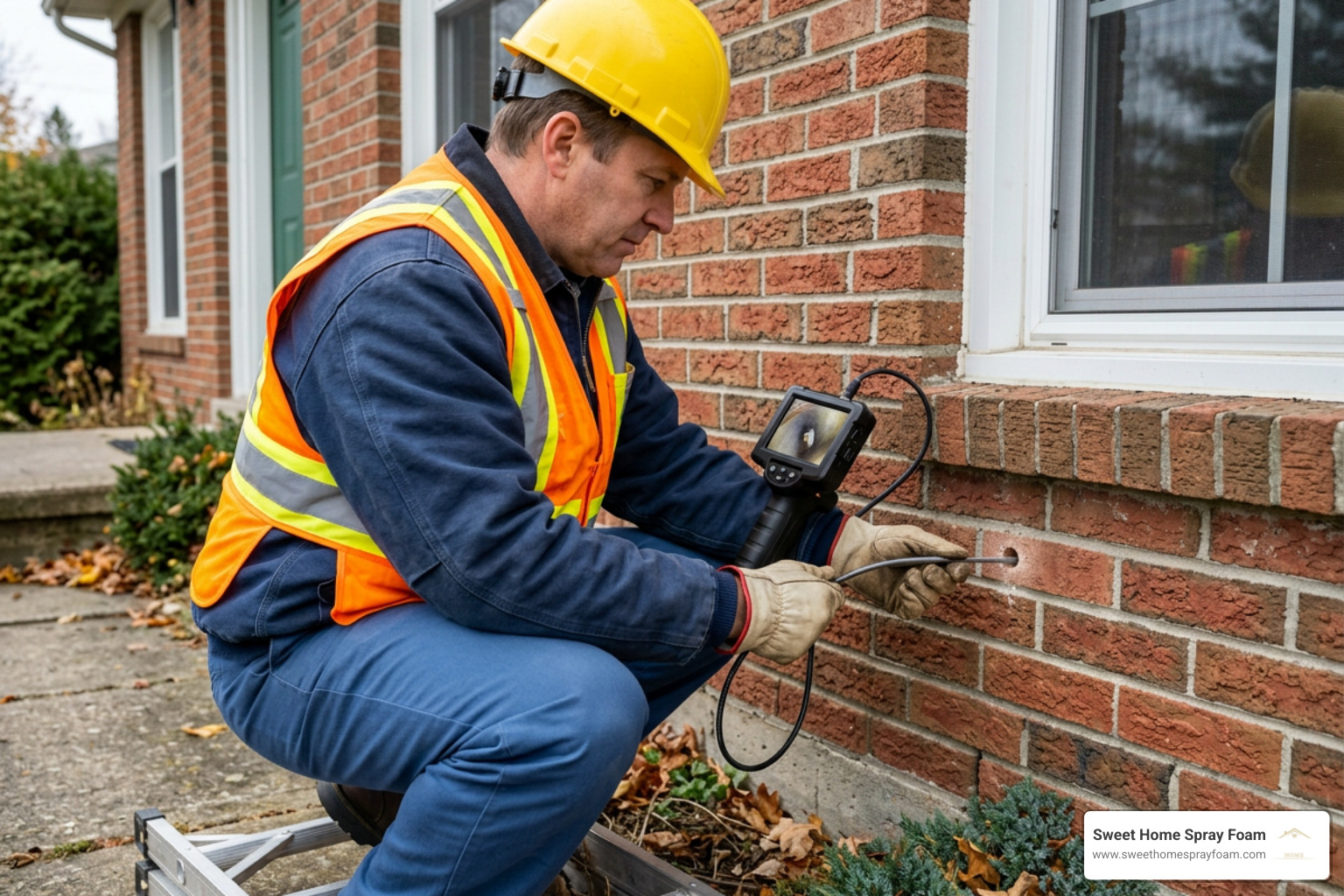
Before blowing beads, a reputable contractor conducts a non-destructive borescope survey by drilling a tiny inspection port and inserting an optical camera. This checks for mortar bridges, fallen rubble, ties, and leftover degraded insulation batts.
If defective or moisture-damaged insulation is found, extraction is mandatory before new beads can be introduced. Removing degraded materials adds $1.50 to $3.00 per square foot (£20–£25/m² or £1,680–£2,520 total). In tricky situations where cavities are inconsistent or exterior walls are solid, exploring retrofitted wall spray foam insulation may provide a superior continuous air and thermal barrier.
Accessibility and Scaffolding Requirements
Single-story ranches and bungalows require little more than step ladders. Two- and three-story properties, sloped lots, or tight alleyways between properties often require mobile tower scaffolding or fixed pipe staging. Scaffolding can add $400 to $1,500 to a project, depending on elevation height and setup time.
Blown Bead Insulation vs Alternative Cavity Wall Options
Evaluating material options helps you select the right balance of cost, longevity, and thermal capability. For broader comparisons across different building assemblies, our blown-in insulation cost guide 2026: what to expect to pay provides extensive data on alternative formats.
Explore our dedicated insulation education hub to review how various insulative materials perform in different climate zones.
Material Performance and R-Value Comparison
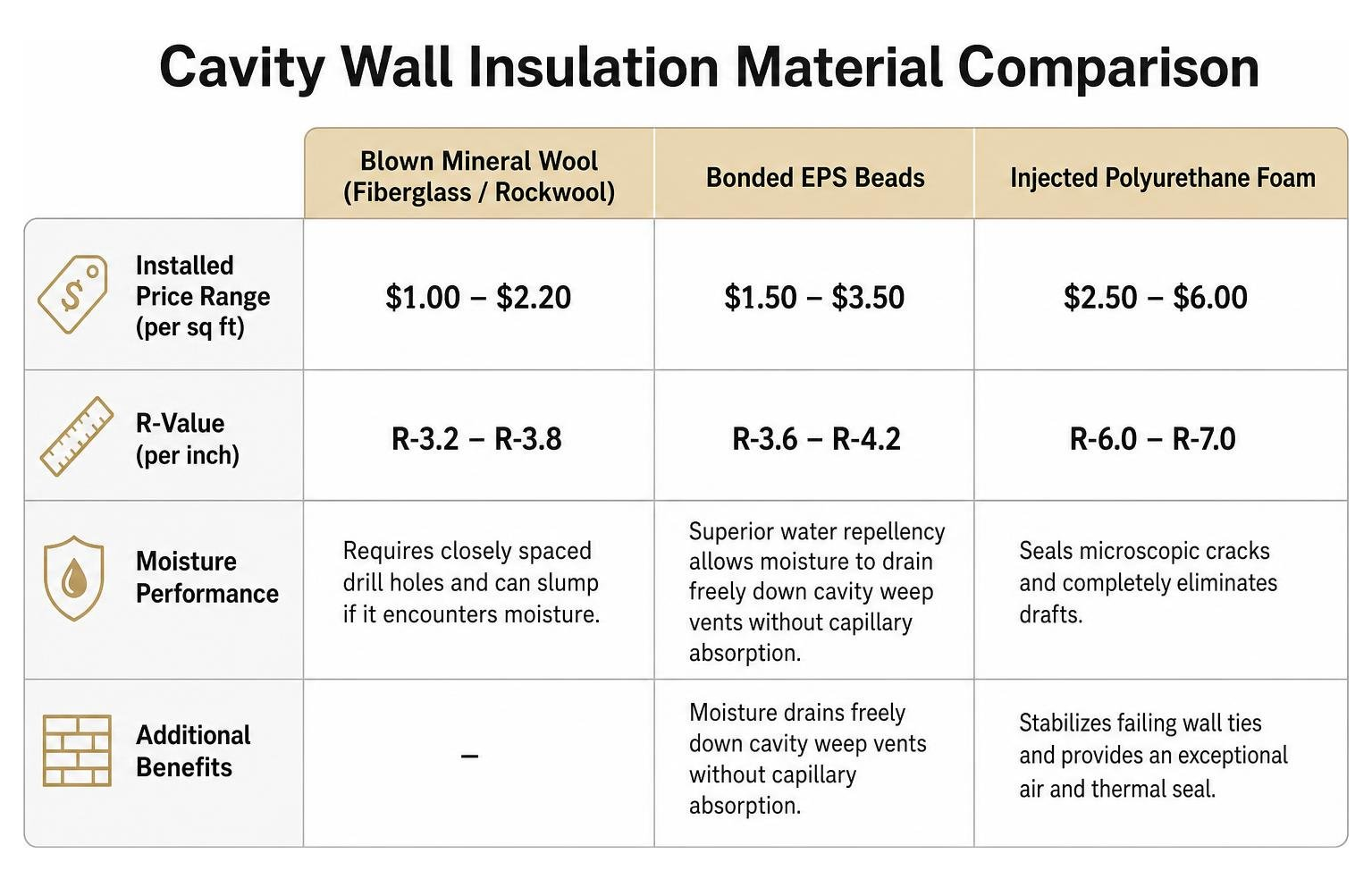
- Blown Mineral Wool (Fiberglass / Rockwool): Priced lowest at $1.00 to $2.20/sq ft (£20–£30/m²). It provides R-3.2 to R-3.8 per inch. However, it requires closely spaced drill holes and can slump if it encounters moisture.
- Bonded EPS Beads: Priced moderately at $1.50 to $3.50/sq ft (£25–£35/m²). Provides R-3.6 to R-4.2 per inch. Superior water repellency allows moisture to drain freely down cavity weep vents without capillary absorption.
- Injected Polyurethane Foam: Priced at $2.50 to $6.00/sq ft (£35–£65/m²). It delivers an exceptional R-6.0 to R-7.0 per inch, seals microscopic cracks, stabilizes failing wall ties, and completely eliminates drafts.
Energy Savings, Payback Timelines, and Available Grants
Insulating wall cavities is widely regarded as one of the fastest returning capital improvements in residential energy efficiency.
Annual Heating Bill Reductions and ROI
Because uninsulated exterior walls represent massive continuous heat sinks, filling them can lower whole-home heating and cooling consumption by 15% to 30%.
For a detached home, this translates to annual savings up to $450 to $650 (£370 to £470 per year). Given an average installation investment around $2,500 (£2,200), most homeowners see a complete financial payback in 3 to 5 years. Beyond utility receipts, the immediate elimination of interior cold spots, drafts, and condensation increases everyday living comfort.
Government Grants and Energy Efficiency Rebates
Homeowners can frequently reduce out-of-pocket costs by tapping into local and national incentives:
- Great Britain (ECO4 & Great British Insulation Scheme): Low-income households and properties with poor EPC ratings (D through G) can qualify for 100% funded cavity wall insulation.
- Home Energy Scotland: Offers grants up to £1,500 plus optional interest-free loans for energy conservation upgrades.
- United States Rebates: While federal 25C tax credits expired at the end of 2025, many electric and gas utilities in 2026 provide instant rebates ranging from $300 to $1,200 for certified wall air-sealing and insulation retrofits.
Frequently Asked Questions about Blown Bead Insulation Costs
Can blown bead insulation cause damp problems in cavity walls?
When installed correctly in a sound wall, no. EPS beads are naturally hydrophobic; water runs downward between the spherical voids to escape through bottom weep holes.
Damp problems only occur if beads are pumped into walls with pre-existing structural defects, such as cracked outer brickwork, compromised damp-proof courses, mortar-bridged wall ties, or in regions subject to severe wind-driven rain on unsealed masonry. A pre-installation survey is designed to catch these risks before work starts.
How long does blown bead insulation last in exterior walls?
Bonded EPS bead systems are engineered to last the lifetime of the building—routinely 25 to 50+ years. The bonding adhesive prevents settlement or compaction over time. In the UK, reputable installations come backed by a 25-year CIGA (Cavity Insulation Guarantee Agency) or equivalent guarantee.
Is my home suitable for blown bead cavity insulation?
Your home is generally a strong candidate if:
- It was constructed between the 1920s and 1990s with an unfilled cavity.
- The cavity width is at least 35mm (preferably 50mm or greater).
- The brickwork and mortar joints are structurally sound and unpainted.
- The property is not excessively exposed to severe driving sea spray or driving rain without specialized masonry protection.
Conclusion
Upgrading exterior walls with bonded EPS beads is a proven, cost-effective way to seal off drafts, lower heating bills, and improve home comfort with minimal disruption. With average installed prices hovering between $1.00 and $4.00 per square foot and payback timelines under 5 years, it remains one of the smartest energy investments available.
If you are dealing with cold rooms, damp crawl spaces, or drafty walls across Virginia—including Richmond, Roanoke, Lynchburg, and Smith Mountain Lake—our team at Sweet Home Spray Foam is ready to help. We provide upfront, transparent pricing, pressure-free assessments, and expert guidance to help you find the best insulation solution for your home.