
Finding Reliable Cement Lifting Near You Without the High Price Tag
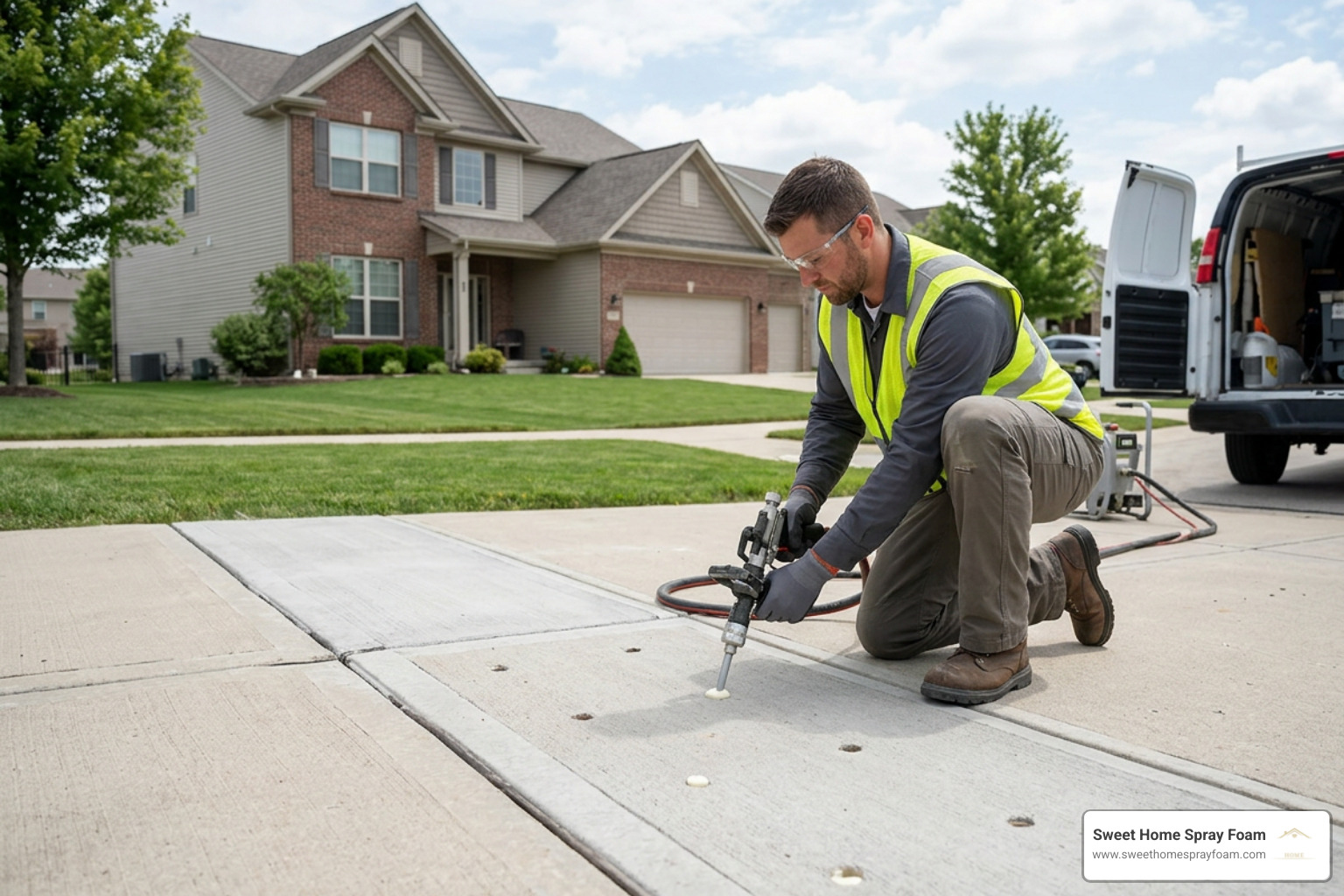
If you are searching for cement lifting near me, high-density polyurethane foam injection (also called polyjacking) is the cleanest, fastest, and most cost-effective way to restore sunken slabs. It raises uneven driveways, walkways, patios, and garage floors back to level for roughly 50% less than the cost of pouring new concrete.
To get quality work done without overpaying, follow these three steps:
- Choose the right method: Polyurethane foam requires tiny penny-sized holes, cures in under an hour, and will not wash away like heavy mudjacking slurry.
- Demand transparent pricing: Get a free, itemized on-site inspection that clearly covers void filling, leveling, and hole patching.
- Check warranties and reviews: Hire an insured contractor offering a multi-year warranty and verified local reviews.
Sunken slabs ruin your curb appeal, create dangerous trip hazards, and direct rainwater straight toward your home's foundation. In most cases, the concrete itself is completely fine—the underlying soil simply settled or washed out.
Lifting your concrete restores structural support, protects your lawn from heavy demolition machinery, and lets you walk or drive on the surface the very same day.
What Is Concrete Raising and How Does It Work?
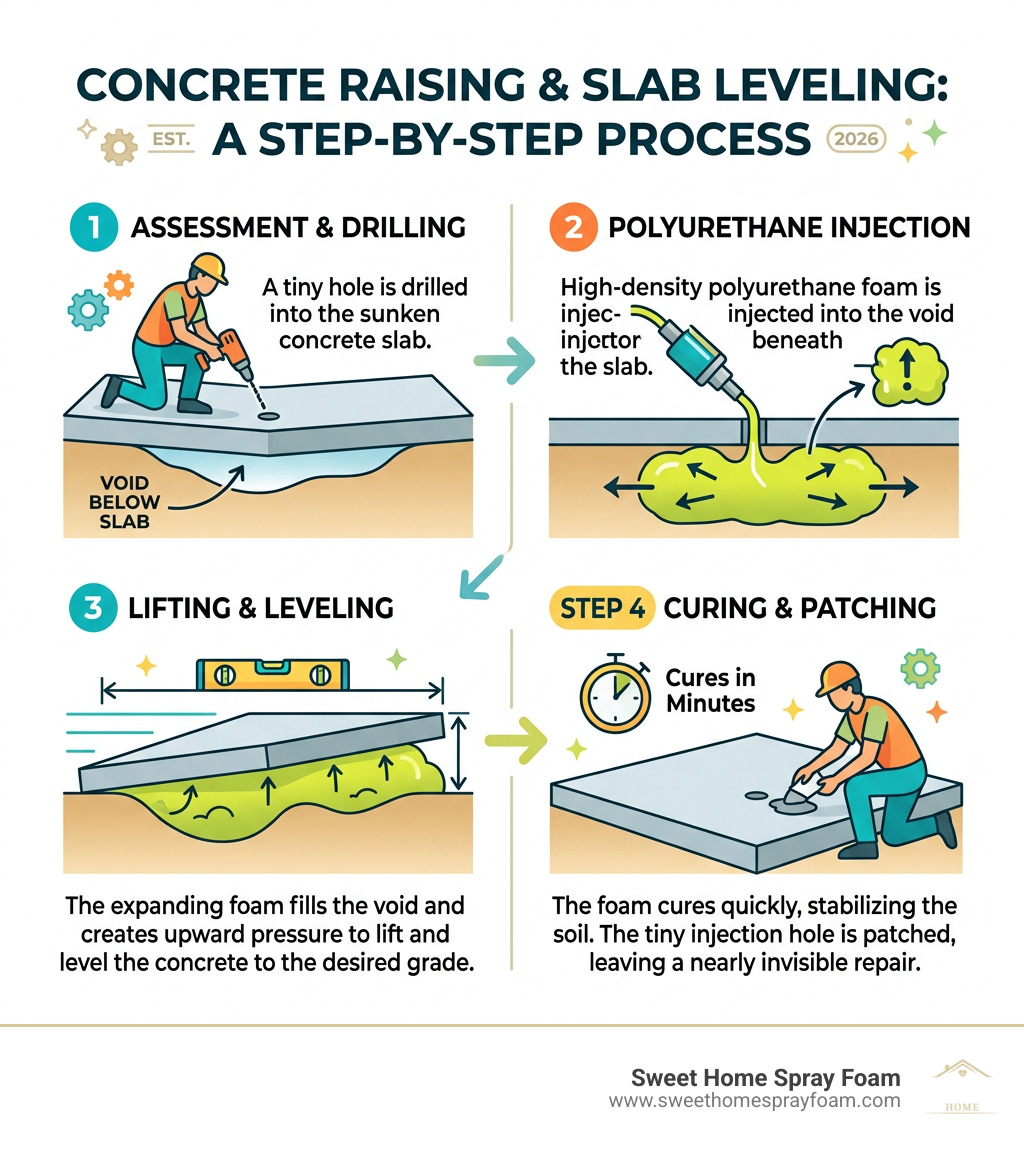
Concrete raising—often referred to as slab jacking, polyjacking, or concrete leveling—is an engineered process that lifts sunken concrete back to its original grade without the mess of demolition. When a concrete slab is poured, it relies entirely on the sub-base beneath it for structural support. Over time, poorly compacted soil, water erosion, tree roots, or seasonal freeze-thaw cycles cause the subgrade to shift, settle, or wash away. This leaves empty air pockets—known as voids—beneath the heavy concrete.
Without solid ground beneath it, gravity pulls the slab downward, creating uneven edges and structural misalignment.
Concrete raising works through controlled hydraulic lifting and expanding sub-base stabilization. Here is how the process works in practice:
- Precision Drilling: We drill small, strategically placed injection ports across the settled slab.
- Void Filling and Foam Expansion: We inject specialized two-part high-density closed-cell polyurethane foam beneath the concrete. As the liquid components mix, they instantly expand into a dense, solid foam.
- Subgrade Compaction: The expanding foam travels through the path of least resistance, filling every underground void and compressing loose, weak soil.
- Controlled Hydraulic Lift: Once the voids are completely filled, the expanding foam generates strong, uniform upward pressure, lifting the sunken slab millimeter by millimeter back into alignment.
- Sealing: After the slab reaches the exact grade needed, the injection ports are cleaned and patched with a durable concrete mortar that blends into the surrounding surface.
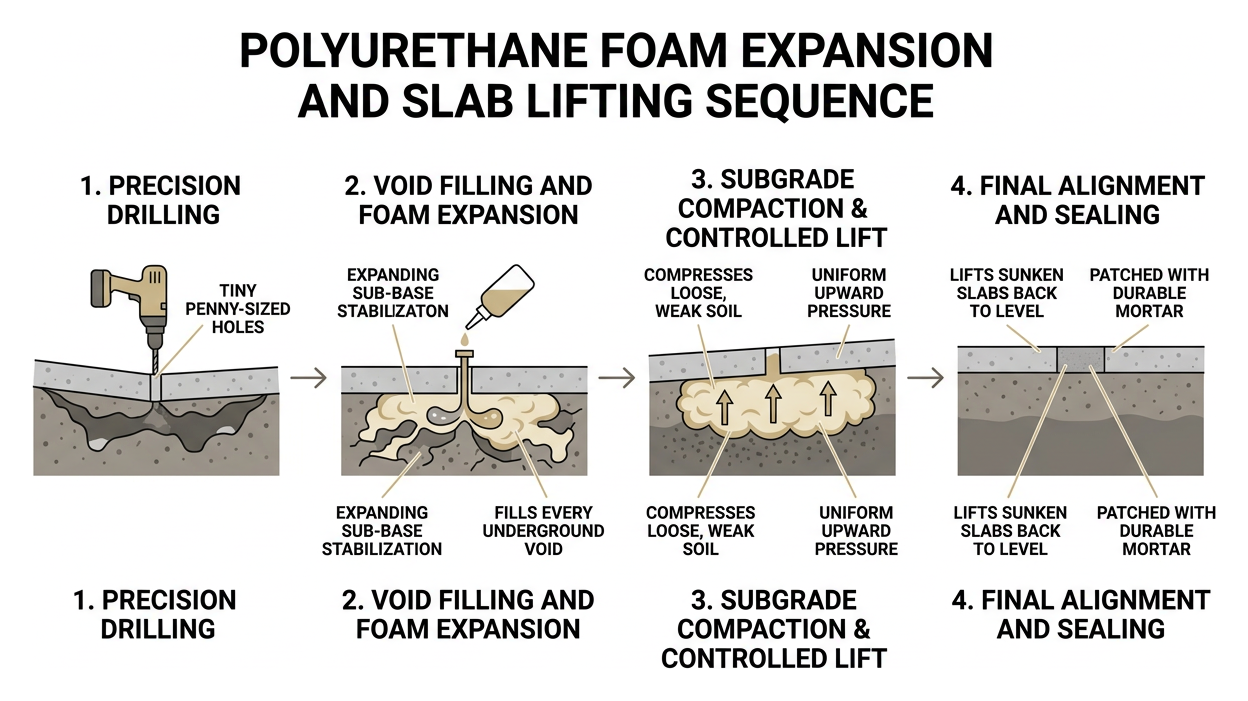
This method treats both the symptom and the root cause by lifting the surface and reinforcing the compromised soil base beneath it.
Signs Your Concrete Slabs Need Leveling
Slab settlement rarely happens overnight; it usually starts with subtle shifts that worsen with every rainfall. Identifying the early signs of settlement allows you to address the problem before the concrete cracks beyond repair.
Watch out for these common warning signs around your home or commercial building:
- Uneven Joints and Trip Hazards: When one slab sits higher than its neighbor, it creates a dangerous lip. Uneven sidewalk slabs and walkway transitions are frequent sources of falls and insurance liabilities.
- Standing Water and Pooling: If rainwater pools on your patio, driveway, or garage floor instead of draining away naturally, the concrete has tilted out of its intended pitch.
- Negative Slope Toward Foundations: A sunken slab sloping toward your home channels roof and surface runoff directly into foundation walls, creating basement dampness and crawl space moisture problems.
- Gaps Under Baseboards or Garage Walls: If you notice light coming under your garage door or gaps forming beneath exterior siding, the underlying concrete pad is likely sinking.
- Interlocked Cracked Slabs: Many homeowners assume that a crack means the concrete is ruined. However, as long as the cracked sections maintain structural integrity and remain interlocked, they can be lifted, stabilized, and caulked to prevent future moisture intrusion.
Why Search for Cement Lifting Near Me Instead of Concrete Replacement?
When faced with an uneven walkway or sunken patio, property owners often ask: Should I tear it out and pour new concrete, or lift what is already there?
In nearly every situation where the slab is structurally intact, lifting is the superior choice.
Full replacement requires heavy jackhammers, skid steers, dumpster rentals, and loud demolition that ruins surrounding turf, flowerbeds, and sprinkler systems. Once poured, fresh concrete takes days to cure before you can walk on it, and up to a month before you can park a vehicle on it.
More importantly, pouring new concrete does not fix unstable sub-base soil. Pouring thousands of pounds of fresh, heavy concrete over poorly compacted or eroding ground almost guarantees the new slab will settle just like the old one. Polyurethane lifting solves the underlying soil deficiency while keeping your budget intact.
Comparing Slab Raising Methods: Polyurethane Foam vs. Mudjacking
For decades, traditional "mudjacking" was the primary method used to raise sunken slabs. While mudjacking represented an improvement over total replacement, modern polyurethane foam injection has revolutionized the concrete repair industry.
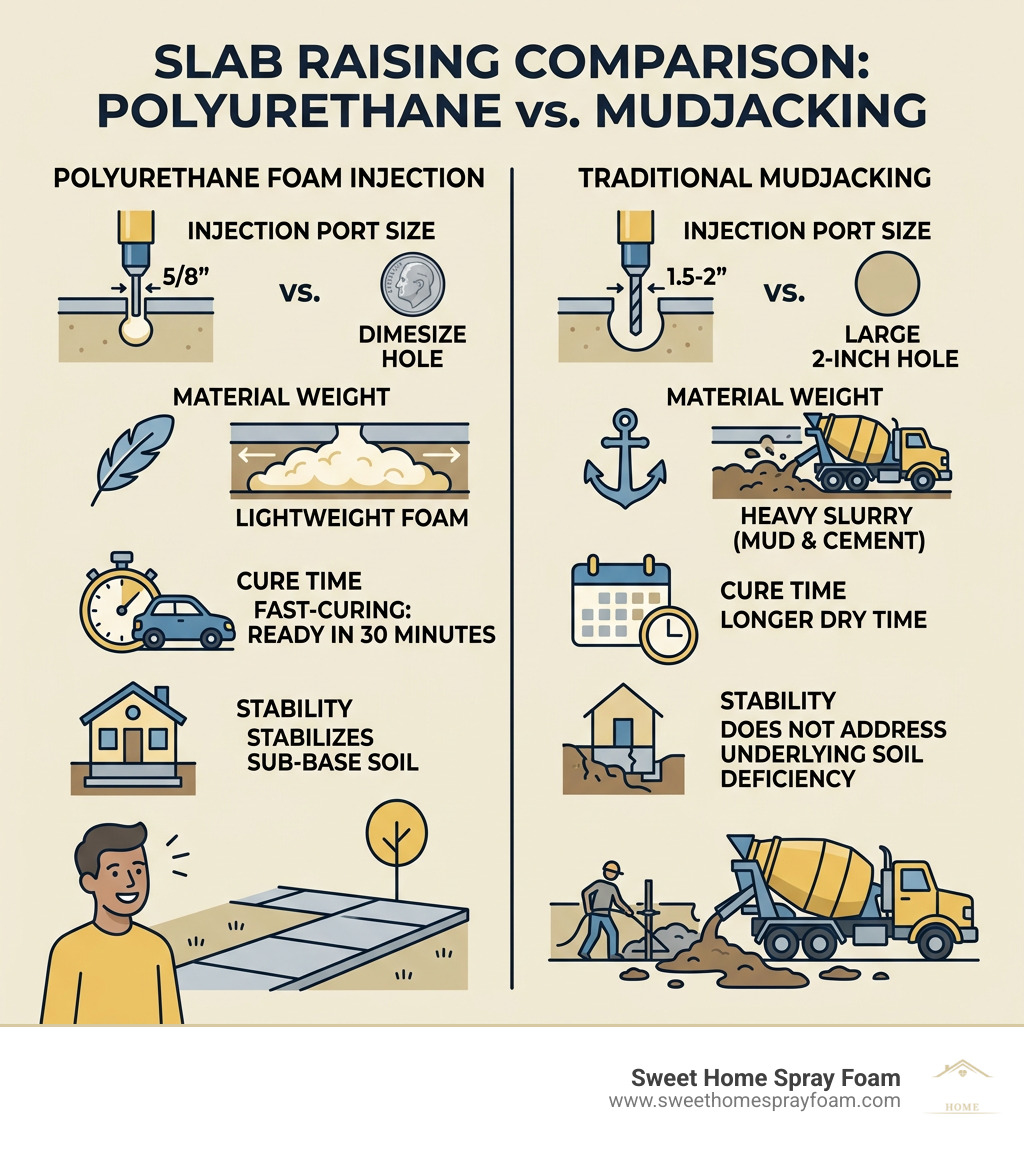
To understand why polyurethane is the preferred material for residential and commercial repairs, it helps to compare the two methods across several key performance factors:
| Feature | Modern Polyurethane Foam (Polyjacking) | Traditional Mudjacking |
|---|---|---|
| Injection Port Size | 5/8-inch (about the size of a dime or penny) | 1.5 to 2 inches (size of a soda can top) |
| Material Weight | 2 to 4 lbs per cubic foot | 100 to 140 lbs per cubic foot |
| Moisture Resistance | Closed-cell, 100% waterproof & hydrophobic | Water-soluble; can erode and wash away |
| Cure Time | Fully cured in 15 to 30 minutes | 24 to 72 hours minimum |
| Soil Impact | Compresses soil without adding weight | Heavy slurry adds weight, risking re-settling |
| Aesthetic Impact | Nearly invisible, discreet patched holes | Large, noticeable round concrete plugs |
| Longevity | Decades; does not degrade underground | Prone to breakdown in freeze-thaw cycles |
Traditional mudjacking pumps a heavy slurry of topsoil, sand, water, and Portland cement beneath the slab. Because the slurry is heavy and thick, it requires drilling large holes across your driveway or patio.
Furthermore, mudjacking slurry adds thousands of pounds of extra weight onto the very soil that was already failing to support the original slab. Over time, rainfall and seasonal freeze-thaw cycles can wash the slurry out, causing the slab to sink again.
Polyurethane foam, by contrast, is an ultralight, high-density closed-cell polymer. It expands beneath the slab as a liquid, entering tight crevices that heavy mud cannot reach before expanding into a rigid, rock-solid base. Because it is hydrophobic, it repels water, resists erosion, and will never degrade underground.
Applications Across Residential, Commercial, and Marine Projects
Polyurethane slab raising is versatile enough to handle delicate decorative pool surrounds as well as high-traffic industrial warehouse floors and municipal infrastructure.
Residential Applications
Sunken concrete around a home is an everyday nuisance that lowers property value and creates trip hazards for family members and guests. Residential concrete raising commonly solves problems on:
- Driveways and Garage Aprons: Leveling the transition between the asphalt/driveway and garage floor eliminates tire jolts and prevents water from pooling against the garage sill.
- Sidewalks and Entry Walkways: Eliminating step-ups and uneven joints ensures your walkways remain safe and compliant with accessibility standards.
- Patios and Porches: Bringing sunken outdoor living spaces back to their original grade prevents water from draining toward exterior walls and sliding doors.
- Pool Decks: Settled pool coping and surrounding pool deck slabs create sharp edges for bare feet. Foam lifting levels the pool deck cleanly without damaging delicate plumbing lines or pool liners.
Commercial and Municipal Applications
Settled slabs in public and commercial areas pose major safety liabilities and disrupt operations. High-density foam lifting provides rapid remediation for:
- Warehouse Aisles and Interior Slabs: Rocking or sunken concrete joints cause forklift damage and slow down inventory transport. Polyurethane foam stabilizes interior joints with zero warehouse downtime.
- Commercial Parking Lots and Curbs: Rapid leveling keeps commercial storefronts safe for foot traffic without requiring lengthy parking lot closures.
- Municipal Streets and Storm Drains: Sunken road slabs and failing concrete collars around storm intake structures create severe traffic hazards. Polyurethane lifting levels roadways quickly, allowing cities to reopen lanes in under an hour.
Soil Stabilization, Marine Properties, and Seawalls
Polyurethane foam works beyond standard slab leveling—it is also an effective tool for deep soil stabilization and marine erosion control. In coastal and waterfront settings, water movement routinely washes soil out from behind seawalls, bulkheads, and retaining walls, forming massive underground voids beneath docks and waterside patios.
By injecting expanding, hydrophobic closed-cell polyurethane deep into the soil strata, we displace water, lock loose sands and soils together, fill hidden sinkholes, and stop seawall erosion.
For severe foundation settlement, stabilizing concrete lifting foundations using high-density foam creates a moisture-resistant barrier that halts foundation sinking and stabilizes the sub-base.
How to Choose the Best Cement Lifting Near Me for Your Property
Finding the right contractor ensures that your concrete is raised safely, accurately, and permanently. Because concrete lifting requires specialized equipment, proper material chemistry, and precise laser-guided leveling techniques, taking time to vet your local service provider will save you time and money.
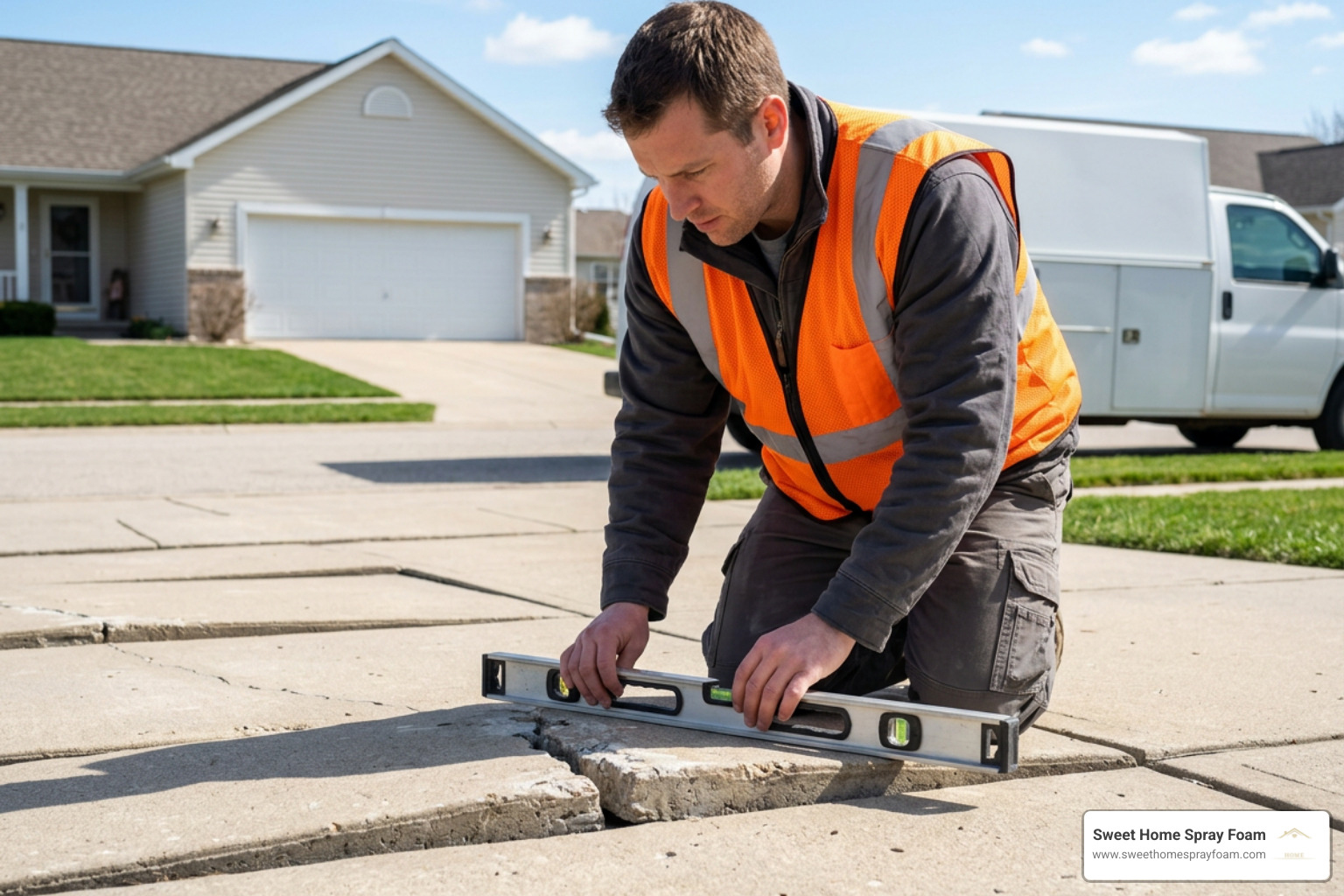
When researching local contractors, look for these key indicators of quality and reliability:
Evaluating Contractor Experience, Reviews, and Warranties
- Specialized Industry Experience: Ask how long the company has worked with high-density polyurethane foam. Polyjacking requires an understanding of expansion ratios, soil dynamics, and injection timing to avoid over-lifting or cracking the slab.
- Verified Local Reviews: Check independent platforms and the Better Business Bureau to see what past customers say about the contractor’s punctuality, cleanliness, and communication.
- Strong Multi-Year Warranties: A reputable contractor stands behind their craftsmanship with a multi-year warranty covering material stability and re-settling.
- Proper Licensing and Liability Insurance: Ensure the company carries full commercial general liability and workers' compensation coverage to protect your home and property during the project.
- Transparent, Upfront Estimates: Avoid contractors who provide vague, open-ended phone quotes. Choose a company that offers a free on-site assessment with clear, fixed pricing that covers drilling, injection, leveling, and site cleanup.
What to Expect from a Cement Lifting Near Me Consultation
A professional concrete lifting consultation should be straightforward, educational, and pressure-free. Here is what our typical process looks like from start to finish:
- Visual and Structural Inspection: We evaluate your slabs to check for underlying voids, sub-base erosion, joint separation, and structural cracking.
- Elevation Assessment: Using precision optical levels, we measure the exact drop of each sunken slab to determine the precise lift required for proper drainage.
- Custom Injection Plan: We map out injection port locations to ensure balanced lifting without stressing the concrete.
- Clear, Itemized Pricing: You receive an upfront written estimate detailing the scope of work, material requirements, and warranty coverage.
- Fast, Clean Execution: On the scheduled service day, our mobile rig arrives with all equipment contained on-board. Hoses are run carefully to the repair site, holes are drilled, the foam is injected, and the ports are patched. The entire residential project typically takes just a few hours, leaving your yard clean and your concrete immediately ready for use.
Frequently Asked Questions About Concrete Leveling
How long do concrete lifting results last?
Polyurethane foam lifting is designed to provide a permanent repair. High-density, closed-cell polyurethane does not degrade, rot, or break down underground over time.
Because it is completely hydrophobic, it will not wash away during heavy rainstorms or break down through repeated winter freeze-thaw cycles.
As long as the deeper subgrade soil beneath the foam remains stable and surface water is properly managed through downspouts and caulked joints, a polyurethane concrete lift will last for decades.
Will the injection holes be visible after the job is done?
Injection ports are very discreet. Unlike old-fashioned mudjacking, which requires large 2-inch holes, polyurethane injection utilizes tiny 5/8-inch ports—about the diameter of a penny.
Once the lifting is complete, we clean each port and fill it flush with a heavy-duty, color-matched cementitious patch material. Over a short period, as the patch cures and weathers alongside the surrounding slab, the injection spots blend naturally into the existing concrete texture.
How long does a standard concrete lifting project take?
Most residential projects—such as a sunken two-car driveway, an uneven front walkway, or a settling back patio—take between one and three hours from setup to final cleanup. Larger commercial warehouse floors or municipal storm drain repairs may take half a day to a full day depending on the total square footage.
Because polyurethane foam reaches 90% of its full structural load-bearing capacity within 15 to 30 minutes of injection, there is virtually zero downtime. You can walk on the concrete immediately after we pack up our tools, and you can park heavy vehicles on your driveway the exact same day.
Can cracked concrete slabs still be raised?
Yes. A slab does not need to be in one piece to be successfully raised. As long as the cracked sections are structurally sound and not shattered into tiny gravel-sized fragments, we can place injection ports on both sides of the fracture to lift each section independently back into alignment.
Once the cracked pieces are brought back to a uniform height, the cracks can be sealed with a flexible polyurethane or silicone sealant to keep water from entering the subgrade below.
Is concrete lifting messy or disruptive to my daily routine?
Not at all. Polyurethane concrete lifting is one of the cleanest home improvement projects available. All pumping machinery and materials remain self-contained inside our service truck parked on the street or driveway.
We simply run a single, clean hose to your repair area. There is no dust cloud from demolition, no heavy excavators tearing through your lawn, and no loud machinery running for days. We leave your property clean, level, and ready to use.
Conclusion
Uneven, sunken concrete is more than an eyesore—it is an active safety hazard and a threat to your home's foundation. Tearing out and replacing sunken slabs is an expensive, messy, and unnecessary hassle when the concrete itself remains in great shape.
Modern high-density polyurethane concrete raising gives you a level, safe, and stable surface in a matter of hours at roughly half the cost of replacement.
At Sweet Home Spray Foam, we bring high-performance spray foam expertise, clear upfront pricing, and friendly service to every project. Whether you have a settling front walkway, a dropped driveway apron, or a sunken back patio, our experienced team delivers clean, permanent slab leveling that protects your property value.
We proudly serve homeowners and businesses across Virginia, including Richmond, Roanoke, Lynchburg, and Smith Mountain Lake.
Stop tripping over uneven concrete and channeling rainwater toward your foundation. Contact our friendly team today to schedule a free concrete lifting consultation and restore your concrete surfaces with confidence!