
Homeowner Guide to Comparing Local Concrete Leveling Contractors
How to Compare Concrete Leveling Contractors
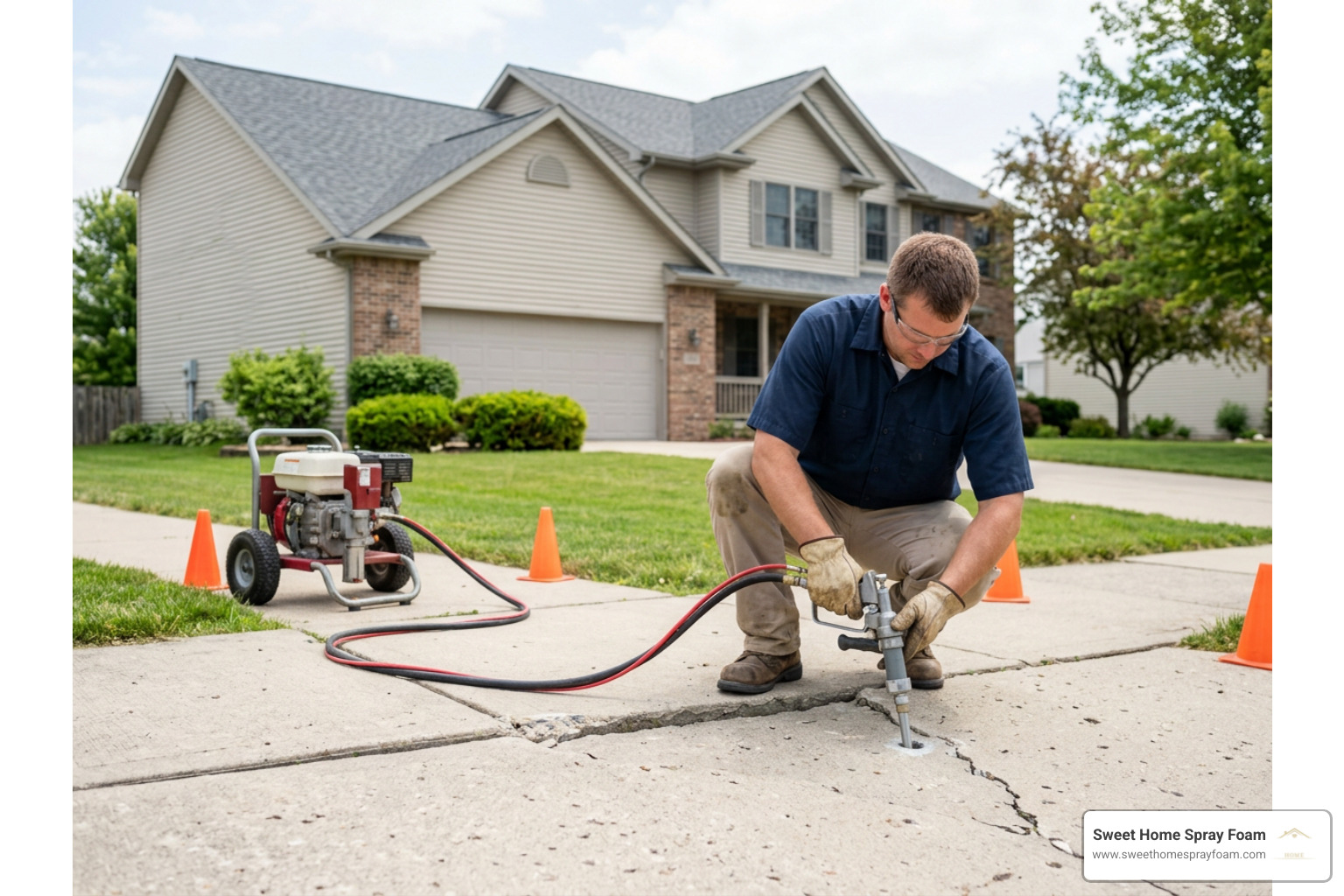
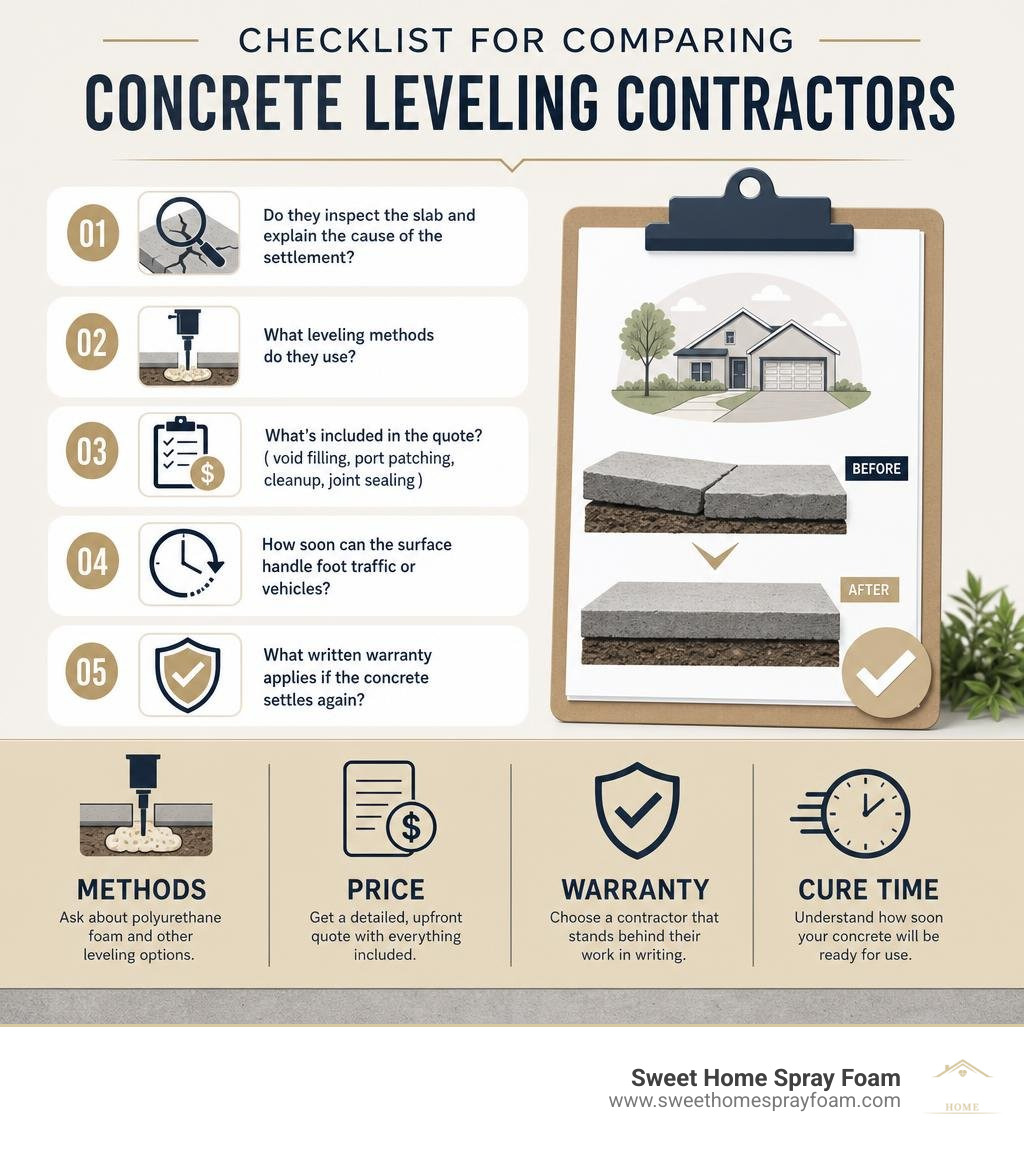
When comparing concrete leveling contractors, choose a company that first checks whether the slab is structurally sound, identifies why it sank, explains the lifting method, and provides clear pricing and warranty terms. For a driveway, sidewalk, patio, or garage floor that is still in good condition, leveling can often restore a safe, even surface without the cost and mess of demolition.
Ask each contractor:
- What caused the slab to settle: erosion, poor drainage, soil movement, or a void?
- Will they use polyurethane foam, mudjacking slurry, or another method?
- Does the quote include void filling, port patching, cleanup, and joint sealing?
- How soon can the surface handle foot traffic or vehicles?
- What written warranty applies if the concrete settles again?
Concrete leveling raises a settled slab from below instead of removing and repouring it. Polyurethane foam is lightweight, cures in about 15 minutes, and can allow same-day use. Traditional mudjacking uses a heavier cement-based slurry and may be a fit for some larger exterior slabs, but it generally needs larger drill holes and longer curing time.
For many homeowners, the decision comes down to condition. If the concrete has major breakage, severe spalling, or structural failure, replacement may be the better investment. If the slab is largely intact but uneven, professional leveling can remove trip hazards, improve drainage, and cost far less than replacement.
Understanding Concrete Leveling Methods: Foam Injection vs. Mudjacking
Concrete settling happens beneath the surface. When soil washes out, compacts poorly, or shrinks during dry spells, it leaves empty voids beneath your slabs. Without subgrade support, heavy concrete inevitably drops.
Leveling methods solve this problem by pumping stabilizing material underneath the sunken concrete to fill those voids and exert upward pressure. However, the exact material used makes a massive difference in longevity, aesthetics, and structural load.

Traditional Mudjacking and Hydraulic Slurry
Traditional mudjacking (often called slab-jacking) has been around for decades. In this process, contractors pump a heavy mixture of water, soil, sand, and Portland cement under the slab using hydraulic pressure.
While it is an established technique, mudjacking has significant drawbacks:
- Extreme Weight: Mudjacking slurry weighs roughly 120 pounds per cubic foot. Adding thousands of pounds of heavy mortar on top of weak, poorly compacted subsoil can cause the ground to settle even further down the road.
- Large Drill Holes: Mudjacking requires drilling injection ports that are 1.5 to 2 inches in diameter—roughly the size of a beverage can top. Even after patching, these large circular scars remain visible across your driveway or patio.
- Washout Vulnerability: Because the slurry is water-based and porous, underground water flow and freeze-thaw cycles can erode the material over time, leading to recurring settlement.
- Extended Cure Times: Mudjacking slurry needs days to fully harden, meaning you cannot park heavy vehicles on the slab immediately.
Polyurethane Foam Slab Lifting
Polyurethane foam injection represents the modern standard for concrete restoration. Contractors inject a two-part high-density polymer liquid beneath the slab through tiny ports. As the chemical components react, the mixture expands rapidly into an ultra-strong, lightweight structural foam that fills every subterranean pocket before lifting the slab with controlled precision.
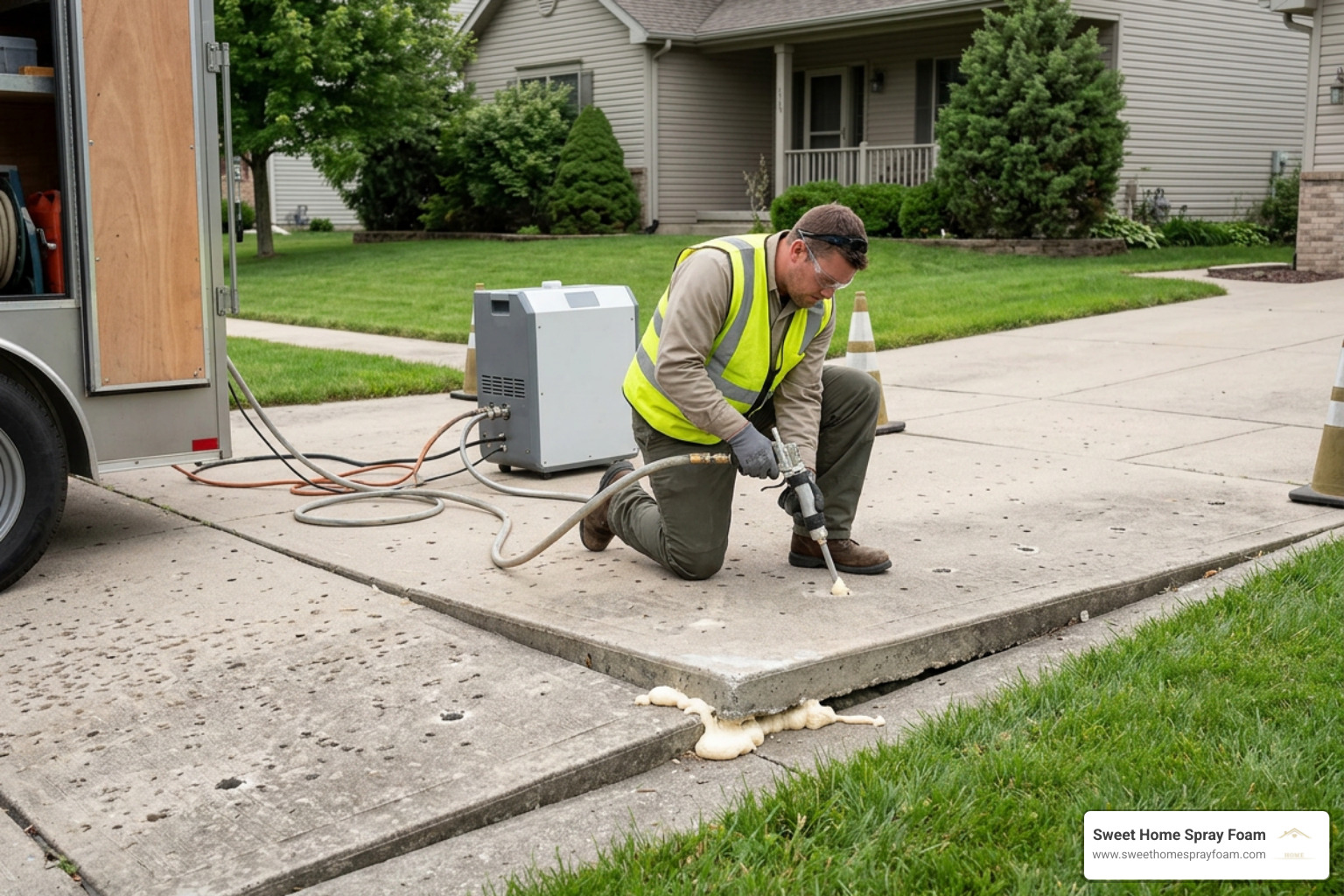
Key advantages of high-density foam lifting include:
- Lightweight Formulation: Polyurethane foam weighs only 4 to 6 pounds per cubic foot. It adds virtually no overburden weight to fragile sub-base soils.
- Tiny, Discreet Injection Ports: Foam only requires 3/8-inch holes—roughly the diameter of a pencil. Once patched with color-matched concrete compound, the injection sites blend seamlessly into the existing slab.
- Rapid 15-Minute Cure: High-density polyurethane foam cures faster than most coffee brews! Slabs can handle full heavy vehicle traffic within 15 minutes after installation.
- Moisture and Chemical Resistance: Polyurethane is completely hydrophobic. It will not wash away during heavy storms, deteriorate from underground moisture, or break down during harsh winter freeze-thaw cycles.
- High Lifting Capacity: Expanding polymers can lift concrete upwards of 5 inches, providing pinpoint accuracy down to a fraction of an inch to align adjoining slabs perfectly.
When to Choose Leveling Over Full Concrete Replacement
When facing uneven walkways or an off-kilter garage floor, homeowners often assume they must demolish and repour the entire area. In reality, leveling is almost always the smarter, faster, and more affordable choice for structurally sound concrete.
Full concrete replacement is notoriously expensive and disruptive. A typical residential leveling job costs between $400 and $3,500, whereas tearing out and repouring the same area often ranges from $4,000 to $15,000 or more.
Beyond cost, leveling is far more environmentally friendly. Demolition sends tons of solid masonry rubble straight into local landfills while requiring fresh concrete production, which carries a massive carbon footprint. Leveling preserves your existing, mature slab without tearing up your lawn or destroying mature landscaping with skid steers and heavy dump trucks.
Evaluating Driveways, Patios, and Walkway Surfaces
Foam lifting works across almost all residential and commercial flatwork, including:
- Driveways and Garage Floors: Eliminates the jarring bumper drop when pulling into the garage and levels out uneven parking pads.
- Sidewalks and Walkways: Removes dangerous trip hazards and brings commercial or municipal pathways back into strict ADA compliance.
- Pool Decks and Patios: Corrects settled pool surround slabs to restore proper water runoff and prevent stubbed toes—all while keeping the swimming pool open and fully operational.
- Interior Warehouse and Basements: Stabilizes rocking, void-prone industrial flooring and residential basement subfloors without messy interior demolition.
How to Assess If a Sunken Slab Can Be Saved
Can your sunken slab be saved? A quick visual assessment helps determine whether leveling is feasible:
- Surface Integrity: Minor hairline cracks are completely normal and can be lifted and sealed. However, if the slab has shattered into a puzzle of dozens of small, crumbling chunks (known as "alligator cracking"), there is not enough structural integrity left to lift cleanly.
- Spalling and Flaking: Superficial surface flaking from winter salt or age does not prevent a slab from being raised, though you may want a resurfacing coat applied afterward.
- Subgrade Stability: If soil erosion is caused by an active plumbing leak or a misdirected roof downspout, the water issue must be corrected alongside the lift.
- Foundations and Deep Structural Support: For larger settlement issues involving structural footers or interior foundation walls, specialized concrete lifting for foundations and slabs provides the deep structural void filling and soil stabilization required.
Key Criteria for Vetting Concrete Leveling Contractors
Choosing the right partner ensures your concrete stays level for decades. Not all service providers use the same materials, equipment, or quality standards.
When vetting local providers, verify the following credentials:
- Proper Licensing and Insurance: Always verify general liability coverage and active workers' compensation insurance to protect your property.
- Proven Track Record: Look for established businesses with strong community reputations, verified customer reviews, and high BBB ratings.
- Specialized Foam Equipment: Modern polyurethane lifting requires calibrated proportioning rigs to ensure the chemical components mix at exact temperatures and pressures.
- Clear, Upfront Pricing: Reputable contractors provide transparent, written estimates with no hidden travel fees or surprise add-ons.
Essential Questions to Ask Concrete Leveling Contractors
Before signing any contract, ask these direct questions:
- What specific lifting material do you use, and what is its density? (Look for high-density, closed-cell expanding polyurethane designed specifically for slab lifting).
- What size holes will you drill into my concrete? (High-density foam uses 3/8-inch ports; mudjacking uses 1.5 to 2-inch ports).
- Do you offer a written warranty against re-settling? (Quality contractors stand behind their work with multi-year warranties).
- Does the proposal include caulking expansion joints and patching injection ports? (Sealing joints prevents future water penetration).
- What is your policy if a slab cannot be safely raised? (Ask if they maintain a clear "no-fix, no-charge" inspection policy).
Comparing Quotes from Concrete Leveling Contractors
When comparing bids, make sure you are looking at true apples-to-apples scopes of work. A lower mudjacking quote may seem attractive at first glance, but it often excludes vital joint sealing, leaves massive core holes, and adds substantial weight to an already unstable soil bed.
| Feature / Metric | Polyurethane Foam Lifting | Traditional Mudjacking |
|---|---|---|
| Material Weight | 4 – 6 lbs / cu. ft. | ~120 lbs / cu. ft. |
| Drill Port Diameter | 3/8 inch (pencil sized) | 1.5 to 2.0 inches (soda can sized) |
| Cure Time | 15 minutes (immediate use) | 24 to 72 hours |
| Moisture Resistance | 100% Waterproof & Hydrophobic | Susceptible to washout and erosion |
| Soil Compaction | Expands into and binds loose sub-soil | Relies entirely on hydraulic pressure |
| Typical Lifespan | 10+ Years | 2 to 5 Years |
Expected Lifespan, Curing Times, and Long-Term Maintenance
When performed using high-density structural foam, concrete leveling is a long-lasting solution. Because polyurethane foam is chemically inert and fully hydrophobic, it will never rot, decay, or wash away. As long as the underlying subgrade remains stable and proper surface drainage is maintained, foam-leveled concrete routinely lasts 10+ years without requiring re-leveling.
To maximize the lifespan of your leveled concrete, follow these simple maintenance best practices:
- Seal Expansion Joints: Apply high-grade commercial polyurethane or silicone joint sealant along control joints and abutting walls to keep rainwater from penetrating below the slab.
- Redirect Downspouts: Ensure gutters and downspouts discharge water at least 5 feet away from driveways, patios, and foundation slabs.
- Maintain Soil Grades: Keep perimeter garden beds and turf graded away from the slab edges to prevent water pooling.
Frequently Asked Questions about Concrete Leveling
How long does polyurethane concrete leveling last?
Properly injected polyurethane foam lasts for decades because it does not degrade underground, absorb moisture, or wash out during heavy rain. In installations with stable underlying soil and sealed surface joints, the repair easily lasts 10+ years, often matching the remaining physical lifespan of the concrete slab itself.
Can concrete leveling eliminate trip hazards and meet ADA standards?
Yes. Foam injection allows contractors to control lift height down to an eighth of an inch. This precision makes it an ideal solution for eliminating trip hazards on municipal walkways, commercial entrances, and residential sidewalks, bringing transitions back into full compliance with ADA accessibility guidelines without costly sidewalk replacement.
How soon can I drive on concrete after polyurethane foam lifting?
Polyurethane foam expands and cures to 90%+ structural load capacity in roughly 15 minutes. As soon as the injection crew finishes patching the pencil-sized drill holes and cleans the site, you can drive personal cars, trucks, and equipment across the surface with zero operational downtime.
Restoring Your Concrete with Confidence
Sunken, uneven concrete creates unsightly trip hazards, damages vehicle suspensions, and lowers your property's curb appeal. Tearing out and repouring concrete is rarely necessary when modern, minimally invasive lifting methods are available.
By choosing professional foam injection, you save thousands of dollars, protect your yard from heavy machinery, and restore smooth, level surfaces in a single afternoon. At Sweet Home Spray Foam, we deliver upfront pricing, rapid turnaround, and long-lasting stability across Virginia—including Richmond, Roanoke, Lynchburg, and Smith Mountain Lake.
Ready to eliminate trip hazards and restore your sunken slabs? Contact our team today for professional concrete lifting services and get a free, detailed assessment of your property.