
Concrete Mudjacking Near Me: Real Costs and Expected Lifespan
How Mudjacking Works and Why Concrete Sinks
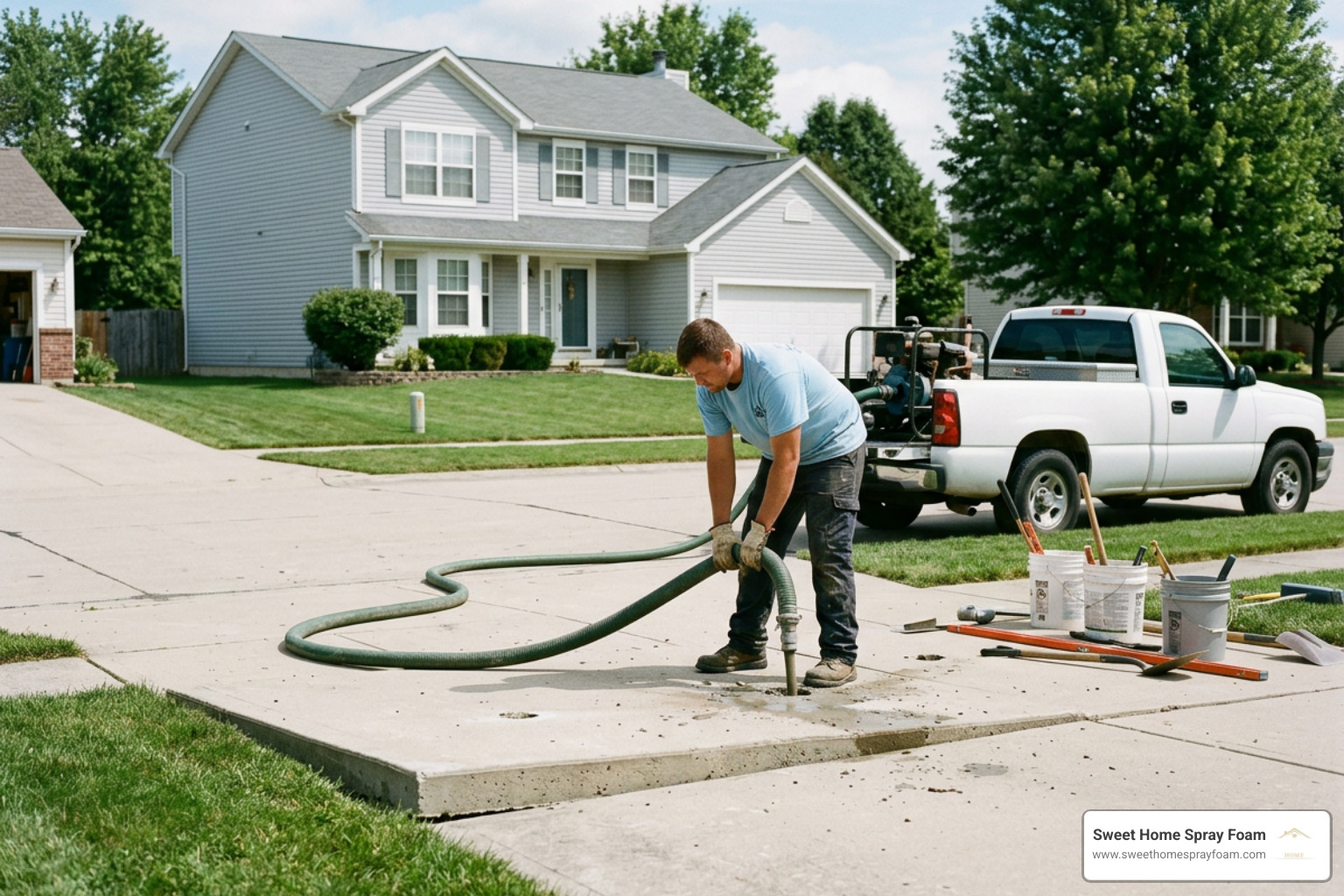
If you are searching for concrete mudjacking near you, professional slab leveling typically costs between $2 and $5 per square foot—roughly 50% less than full replacement—and provides a durable lifespan of 5 to 10 years. The process restores settled driveways, sidewalks, and patios by pumping a supportive slurry beneath the slab through small drilled access ports, raising it back to its original grade in just a few hours without the expense of demolition.
Concrete is remarkably heavy, weighing about 150 pounds per cubic foot. When poured, it relies entirely on the subbase beneath it for structural support. Mudjacking—often called slabjacking—is a mechanical lifting technique that restores settled slabs back to their original grade by injecting material directly beneath the surface.
The process begins by drilling access ports through the sunken concrete. A specialized hydraulic pump forces a natural, cement-based slurry into the empty pockets under the slab. As this slurry fills the voids, it builds gentle, uniform hydraulic pressure that lifts the concrete back into proper alignment.
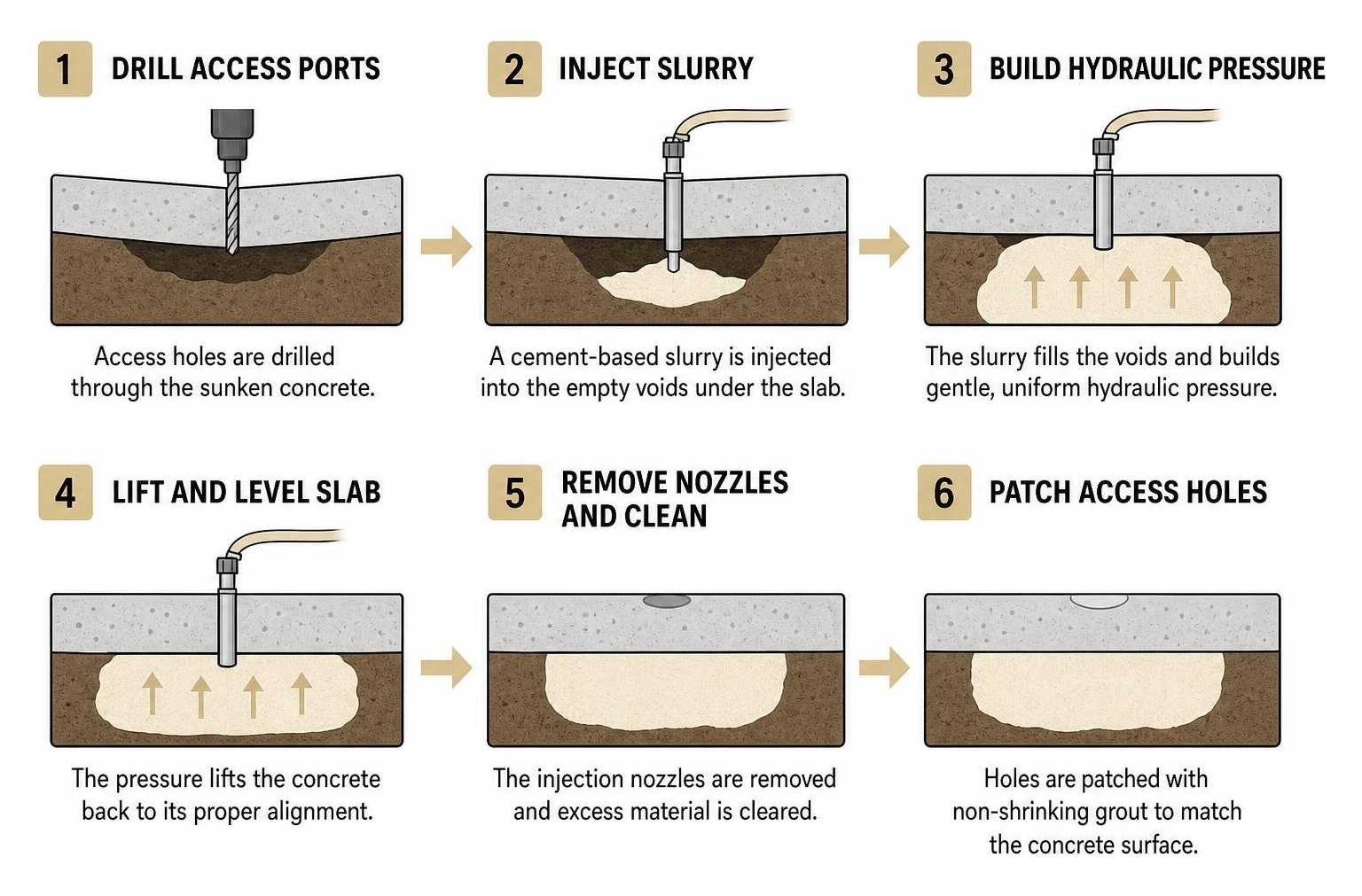
This stabilization process is critical not just for flatwork, but also when addressing issues like concrete lifting foundations. Once the slab reaches the correct height, the technician removes the injection nozzles, clears the excess material, and patches the access holes with non-shrinking grout matched closely to your existing concrete surface.
What Causes Concrete Settlement Under Slabs
Concrete rarely sinks due to flaws within the slab itself; instead, movement stems from shifting soil underneath. The most common triggers of void formation and settlement include:
- Soil Erosion and Water Washouts: Poor downspout placement or leaking subterranean pipes wash away fine base aggregates, leaving open pockets beneath the slab.
- Poor Soil Compaction: When a home is built, the disturbed backfill soil around the foundation settles naturally over several years if not mechanically compacted during construction.
- Freeze-Thaw Cycles: Moisture in the soil expands when frozen and contracts as it thaws, creating microscopic movement that weakens subbase support over time.
- Organic Decomposition: Tree roots, buried wood, and organic matter decay beneath the slab, creating subterranean hollows.
- Moisture Fluctuations: Expansive clay soils shrink significantly during dry summer months and swell during rainy seasons, leading to uneven settling.
- Burrowing Pests: Small rodents, insects, and animals can tunnel under walkways and driveways, creating localized void channels.
Signs You Need Concrete Mudjacking Near Me for Uneven Slabs
Addressing settling concrete early prevents structural cracking and costly safety liabilities. Keep an eye out for these telltale warnings:
- Uneven Walkways and Stepping Hazards: Trip hazards forming along joints between adjacent concrete sections.
- Pooling Water and Drainage Runoff: Water collecting on driveways, walkways, or patio surfaces rather than shedding cleanly away.
- Sloping Toward Foundations: Patios or sidewalks settling toward your exterior walls, which directs rainwater against your foundation.
- Gaps Beneath Slabs: Visible voids opening along the edges of garage entries, steps, or porches.
- Cracking Along Stress Points: Spiderwebbing or stair-step fractures forming as unsupported concrete bends under its own weight.
- Sticking Exterior Doors: Misalignment caused by an uneven porch or stoop resting unevenly on moving soil.
6 Concrete Surfaces Ideal for Mudjacking Repairs
Mudjacking provides a fast, minimally invasive alternative to total demolition for a wide variety of flatwork surfaces. As long as a slab is largely intact and not shattered into tiny fragments, it can typically be raised.
- Driveways: Corrects dipping sections that cause bumper scraping, water puddling, and winter ice sheets.
- Sidewalks and Walkways: Eliminates uneven edges to restore ADA accessibility and protect visitors from trip-and-fall injuries.
- Garage Floors: Levels interior slabs that have dropped along the garage door threshold or foundation stem wall.
- Backyard Patios: Realigns tilted outdoor living areas and restores a positive slope away from your foundation.
- Pool Decks: Lifts settled pool surround slabs to eliminate hazardous stubbed toes and prevent perimeter seal failure.
- Entryway Steps and Stoops: Raises heavy front concrete porches back to their original height, closing gaps beneath thresholds.
Mudjacking vs. Polyurethane Foam: Key Differences and Lifespan
While traditional mudjacking uses a natural, sand-and-cement slurry, modern concrete lifting also utilizes high-density expanding polymers. Understanding how these two techniques compare helps you make an informed decision based on your soil conditions, budget, and long-term repair goals.
| Feature / Metric | Traditional Mudjacking Slurry | High-Density Polyurethane Foam |
|---|---|---|
| Primary Material | Sand, soil, Portland cement, water | Expanding two-part structural polymer |
| Material Density | Approx. 100 to 120 lbs per cubic foot | Approx. 2 to 4 lbs per cubic foot |
| Drill Port Size | 1.0 to 1.5 inches in diameter | 5/8-inch (dime-sized) diameter |
| Cure Time to Traffic | 24 to 48 hours for heavy vehicular loads | 15 to 30 minutes for full load support |
| Moisture Resistance | Susceptible to long-term water washout | 100% waterproof; resists erosion |
| Subbase Load Stress | High weight added to underlying soil | Minimal dead weight added to weak soil |
| Environmental Profile | Natural, mineral-based aggregates | Biobased formulas with up to 40% renewable content |
| Average Initial Cost | Lowest initial investment | Moderate initial investment |
Traditional mudjacking slurry provides a dense, mineral-based foundation that works well in stable base soils where heavy weight is not an issue. Conversely, high-density polyurethane foam expands dynamically to fill intricate voids, offering exceptional longevity in areas with high water tables or loose, sandy soils.
Real Costs: Mudjacking vs. Full Concrete Replacement
Homeowners often assume that an uneven slab requires tearing out the entire section and pouring fresh concrete. In reality, concrete leveling delivers substantial financial savings without the mess of demolition.
Concrete raising typically ranges between $2 and $5 per square foot, saving property owners roughly 50% or more compared to the price of full replacement. Demolition requires jackhammering, hauling heavy debris to landfills, setting new wooden forms, ordering transit-mix trucks, and waiting up to a week for fresh concrete to cure. In contrast, mudjacking repairs the existing structural slab in just a few hours.
Factors That Determine Pricing for Concrete Mudjacking Near Me
Every concrete leveling project requires a customized approach. Several key variables influence your final quote:
- Void Volume Under the Slab: The cubic footage of empty space beneath the concrete dictates how much slurry or foam material must be injected.
- Total Slab Size and Weight: Larger, thicker commercial-grade slabs require higher hydraulic lift capacity and additional injection points.
- Site Accessibility: Tight backyards, complex landscaping, or narrow gates may require specialized equipment routing.
- Underlying Soil Stability: Deep settlement or weak subgrades may require deeper stabilization to prevent recurring movement.
Long-Term Value and Warranty Expectations
A quality mudjacking repair can easily last 5 to 10 years or longer, provided that the underlying drainage issues are corrected. Industry-standard warranties typically range from 2 to 5 years, protecting you against material defects and premature settling.
To maximize the lifespan of your repair:
- Seal all expansion joints with flexible polyurethane or silicone caulk to block surface water from infiltrating beneath the slab.
- Extend gutter downspouts at least 5 feet away from driveways, patios, and walkways.
- Maintain proper yard grading so water flows naturally away from flatwork.
How to Find and Evaluate Concrete Mudjacking Near Me
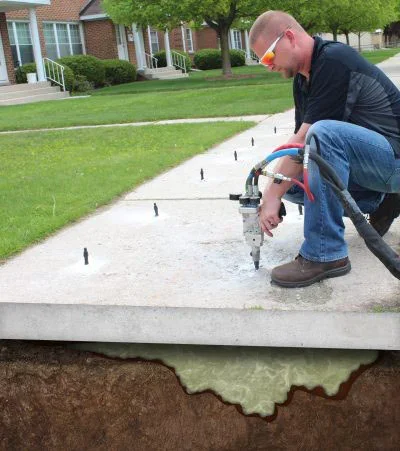
Hiring the right concrete lifting contractor ensures a smooth lift without accidental cracking. When evaluating local leveling specialists, look for proven field experience, transparent pricing, and clear communication.
Key Qualifications and Licensing to Look For
- Proper Licensing and Registration: Verify that the contractor holds valid trade licenses for specialty concrete or structural repair work in your state.
- Comprehensive Liability and Workers' Comp Insurance: Protect your property by confirming active insurance coverage before work begins.
- Specialized Equipment: Ensure the team uses commercial hydraulic injection systems with precise pressure gauges to prevent over-lifting.
- Established Local Track Record: Look for established companies that provide verified customer testimonials and detailed project portfolios.
Questions to Ask Before Hiring a Concrete Contractor
Before signing a contract, ask these straightforward questions:
- What specific slurry or foam formulation do you plan to use for my soil type?
- How large are the injection holes, and how will they be patched and color-matched?
- How soon can we walk and drive on the concrete after the repair is complete?
- Do you call utility locating services before drilling near underground lines?
- What specific warranty do you offer on workmanship and against future settlement?
Frequently Asked Questions About Concrete Leveling
How long does concrete mudjacking last?
When performed on a stable subgrade with proper moisture control, mudjacking repairs often last between 5 and 10 years. The longevity depends heavily on water management; sealing open joints and directing gutter runoff away from the concrete prevents the subbase from washing out again.
Can you drive on concrete immediately after mudjacking?
Foot traffic is generally safe immediately after the technicians finish patching the holes. However, for traditional cement slurry mudjacking, you should wait 24 to 48 hours before parking heavy passenger vehicles on the slab to allow the mixture to cure fully. Polyurethane foam repairs, by contrast, can bear full vehicle traffic in about 15 to 30 minutes.
Is mudjacking environmentally friendly?
Yes. Traditional mudjacking utilizes natural earth, sand, and Portland cement, introducing no harsh synthetic chemicals into the surrounding soil. Furthermore, lifting existing concrete prevents usable slabs from ending up in local landfills and eliminates the carbon footprint associated with manufacturing new cement.
Conclusion
Sunken concrete does not mean you are stuck paying thousands of dollars for messy demolition and replacement. By addressing settled slabs early, you protect your family and visitors from trip hazards, eliminate water drainage toward your foundation, and instantly restore your property's curb appeal.
At Sweet Home Spray Foam, we help homeowners across Virginia—including Richmond, Roanoke, Lynchburg, and Smith Mountain Lake—stabilize their concrete and improve building performance with upfront pricing and pressure-free service. Ready to restore your sunken flatwork? Visit our homepage to schedule a concrete assessment with our experienced team today!