A Homeowner's Practical Guide to Attic Insulation in Lynchburg VA
The Real Value of Upgrading Attic Insulation Lynchburg VA Homes
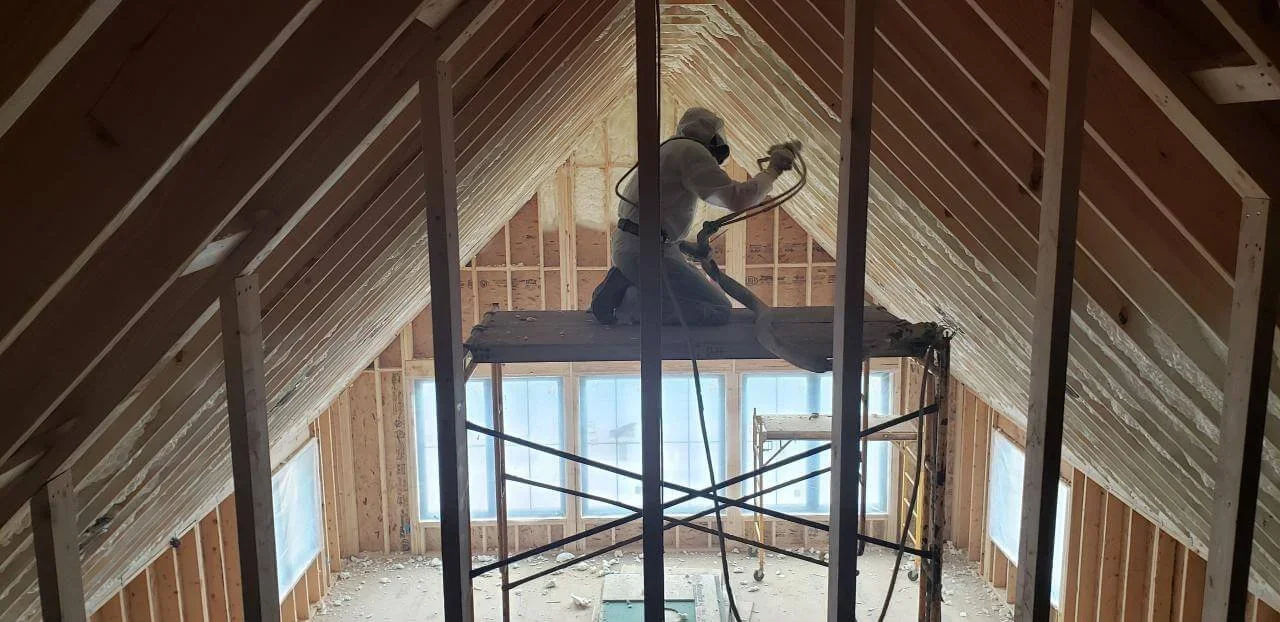
Homeowners in Lynchburg, VA, can significantly reduce heating and cooling costs, eliminate drafty rooms, and prevent ice dams by upgrading to a continuous attic insulation and air sealing system. In our mixed-humid Climate Zone 4, the most effective modern solution is spray foam insulation applied directly to the roof deck, which stops air leakage that traditional fiberglass and cellulose cannot address. This upgrade typically cuts energy usage by 15% to 30% while improving indoor comfort across all four seasons.
Central Virginia treats us to gorgeous autumn foliage and crisp mountain mornings, but our local weather also delivers blazing summer humidity and freezing winter cold snaps. When outdoor conditions swing drastically, your attic acts as the primary barrier between your living space and the elements. Without a robust thermal boundary, your attic essentially functions like an open window on the roof of your house.
When you upgrade your attic, the immediate payoff comes in lower monthly heating and cooling bills. Because warm air naturally rises during winter (the stack effect) and hot attic air radiates downward during summer, an uninsulated or poorly insulated ceiling forces your HVAC unit to work double-time. Modern building science shows that pairing the right material with proper attic and crawl space insulation wraps the entire home in a continuous protective envelope. This significantly reduces run times on your heat pump or furnace, directly extending equipment life and cutting utility expenses year-round.
How Weather Patterns Impact Attic Insulation Lynchburg VA Needs
Lynchburg sits firmly in Climate Zone 4. This mixed-humid zone requires insulation systems capable of handling both heavy winter heating demands and extreme summer cooling loads. During July and August, attic temperatures in the Hill City routinely exceed 130°F. If your ceiling lacks an airtight thermal seal, radiant heat bakes the rooms below, making upstairs bedrooms uncomfortable well into the evening.
In the winter months, sub-freezing nights create stark temperature differentials across your roof deck. When indoor heat leaks upward through ceiling penetrations and thin insulation, it melts snow on the upper roof. As that runoff reaches the colder eaves, it refreezes, creating ice dams that back water up underneath your shingles. By establishing a continuous air seal and robust thermal barrier, you stop thermal bridging, eliminate ice dam risks, and keep interior relative humidity balanced across all four seasons.
Common Signs Your Lynchburg Attic Needs an Insulation Upgrade
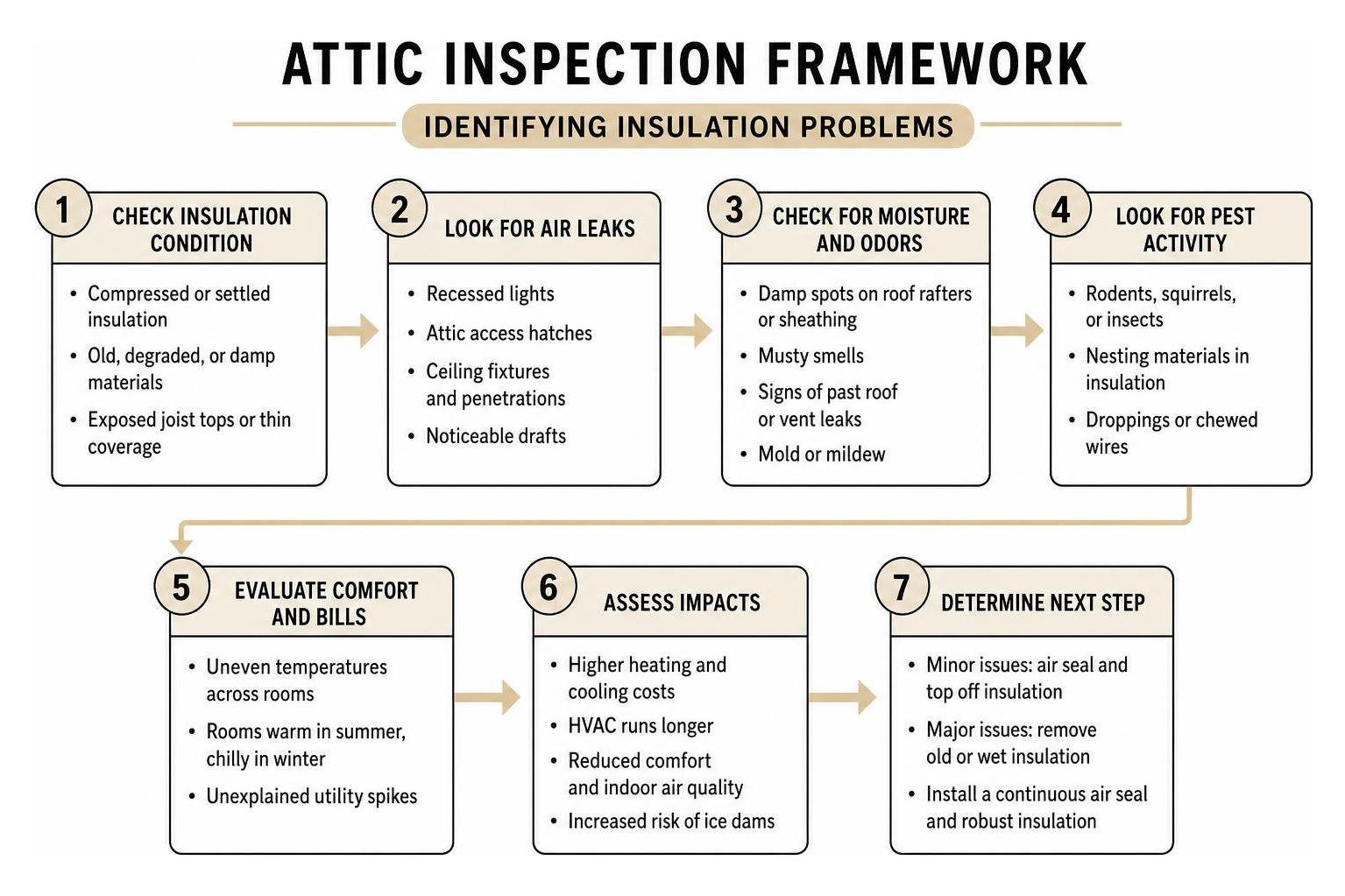
Most homeowners do not climb into their attics every week, meaning problems overhead often develop quietly out of sight. However, your house communicates distress through several clear indicators:
- Uneven temperatures across rooms: You notice the second floor or specific corner rooms stay warm in summer and chilly in winter.
- Drafty living spaces: Recessed lighting, attic access hatches, or ceiling fixtures leak noticeable currents of air.
- Unexplained utility spikes: Your power bills climb steadily, even though your daily routines have not changed.
- Pest intrusion: Rodents, squirrels, or insects make their way into your attic, finding shelter inside fibrous nesting materials.
- Damp spots or musty smells: Moisture migration through unsealed attic floors condenses on roof rafters, causing mildew odors.
Key Signs It Is Time to Replace Attic Insulation Lynchburg VA
Sometimes simply topping off an existing setup is not enough. Old, degraded, or compromised insulation must be completely extracted before installing a modern system.
If your attic has traditional fiberglass batts that have been compressed by foot traffic or storage boxes, their thermal resistance has degraded significantly. Blown-in cellulose that has settled over decades leaves joist tops exposed, creating major thermal bridges. More critically, past roof leaks, plumbing vent leaks, or duct condensation often cause hidden mold growth inside organic insulation fibers. Once organic materials trap moisture, they lose their R-value and release spores and dust into your breathing air, degrading indoor air quality throughout the home.
Comparing Insulation Types for Lynchburg Residences
Choosing the right material determines how well your attic performs over the next several decades. While older homes typically relied on fibrous batts or loose fill, modern retrofits increasingly favor comprehensive air-sealing systems like spray polyurethane foam.
| Insulation Type | R-Value Per Inch | Air Sealing Ability | Moisture & Vapor Resistance | Typical Lifespan |
|---|---|---|---|---|
| Open-Cell Spray Foam | ~R-3.6 to R-3.8 | Excellent (Expands to seal gaps) | Breathable vapor-permeable seal | 50+ Years (No settling) |
| Closed-Cell Spray Foam | ~R-6.5 to R-7.0 | Superior (Complete air barrier) | Class II Vapor Retarder / Water resistant | 50+ Years (Structural rigidity) |
| Blown-In Cellulose | ~R-3.2 to R-3.8 | Poor (Requires separate air sealing) | Absorbs moisture; prone to settling | 15–20 Years (Settles over time) |
| Fiberglass Batts | ~R-2.9 to R-3.5 | None (Air passes freely through) | Retains moisture; loses R-value wet | 10–25 Years (Shifts and degrades) |
When evaluating traditional vs spray foam insulation, air movement makes all the difference. Traditional loose materials allow conditioned air to filter straight through them unless every ceiling bypass is manually sealed with caulk or expanding foam first.
By contrast, installing premium attic spray foam insulation directly along the underside of your roof deck transforms an unconditioned, dusty attic into a clean, semi-conditioned space. This keeps ductwork inside the home's thermal boundary, preventing heated or cooled air from losing energy before it ever reaches your vents.
Costs, ROI, and Energy Rebates for Central Virginia Homeowners
The investment required for an attic project in Lynchburg depends on square footage, roof pitch, existing insulation removal requirements, and the specific insulation material selected. While basic blown-in fills carry lower upfront costs, high-performance spray foam delivers higher return on investment (ROI) by stopping air infiltration and providing decades of maintenance-free performance.
Homeowners can offset installation costs through valuable energy incentives available in 2026:
- Federal Tax Credits (Inflation Reduction Act / Section 25C): Homeowners can claim up to 30% of the cost of qualifying insulation and air-sealing materials, capped at $1,200 annually through programs outlined by the ENERGY STAR Federal Tax Credits.
- Local Utility Rebates: Regional electric utilities often provide direct cash rebates for completing attic air sealing and insulation upgrades performed by qualified contractors.
- Long-Term Utility Savings: A comprehensive attic upgrade routinely cuts overall heating and cooling energy usage by 15% to 30%, delivering compounding dividends as power rates climb.
Reviewing practical homeowner insulation education resources can help you calculate your anticipated energy savings and pinpoint the most cost-effective approach for your home's layout.
How to Choose the Right Local Insulation Contractor
Attic insulation is a precision craft; even the most advanced materials fail to deliver their advertised R-value if installed with gaps, voids, or improper chemical ratios. When searching for local installation professionals, look for contractors who provide detailed site evaluations rather than rough ballparks over the phone.
A quality contractor will:
- Possess proper Virginia state trade licensing, workers' compensation, and liability insurance.
- Offer transparent, upfront pricing without hidden fees or high-pressure sales tactics.
- Inspect the entire building envelope, evaluating roof ventilation, ceiling fixtures, and attic access points.
- Back their craftsmanship with clear, written warranties on both labor and materials.
Taking the time to follow the steps for finding the best spray foam insulation contractors near you protects your property and ensures the project meets local code standards. If you are located in Central Virginia, partnering with a team that provides specialized services in Lynchburg VA gives you access to crews who understand local construction styles, from historic Rivermont Victorians to modern Timberlake builds.
Frequently Asked Questions About Attic Insulation in Central Virginia
What R-value is recommended for attics in Lynchburg, Virginia?
Under modern International Energy Conservation Code (IECC) guidelines for Climate Zone 4, residential attics in Lynchburg generally require an insulation level between R-38 and R-60 when installed on a traditional flat attic floor. When applying spray foam directly to the roof rafters to create an unvented conditioned attic, a lower total R-value (often R-20 to R-30 using closed-cell foam or R-30 to R-38 using open-cell foam) delivers equivalent or superior real-world performance because it completely eliminates air leakage and thermal bypass.
How long does modern attic insulation typically last?
Fiberglass batts and blown cellulose typically last between 15 and 20 years before settling, shifting, or moisture exposure diminishes their effectiveness. High-density spray foam insulation lasts upwards of 50 years. Because spray foam adheres permanently to the roof framing and does not sag, compress, or provide a food source for pests, it maintains its rated R-value for the life of the building.
Will upgrading my attic insulation qualify for tax credits in 2026?
Yes. Under the Energy Efficient Home Improvement Credit (Section 25C), homeowners who add qualifying insulation and air sealing to their primary residence can receive a federal tax credit equal to 30% of material costs (up to $1,200 per year). Always retain your purchase receipt and manufacturer certification statement for tax filing.
Conclusion
Upgrading your attic insulation is one of the most effective, lasting investments you can make in your Lynchburg home. Eliminating air leaks and establishing a proper thermal barrier keeps every room comfortable throughout humid summers and freezing winter spells while protecting your heating and cooling equipment from unnecessary strain.
At Sweet Home Spray Foam, we take pride in delivering clear, upfront pricing, prompt scheduling, and pressure-free guidance to homeowners across Central Virginia. If you are ready to eliminate drafts, lower your monthly energy expenses, and enjoy true whole-home comfort, explore our expert spray foam insulation solutions today and schedule your custom attic evaluation.