
How to Choose the Best Spray Foam Insulation for Attic Spaces
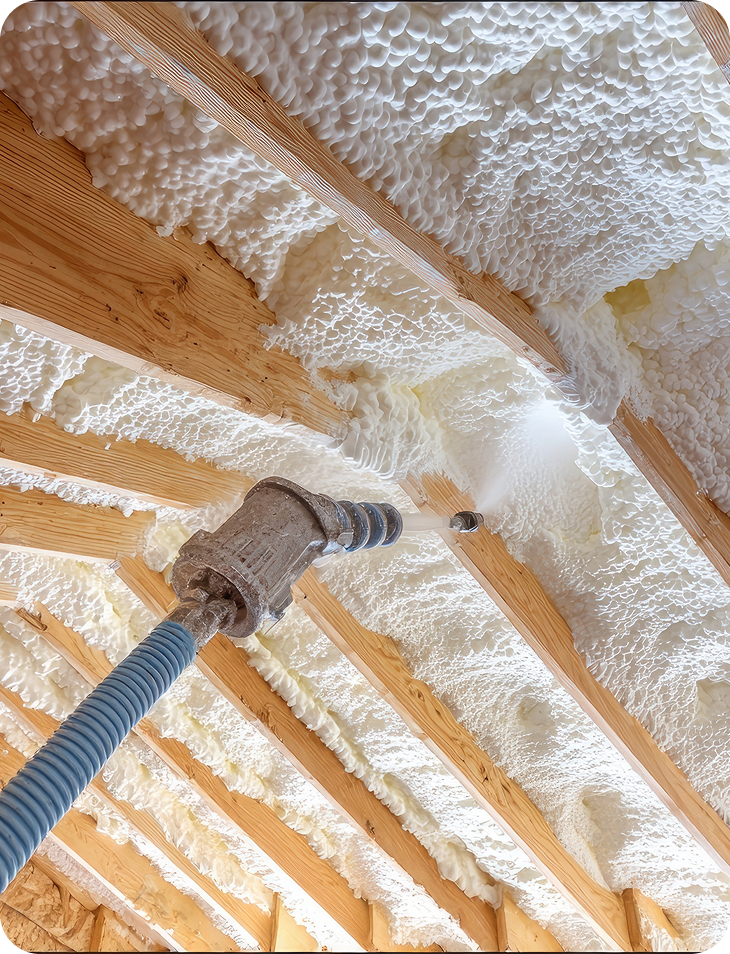
The best spray foam insulation for attic projects depends on where it goes and what problem it must solve. For Virginia homes with drafts, high utility bills, or rooms that run too hot or cold, closed-cell foam is often the strongest choice for attic rafters because it provides high R-value per inch, air sealing, and moisture control. Open-cell foam can be a practical option for deeper joist cavities where sound control and air sealing matter more than maximum R-value in limited space.
Start by comparing these essentials:
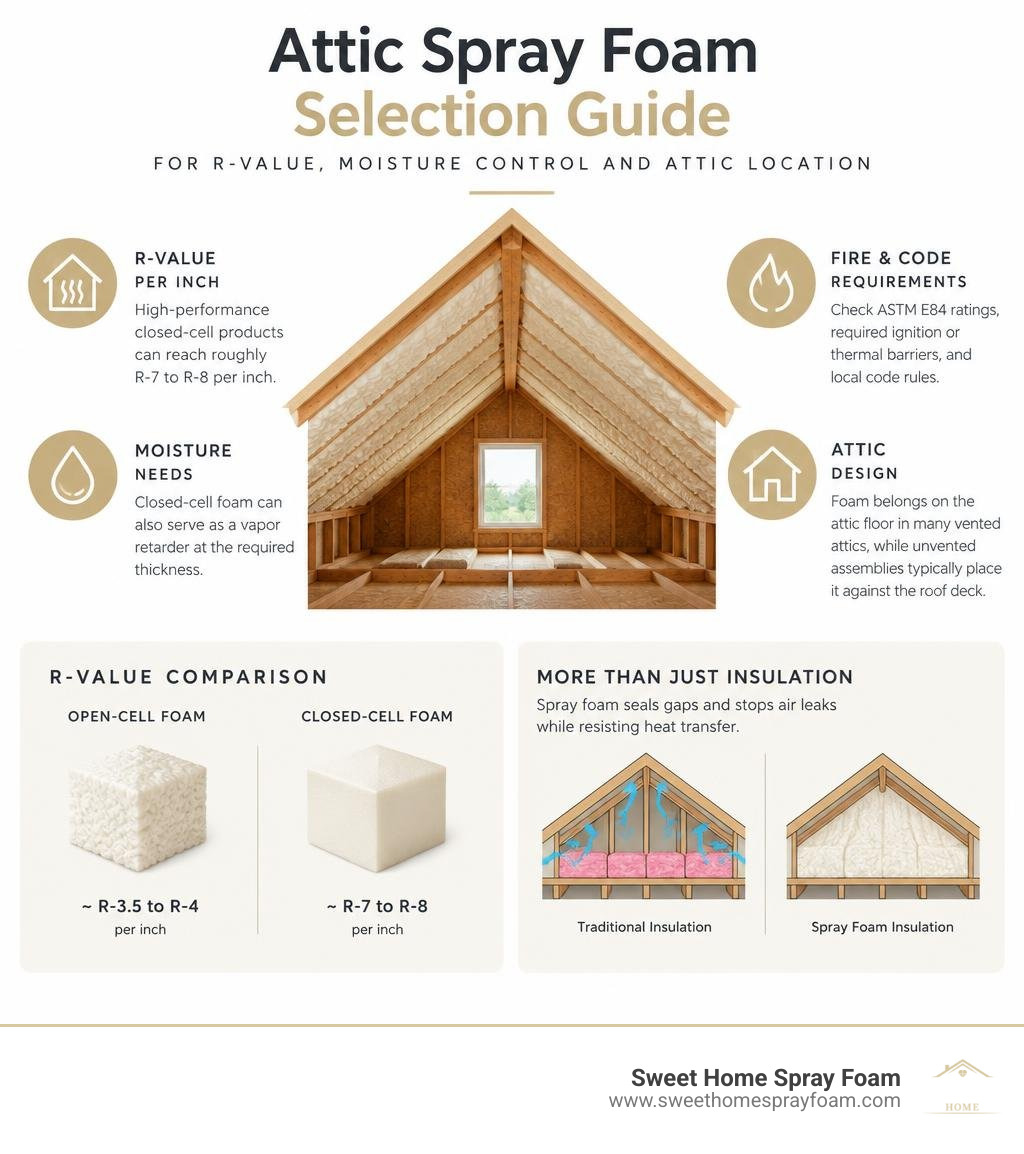
- R-value per inch: High-performance closed-cell products can reach roughly R-7 to R-8 per inch.
- Moisture needs: Closed-cell foam can also serve as a vapor retarder at the required thickness.
- Fire and code requirements: Check ASTM E84 ratings, required ignition or thermal barriers, and local code rules.
- Attic design: Foam belongs on the attic floor in many vented attics, while unvented assemblies typically place it against the roof deck.
Spray foam works differently from insulation that only slows heat flow. It also seals the small gaps around rafters, joists, wiring, and plumbing that let conditioned air escape. That air sealing can make a noticeable difference in comfort as well as energy use.
Top Criteria for Choosing the Best Spray Foam Insulation for Attic Spaces
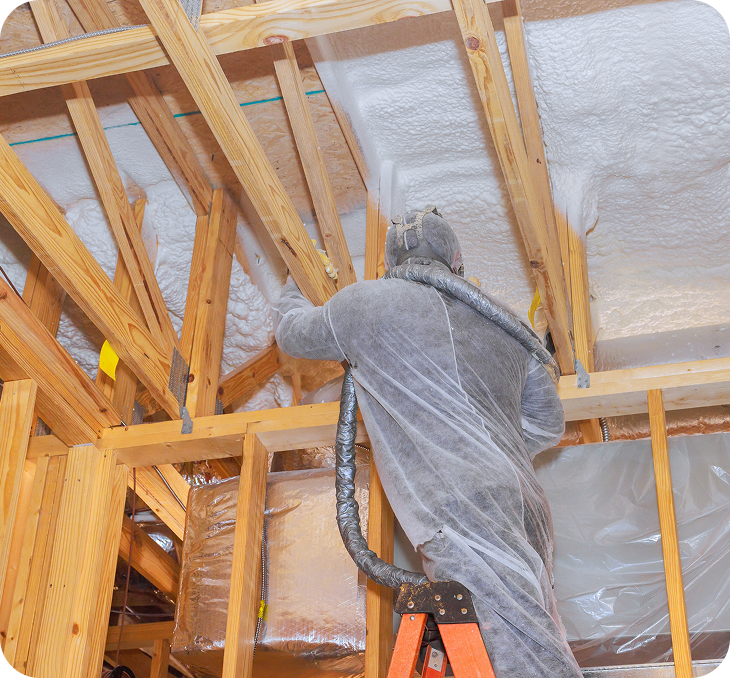
Selecting the right spray foam requires understanding how different formulations interact with your home's structure and climate. When comparing traditional vs spray foam insulation, conventional fiberglass and cellulose only slow conductive heat transfer; they do not stop air infiltration or bulk vapor transfer. Spray foam performs double duty by sealing voids while resisting thermal conduction.
To find the right product for your attic, weigh these key criteria:
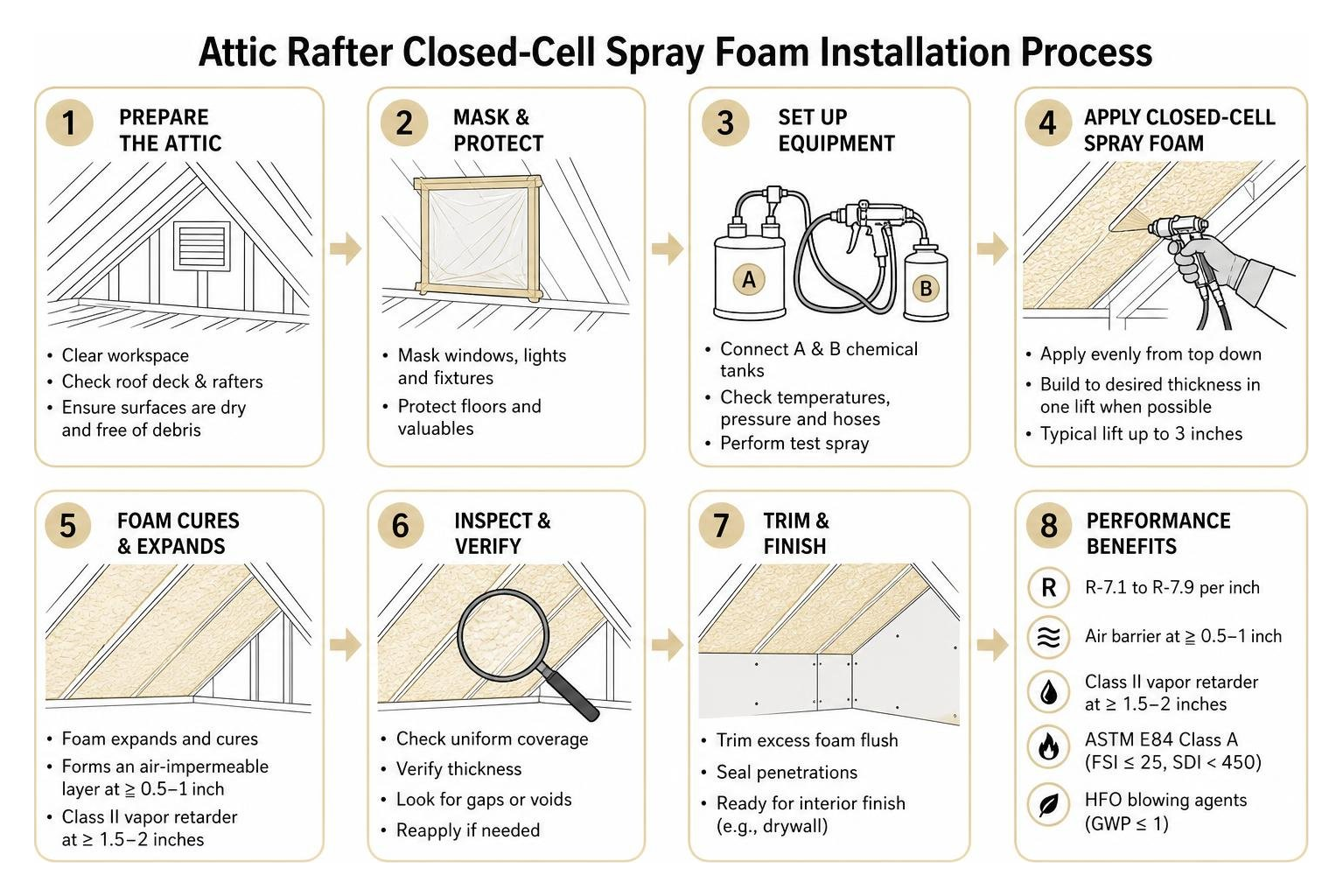
- Thermal Resistance (R-Value per Inch): Attic spaces frequently feature tight dimensional constraints, especially along shallow rafter bays. Modern closed-cell spray foams deliver R-values between 7.1 and 7.9 per inch, allowing you to reach code-mandated thermal resistance without overfilling standard 2x6 or 2x8 rafters.
- Air Barrier Performance: Under ASTM E2178 standards, an effective air barrier blocks uncontrolled airflow. High-density spray foams establish an air-impermeable layer at depths as thin as 0.5 to 1 inch, eliminating the stack effect that draws hot attic air into living areas during summer and pulls warm conditioned air up during winter.
- Moisture Permeability and Vapor Retarders: In humid regions, attic assemblies face significant vapor drive. Closed-cell formulations with more than 90% closed-cell content qualify as Class II vapor retarders when installed at minimum thicknesses (typically 1.5 to 2 inches), stopping condensation from rotting wooden roof decks.
- Fire Safety Standards: Any insulation installed in accessible attic spaces must comply with building codes. Look for products meeting ASTM E84 testing with a Class A (or Class I) flame-spread index of 25 or less and smoke-developed index under 450.
- Eco-Friendly Blowing Agents: Modern Fourth-Generation Hydrofluoroolefin (HFO) blowing agents have replaced legacy hydrofluorocarbons (HFCs). HFO technology offers an ultra-low Global Warming Potential (GWP of 1 or less), reducing environmental impact while boosting cell stability and initial yield.
Comparing the Best Spray Foam Insulation Types for Attic Rafters and Joists
The primary structural zones of an attic—the sloped roof rafters and the horizontal floor joists—serve different roles in the building envelope. Applying high-performance attic spray foam insulation involves matching the foam density to the physical demands of each area.
| Feature / Metric | Closed-Cell Spray Foam | Open-Cell Spray Foam | Hybrid DIY Kits |
|---|---|---|---|
| Typical Density | 1.7 – 2.0 lbs/cu. ft. | 0.5 lbs/cu. ft. | 1.2 – 1.5 lbs/cu. ft. |
| R-Value per Inch | R-7.1 to R-7.9 | R-3.5 to R-3.8 | R-4.12 (R-8.24 @ 2") |
| Moisture Permeability | Class II Vapor Retarder (≤1.0 Perm) | Permeable (>10 Perms) | Semi-impermeable skin |
| Air Sealing | Impermeable at ≥ 0.5" | Impermeable at ≥ 3.5" | Impermeable at ≥ 1.0" |
| Structural Rigidity | Adds 200–300% racking strength | Flexible; non-structural | Rigid shell, soft core |
| Best Attic Application | Roof rafters, unvented assemblies | Deep floor joists, soundproofing | Rim joists, small spot sealing |
Evaluating Closed-Cell Formulas: The Best Spray Foam Insulation for Attic Rafters
Closed-cell polyurethanes represent the industry benchmark for insulating sloped roof decks and rafter assemblies. Because rafters directly contact the exterior roof deck, they experience extreme thermal cycling and intense vapor pressure.
Several modern commercial formulations lead this category:
- High-Yield HFO Closed-Cell Foam: Boasting an R-value of 7.9 at 1 inch, this high-yield HFO formula provides up to 5,000 board feet per set. It enables single-pass installations up to 3 inches thick, cutting down labor time on steep attic pitches while delivering Intertek Clean-Air Gold indoor air quality certification.
- High-Lift HFO Closed-Cell Foam: This formula delivers an aged thermal resistance of R-7.4 per inch with a single-pass lift capability of up to 6.5 inches. Its ultra-low GWP of 1 minimizes environmental impact, while its compressive strength (exceeding 25 psi per ASTM C1029 Type II) adds structural integrity to roof rafters.
- 1.7 lb High-Density Closed-Cell Foam: This foam achieves an initial R-value of 7.1 at 1 inch and R-14 at 2 inches. With greater than 90% closed-cell content, it provides reliable Class II vapor retarder performance and holds FEMA Class 5 flood resistance ratings.
Open-Cell vs. Hybrid Options for Attic Joist Cavities
Open-cell spray foam (0.5 lb/cu. ft.) expands roughly 100 times its liquid state upon application. This makes it an effective, cost-efficient option for deep attic floor joists (2x8, 2x10, or 2x12 lumber) where space is abundant and structural racking strength is not required. Open-cell foam expands around irregular wiring, ceiling boxes, and plumbing runs, sealing air leaks while providing acoustic dampening.
For targeted spot work, hybrid options have emerged. Hybrid spray foam kits use a hybrid structure with an R-value of 8.24 at a 2-inch thickness. In consumer testing, 94% of users reported fewer drafts and 91% noticed better room temperature control. While useful for modest repairs, hybrid kits differ in yield and density from high-lift commercial closed-cell foams.
Professional Spray Foam Applications for Attic Gaps
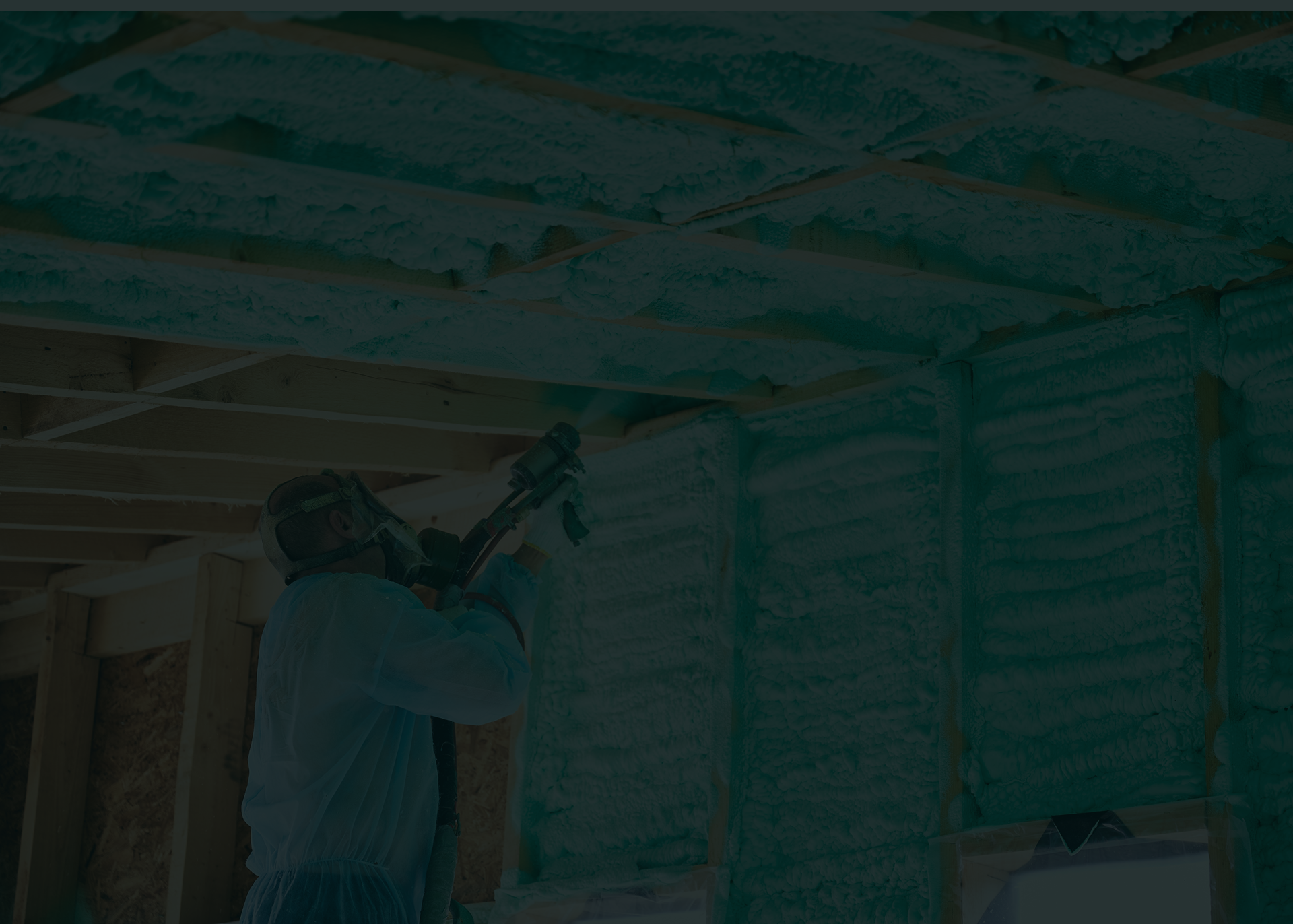
While small cracks can occasionally be addressed with DIY kits, large-scale attic envelopes demand professional equipment. Commercial multi-component rigs maintain dynamic fluid pressures above 1,000 psi and heat chemicals to between 110°F and 140°F. This precise mixture ensures full molecular cross-linking, preventing shrinking, off-ratio curing, or lingering odors.
Key attic areas requiring commercial application include:
- Top Plate and Drywall Junctions: Where partition walls meet ceiling drywall.
- Attic Chases and Soffit Drops: Concealed structural voids that bypass the thermal envelope.
- Rim Joists and Band Boards: Perimeter edges where drafts commonly penetrate.
- Mechanical Penetrations: Large flues, electrical conduits, and HVAC duct chases.
Vented vs. Unvented Attics: Application Guidelines and Code Requirements
When planning an attic retrofit, you must choose between keeping a traditional vented attic floor or creating an unvented, conditioned roof assembly.
- Vented Attic Approach: The thermal boundary remains on the attic floor. Spray foam is applied between the floor joists to stop heat transfer into the living space below, while soffit, gable, or ridge vents allow outdoor air to circulate through the rafter space above.
- Unvented (Conditioned) Attic Approach: The attic is brought inside the home's thermal boundary by spraying closed-cell foam directly to the underside of the roof deck and gable end walls. Existing vents are sealed shut. This approach protects attic-located HVAC ductwork from extreme summer heat (often topping 140°F), lowering system strain.
For broader background on managing both upper and lower building boundaries, explore our guide to attic and crawl space insulation. To understand overall building science fundamentals, visit our main insulation education hub.
Fire Code Compliance and Intumescent Coatings
Building codes (such as the International Residential Code) require exposed spray foam in attics to be separated from the living space. If the attic is accessed only for maintenance or service of equipment, an approved ignition barrier (such as 1.5-inch mineral fiber, 0.25-inch wood structural panel, or an approved intumescent coating tested under NFPA 286 or AC86) must be applied over the foam.
Frequently Asked Questions About Attic Spray Foam
What R-value is needed for attic spray foam?
Attic R-value requirements vary by climate zone under International Energy Conservation Code (IECC) standards. In central and western Virginia (Climate Zone 4), building codes generally require R-38 to R-60 for vented attic floors. However, when converting to an unvented attic assembly using closed-cell spray foam on the roof deck, a continuous layer of R-20 to R-30 (roughly 3 to 4 inches of closed-cell foam) provides equivalent or better real-world performance because it completely stops convective air movement.
Can spray foam be applied directly to attic roof decking?
Yes, closed-cell spray foam is frequently applied directly to the underside of plywood or OSB roof sheathing in unvented attic designs. Closed-cell foam adheres directly to the wood, acting as an air and vapor barrier that prevents interior moisture from condensing against the cold underside of the deck. Major asphalt shingle manufacturers allow direct-to-deck spray foam applications without voiding warranties, provided the installation follows manufacturer instructions and local ventilation exceptions.
How do I choose the right professional spray foam installation approach?
Achieving a high-performance seal requires proper surface prep, accurate chemical ratios, and verified thermal thickness. When evaluating installers, confirm they use calibrated, high-pressure proportioners and conduct post-spray thermal imaging inspections. To learn what questions to ask prospective contractors, read our guide on how to find the best spray foam insulation contractors near you.
Conclusion
Transforming your attic with spray foam delivers immediate benefits: stabilized indoor temperatures, reduced HVAC wear, and lower monthly utility costs. Whether you need closed-cell foam along your rafters to create an airtight conditioned roof envelope or deep open-cell foam across your floor joists, choosing the right material ensures long-lasting performance.
At Sweet Home Spray Foam, we specialize in high-performance residential and commercial spray foam insulation across Virginia, including Richmond, Roanoke, Lynchburg, and Smith Mountain Lake. We believe in clear upfront pricing, fast, pressure-free service, and helping you navigate local utility rebates to maximize your investment.
Ready to make your home more comfortable and energy-efficient? Contact us today to schedule an attic insulation evaluation with our experienced team.