
How to Find the Best Spray Foam Contractor in Virginia
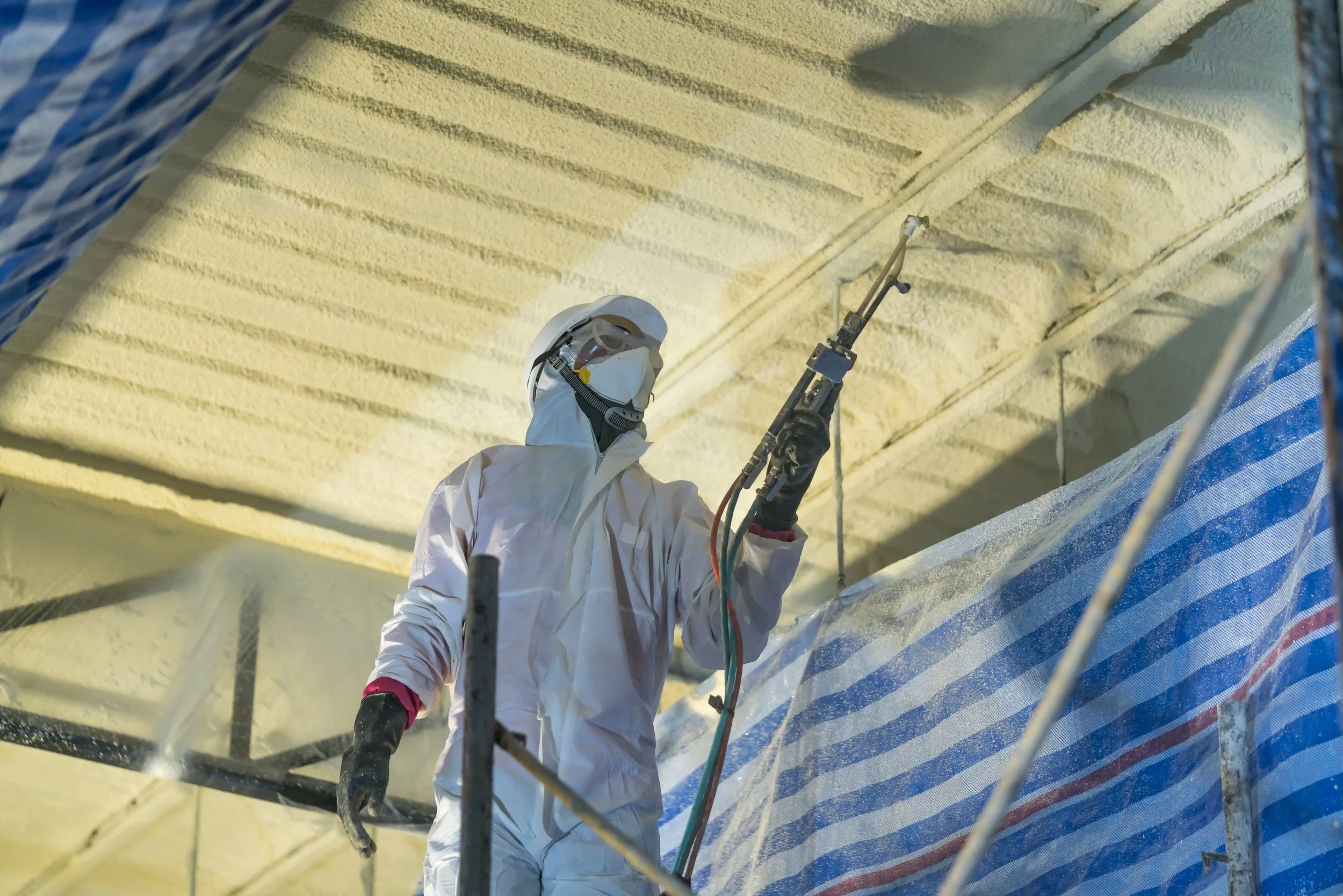
The best spray foam contractor for your home is one who can show you current licensing and insurance, explain the foam choice for each space, and give you a clear written quote. Ask who will do the work, how they check for moisture before spraying, and what their workmanship warranty covers. Compare those answers before choosing a bid.
If drafts, high energy bills, or uneven room temperatures led you here, start with an on-site assessment. A careful contractor should look at where air leaks and moisture may be coming from before recommending work. That matters more than a low price or a familiar foam brand.
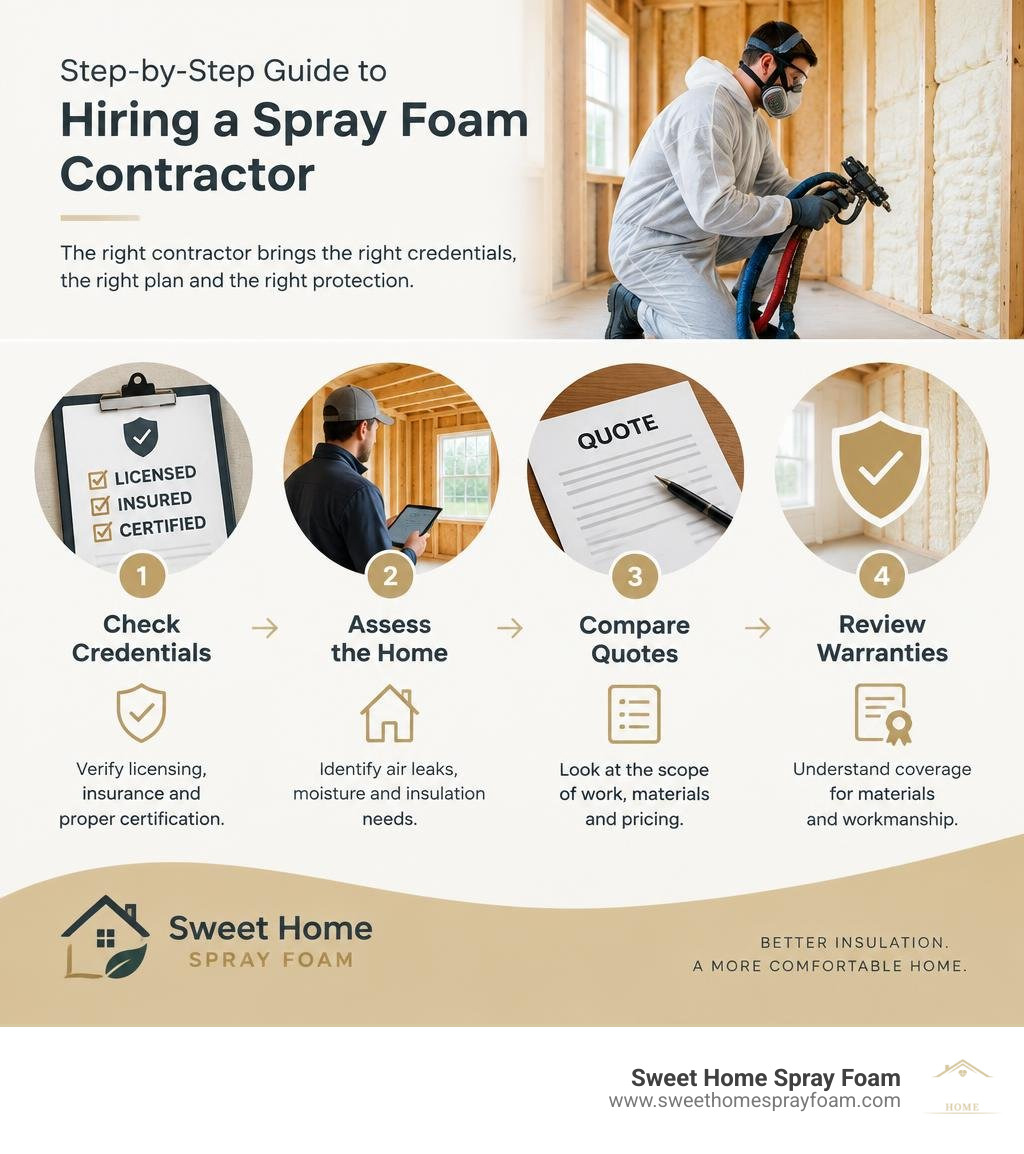
Essential Qualifications of the Best Spray Foam Contractor
Spray foam insulation is not a pre-manufactured commodity that arrives ready to install. It is a custom chemical reaction manufactured directly on-site inside your home or commercial building. When two chemical components—an "A-side" isocyanate and a "B-side" polyol resin blend—meet at the tip of an applicator's spray gun under high heat and pressure, they expand up to 100 times their liquid volume within seconds.
Because this chemical synthesis happens inside your living space, the installer's qualifications matter far more than the brand name on the outside of the chemical drums. Even the highest-grade raw materials will fail to cure properly if an untrained operator mixes them at the wrong temperature, sprays them onto damp lumber, or applies passes that are too thick.
When researching how to find the best spray foam insulation contractors near you, look for proof of specialized building science education and rigorous field training. Leading manufacturers provide extensive schooling, but true mastery is confirmed through verified professional certifications.
The gold standard for the industry is the Contractor Certification - Spray Polyurethane Foam Alliance (SPFA) program, which tests installers on equipment calibration, chemical safety, thermal barriers, and building codes. We ensure our installation crews possess deep building science knowledge, adhering to strict building performance benchmarks across Virginia.
Verifying Licensing, Insurance, and Certifications
Never allow an insulation company onto your property without verifying their legal credentials. A professional contractor should readily provide:
- State Trade Licensing: Proof of active, good-standing contractor licensing in Virginia.
- Comprehensive General Liability: Minimum coverage of $1,000,000 to protect your structure against accidental damage.
- Workers' Compensation Insurance: Comprehensive coverage protecting you from liability if a technician gets hurt on the job.
- Building Performance Credentials: Certifications from organizations like the Building Performance Institute (BPI), the Air Barrier Association of America (ABAA), or the SPFA.
Always verify these documents yourself through state registration databases. A reputable installer will never hesitate to hand you a certificate of insurance with your address listed as a certificate holder.
Why Moisture Testing and Substrate Prep Matter
One of the quickest ways to separate an amateur installer from an expert is observing how they prep your building assemblies. Spray foam requires a clean, dry, and structurally sound substrate to achieve a permanent mechanical bond.
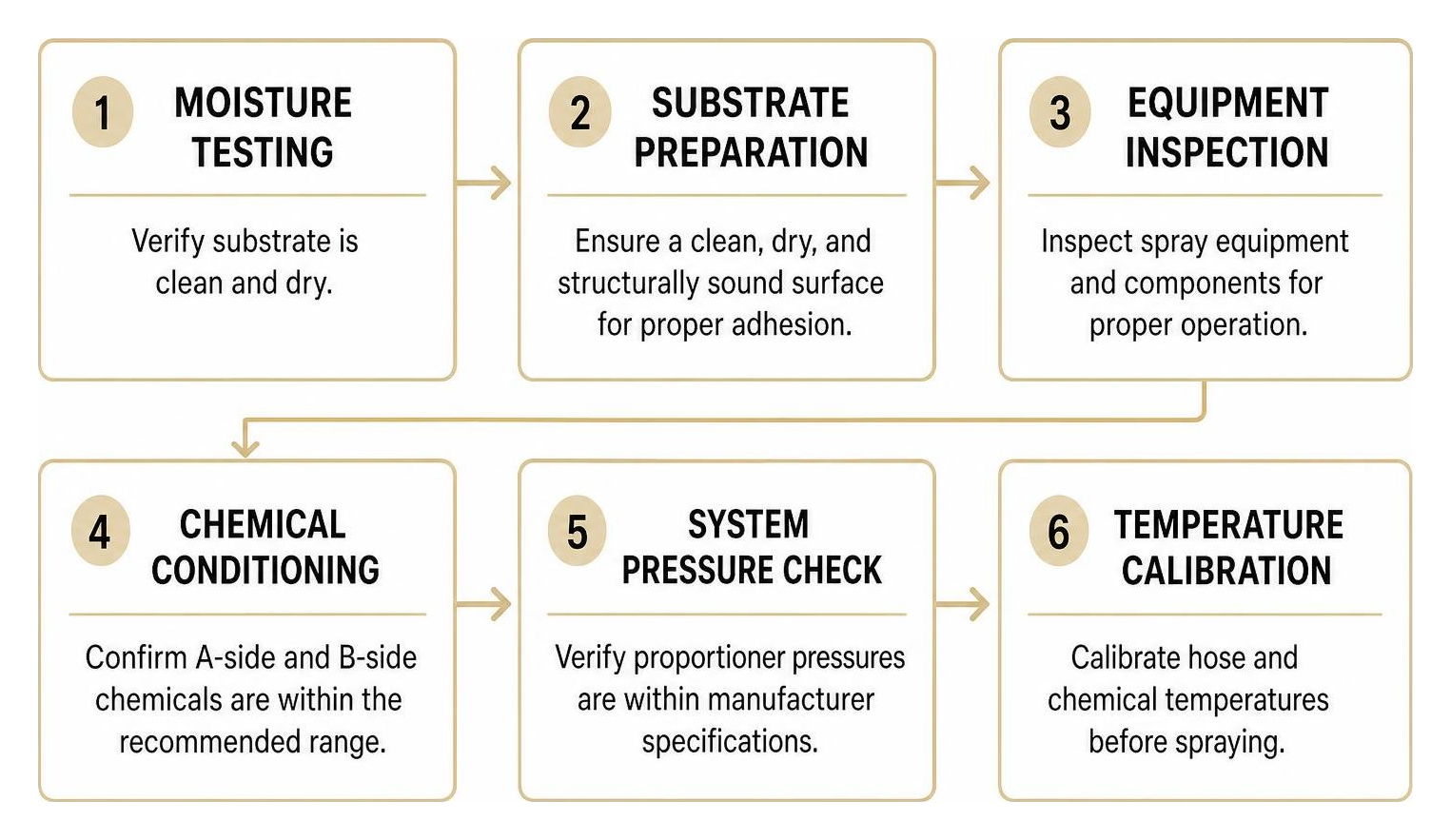
Moisture is the natural enemy of polyurethane foam. If liquid chemical is applied to wet framing studs, the moisture vaporizes instantly, creating steam bubbles that cause:
- Delamination: The foam pulls away from the wood, breaking the airtight seal.
- Off-Ratio Curing: Trapped moisture reacts with the A-side chemical, disrupting the proper chemical balance and leaving lingering odors or soft, squishy foam.
- Trapped Rot: Sealing moisture inside structural framing promotes hidden wood rot and mold growth.
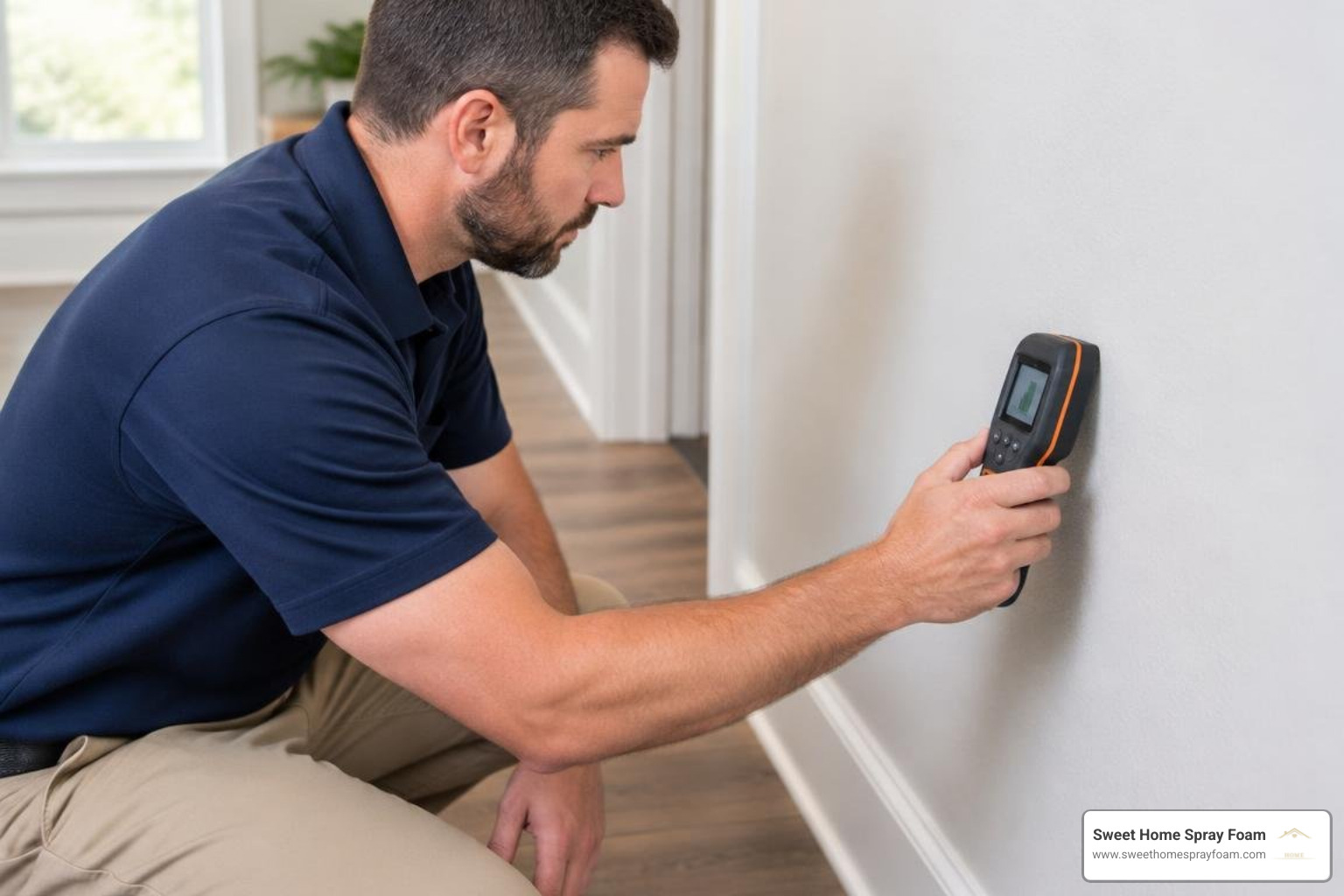
A qualified professional will always use a calibrated pin or pinless moisture meter to confirm that wood framing moisture content is below 18% (and ideally below 15%) before spraying. Technicians should also carry thermal imaging diagnostics to identify hidden air leaks, cold bridges, and dew points prior to spraying.
Foam Types and Application Standards Across Your Home
Selecting the right insulation material depends entirely on the specific building assembly, local humidity dynamics, and structural goals. Polyurethane insulation falls into two distinct categories: open-cell and closed-cell.
| Performance Characteristic | Open-Cell Spray Foam (Low Density) | Closed-Cell Spray Foam (Medium Density) |
|---|---|---|
| Density | ~0.5 lbs per cubic foot | ~2.0 lbs per cubic foot |
| R-Value per Inch | R-3.5 to R-3.8 | R-6.5 to R-7.0 |
| Cell Structure | Flexible, sponge-like open cells | Rigid, packed micro-bubbles with trapped gas |
| Vapor Retarder | Permeable (allows vapor diffusion) | Class II Vapor Retarder (impermeable at ~1.5") |
| Moisture Absorption | Can absorb water if exposed to bulk liquid | Repels liquid water completely |
| Structural Strength | Minimal added structural rack strength | Increases structural racking strength up to 200–300% |
| Best Uses | Interior wall cavities, attics, roof decks | Crawl spaces, basements, exterior walls, metal framing |
Before starting your project, consult our comprehensive attic spray foam insulation guide to understand how these thermal dynamics work in residential spaces.
Selecting the Best Spray Foam Contractor for Attic and Roofline Projects
The attic is the largest source of thermal energy loss in most homes. In older homes across Virginia, conditioned air leaks upward through unsealed ceiling penetrations—recessed lights, plumbing stacks, and chimney chases—pulling cold drafts into the lower living spaces via the stack effect.
When evaluating an attic spray foam insulation proposal, the key design decision is whether to create a traditional vented attic floor or an encapsulated, unvented roofline assembly.
To achieve optimal attic foam performance, contractors seal and insulate the underside of the roof deck rather than the attic flat. This brings your entire attic space inside the home's conditioned thermal envelope. Ductwork and HVAC units located in the attic are no longer subjected to 130°F summer heat or freezing winter temperatures, reducing your total HVAC energy load by up to 15% to 30%.
Insulating Walls, Crawl Spaces, and Metal Structures
Different building assemblies require distinct moisture management strategies:
- Exterior Walls: Achieving dense wall cavity sealing eliminates the drafts and cold spots typical of traditional batt insulation. It stops exterior wind-washing from degrading interior temperatures.
- Crawl Spaces and Basements: Vented crawl spaces in humid climates pull warm, damp air across cold ductwork, causing condensation, mold, and falling fiberglass batts. By upgrading crawl space moisture barriers with closed-cell spray foam applied to foundation walls and sealing the ground with heavy vapor barriers, you permanently isolate the living space from earth moisture and soil gases.
- Metal Buildings: Steel structures are notorious for interior sweating when temperature swings create heavy condensation on cold metal panels. Applying metal building spray foam insulation provides a continuous vapor barrier and eliminates thermal bridging along structural purlins.
If your property is a ground-up build, integrating new construction spray foam insulation during the framing stage allows for seamless whole-home thermal control before drywall is installed.
Evaluating Contractor Service Models and Project Pricing
How an insulation company structures its workforce directly impacts the final quality of your installation.

How to Choose the Best Spray Foam Contractor Over Low-Bid Subcontractors
When you hire an insulation company, ask this straightforward question: "Will the technicians spraying my home be your direct W-2 employees, or do you use subcontractors?"
Subcontracted crews are typically paid by the board foot or square foot rather than hourly. This pricing structure incentivizes speed over quality, increasing the risk of:
- Rushed passes that exceed maximum thickness guidelines, leading to internal foam scorching.
- Overlooked rim joists and hard-to-reach framing blind spots.
- Disregard for proper safety ventilation during the chemical cure phase.
Direct-hire crews operate under structured quality-assurance protocols. They track chemical batch lot numbers, document substrate moisture before every pass, and take personal responsibility for jobsite cleanup.
A reliable contractor should also provide a comprehensive workmanship warranty alongside the manufacturer's chemical lifetime warranty, guaranteeing that if foam separates from a stud or suffers from off-ratio curing, the company will return to repair or replace it at no cost.
Understanding Cost Drivers and Energy Rebates
Spray foam pricing is calculated on a board foot basis (one square foot of foam at one inch of thickness). The total project estimate reflects several interrelated variables:
- Volume and Thickness: The target R-value required by local Virginia building codes determines the thickness needed.
- Foam Type: Closed-cell foam uses more raw chemical resin per board foot than open-cell foam, making it roughly 30% to 50% more expensive per unit volume.
- Prep and Access: Complex cathedral ceilings, high roof peaks, tight crawl spaces, and historical home retrofits require extra masking, scaffolding, and surface prep.
- Existing Insulation Removal: Vacuuming out contaminated, wet, or degraded fiberglass and cellulose before spraying adds labor and disposal fees.
Homeowners can often offset these costs through utility incentives, state energy programs, and federal tax credits (such as the Inflation Reduction Act's Section 25C Energy Efficient Home Improvement Credit). We help our clients identify and file for all available utility rebates across our service areas, including Richmond, Charlottesville, Lynchburg VA, Roanoke VA, and Smith Mountain Lake.
Critical Red Flags to Watch for Before Signing
Keep an eye out for these warning signs during your initial consultations:
- The "Ballpark Guess" Quote: The contractor provides a price over the phone without conducting an on-site evaluation of your roofline, crawl space access, or framing conditions.
- Unlabeled or Expired Chemical Drums: The installer cannot provide lot numbers, manufacturer technical data sheets (TDS), or safety data sheets (SDS) for their chemical components.
- No Safety and Evacuation Protocols: The contractor claims you can remain in the home during the spray without proper containment, negative-air exhaust fans, or a standard 24-hour re-entry period.
- Missing Diagnostic Testing: The installer fails to measure lumber moisture levels before spraying and does not offer pre- or post-installation testing.
- Skipping Thermal Barriers: In accessible attics or living areas, building codes mandate an approved 15-minute thermal barrier (such as drywall or certified intumescent paint) over exposed foam. Contractors who claim this is unnecessary are cutting corners on fire safety.
Frequently Asked Questions About Hiring a Spray Foam Contractor
How can I verify the quality and freshness of the spray foam chemicals?
Every chemical container delivered to your property should have clean, intact manufacturer labels clearly stating the product name, batch number, production date, and shelf life. Most B-side polyol resins have a shelf life of 6 to 12 months when stored within recommended temperature ranges (typically 60°F to 80°F).
You have every right to inspect the drums inside the contractor's mobile rig. If a barrel is rusted, unlabeled, or past its expiration date, do not allow the crew to spray it in your home.
Is open-cell or closed-cell spray foam better for residential retrofits?
Neither foam is universally better; their suitability depends entirely on the application:
- Open-cell foam is ideal for above-grade interior wall cavities, attics, and unvented rooflines where structural movement is common and maximum cost-effective thickness is easily accommodated. It expands rapidly into tiny framing crevices and provides excellent sound dampening.
- Closed-cell foam is essential for below-grade applications, crawl space foundation walls, exterior wall sheathing, pole barns, and spaces where moisture or bulk water intrusion is a risk. It adds structural racking strength to framed walls and acts as an impermeable vapor barrier.
Review our guide comparing traditional vs spray foam insulation to see how both types compare to older fiberglass or cellulose materials.
What tests should a contractor perform before and after installation?
A thorough installation process includes diagnostic testing at each phase:
- Substrate Moisture Metering: Conducted before application to confirm framing lumber moisture is safely below 18%.
- Ambient and Chemical Temperature Checks: Ensuring chemical drums, hoses, and substrate surfaces meet the manufacturer’s processing window.
- Core Sampling and Density Checks: Extracting small test plugs from installed foam passes to verify proper cell structure, adhesion, and core density.
- Infrared Thermography Scan: A post-install thermal camera walk-through to ensure continuous coverage without voids or thin spots.
- Blower Door Air Leakage Testing: Measuring whole-house air changes per hour (ACH) before and after work to confirm air-sealing performance.
Conclusion
Upgrading your home with spray polyurethane foam is one of the most effective long-term investments you can make in your property's energy efficiency, comfort, and structural durability. However, because spray foam is manufactured directly on your walls and roof deck, your results depend entirely on the skill, knowledge, and integrity of your installation team.
At Sweet Home Spray Foam, we make the entire process clear, safe, and stress-free. We install high-performance spray foam insulation and provide concrete lifting solutions for residential and commercial structures throughout Virginia, including Richmond, Roanoke VA, Lynchburg VA, and Smith Mountain Lake.
With upfront pricing, dedicated in-house crews, and guidance on local energy rebates, we deliver permanent thermal performance without the hassle. Explore our insulation education resources or read our budget spray foam buyer guide to plan your next home performance project with confidence.