
What Does Polyurethane Concrete Leveling Cost in 2026?

Expect to pay $5 to $25 per square foot for polyurethane foam concrete lifting in 2026. Many jobs cost $1,000 to $3,000, though a deep void or hard-to-reach slab can cost more. The price depends on how much concrete needs lifting, how far it has sunk, and how much foam the job requires.
Polyurethane foam lifting is a modern, high-performance solution that adds minimal weight beneath the slab and can be ready for use in about 15 to 30 minutes. For a sunken driveway or walkway that has become a trip hazard, a site-specific quote is the best way to compare your options.
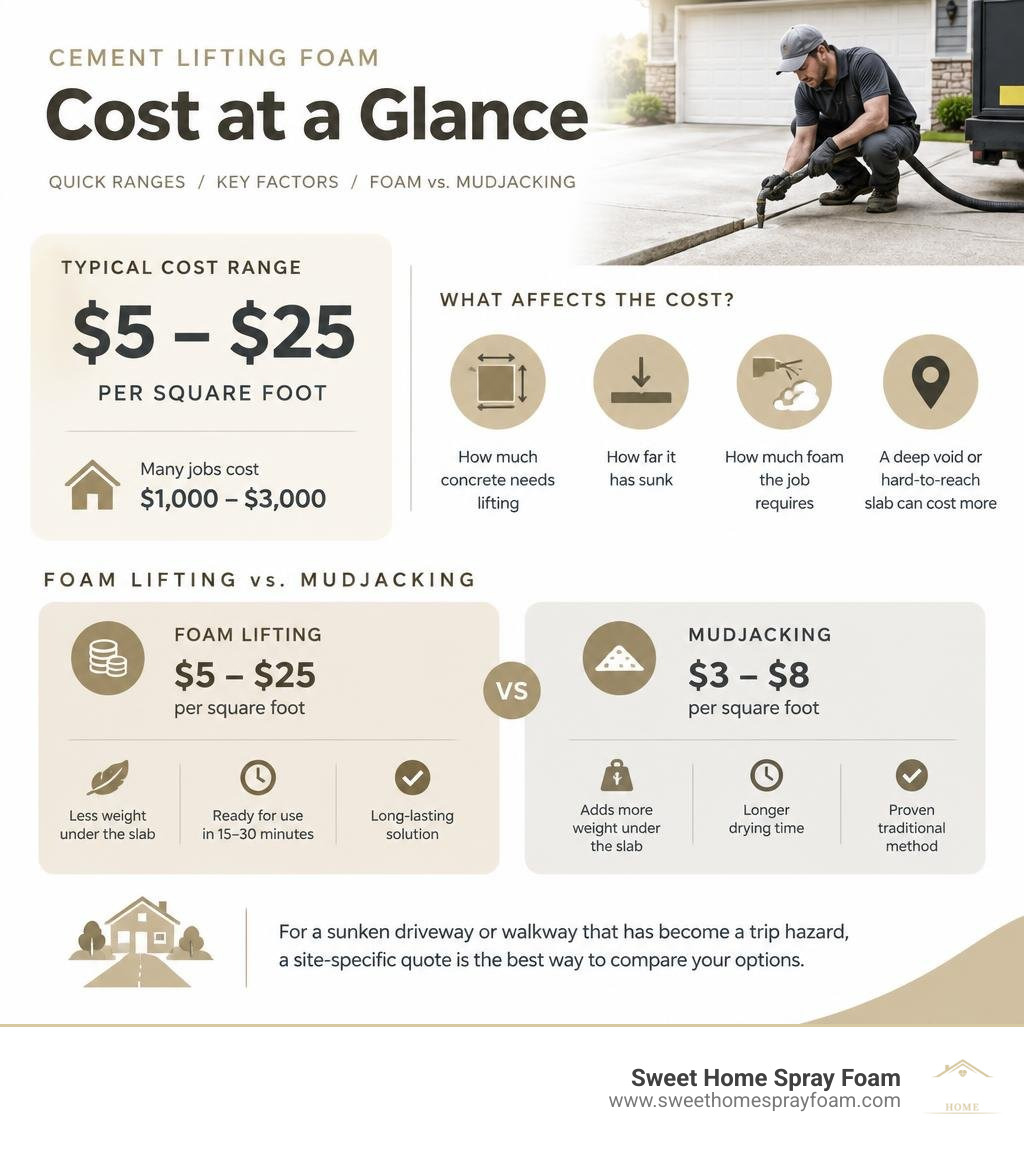
Understanding 2026 Cement Lifting Foam Cost Ranges
When budgeting for home repairs, getting a clear breakdown of pricing makes all the difference. Across Virginia—from Richmond and Charlottesville to Lynchburg and Roanoke—homeowners dealing with sunken walkways, tilted steps, and uneven garage entrances often ask what a realistic cement lifting foam cost looks like.
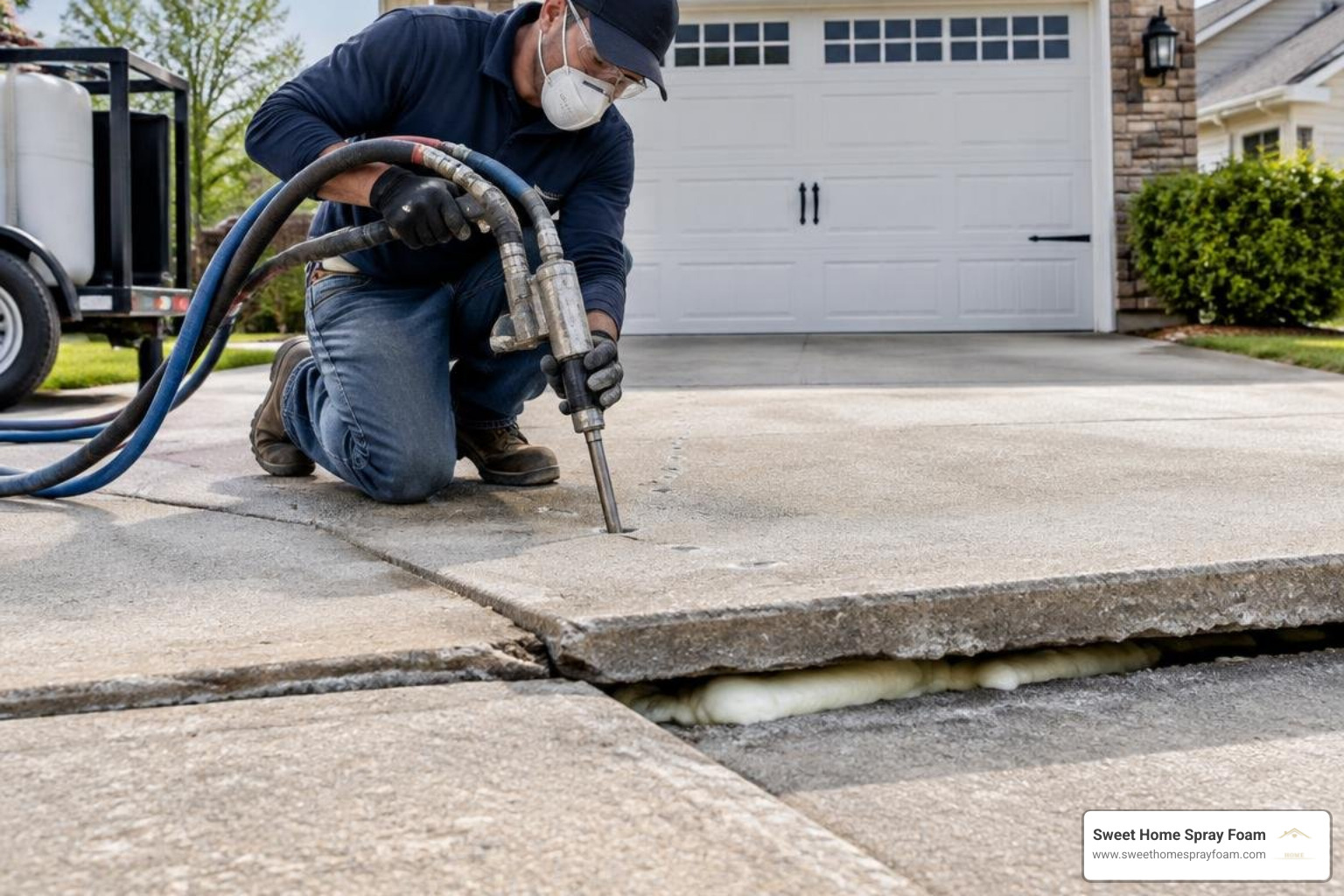
On a national level, total concrete leveling projects generally fall between $791 and $3,615 across various techniques. However, high-density polyurethane foam injection (frequently called polyjacking) typically sits on the premium end of that scale, ranging from $1,015 to $8,100+ for complex structural slabs.
Here is how the per-unit figures break down:
- Unit Price: Polyurethane foam leveling ranges between $5 and $25 per square foot, depending on slab depth and thickness.
- Standard Projects: Most residential repairs land comfortably in the $1,000 to $3,000 total project range.
- Raw Material Allocation: Material charges alone for polyjacking typically run $400 to $900.
- Minimum Service Fees: Most professional contractors implement a trip minimum of $300 to $2,000 to cover fuel, mobilization, equipment calibration, and crew overhead.
To understand how these numbers apply to specific configurations, check out our comprehensive cement slab lifting guide for step-by-step insight into residential applications.
Typical Cement Lifting Foam Cost by Project Type
The overall size and purpose of your slab play significant roles in the final invoice. Driveways and garage floors must support heavy vehicular loads, requiring higher foam density and larger material volumes than a decorative garden walkway.
| Project Type | Typical Square Footage | Average Cost Range (Polyurethane Foam) |
|---|---|---|
| Sidewalk / Walkway (1–3 slabs) | 30 – 100 sq. ft. | $600 – $1,500 |
| Front Porch / Stoop | 40 – 120 sq. ft. | $750 – $2,200 |
| Outdoor Patio | 120 – 350 sq. ft. | $1,000 – $3,200 |
| Standard Driveway (Settled Sections) | 200 – 600 sq. ft. | $1,215 – $5,670 |
| Two-Car Garage Floor | 400 – 600 sq. ft. | $1,215 – $6,075 |
| Pool Deck Realignment | 150 – 500 sq. ft. | $1,400 – $4,500 |
As shown above, lifting a sunken driveway typically costs between $1,215 and $5,670, while a settled garage floor runs $1,215 to $6,075. The variation within each project type depends largely on how much open space exists beneath the concrete.
Evaluating Regional and Site-Specific Cement Lifting Foam Cost Drivers
No two concrete slabs sink under identical conditions. Several physical and geographical factors dictate where your quote falls within the $5 to $25 per square foot spectrum:
- Void Depth and Cavity Volume: If a washed-out downspout left a 12-inch hollow cavity beneath your patio, it requires significantly more expanding polymer than a slab that settled just an inch onto compacted dirt.
- Slab Thickness & Heavy Loads: Commercial slabs and garage floors are poured thicker (5 to 6+ inches) than walkways (3.5 to 4 inches), demanding higher lifting force and specialized high-density formulations.
- Accessibility: Bringing equipment lines around tight landscaping or behind fenced pool areas adds labor time compared to a wide-open front driveway.
- Soil Instability: Loose backfill or shifting clay soils may require sub-surface stabilization before lifting the top slab.
- Local Labor & Metro Adjustments: Metro areas with higher living and transportation expenses can see labor adjustments of 12% to 18% compared to rural areas.
Homeowners can explore an online foundation repair cost calculator to see how different structural methods and regional factors impact baseline budgets.
Polyurethane Foam Leveling Costs and Long-Term Value
When evaluating concrete leveling options, homeowners often want to understand what drives the cost of polyurethane foam lifting. Examining the mechanical advantages reveals why high-density foam represents a premium solution—and why it provides exceptional long-term value.
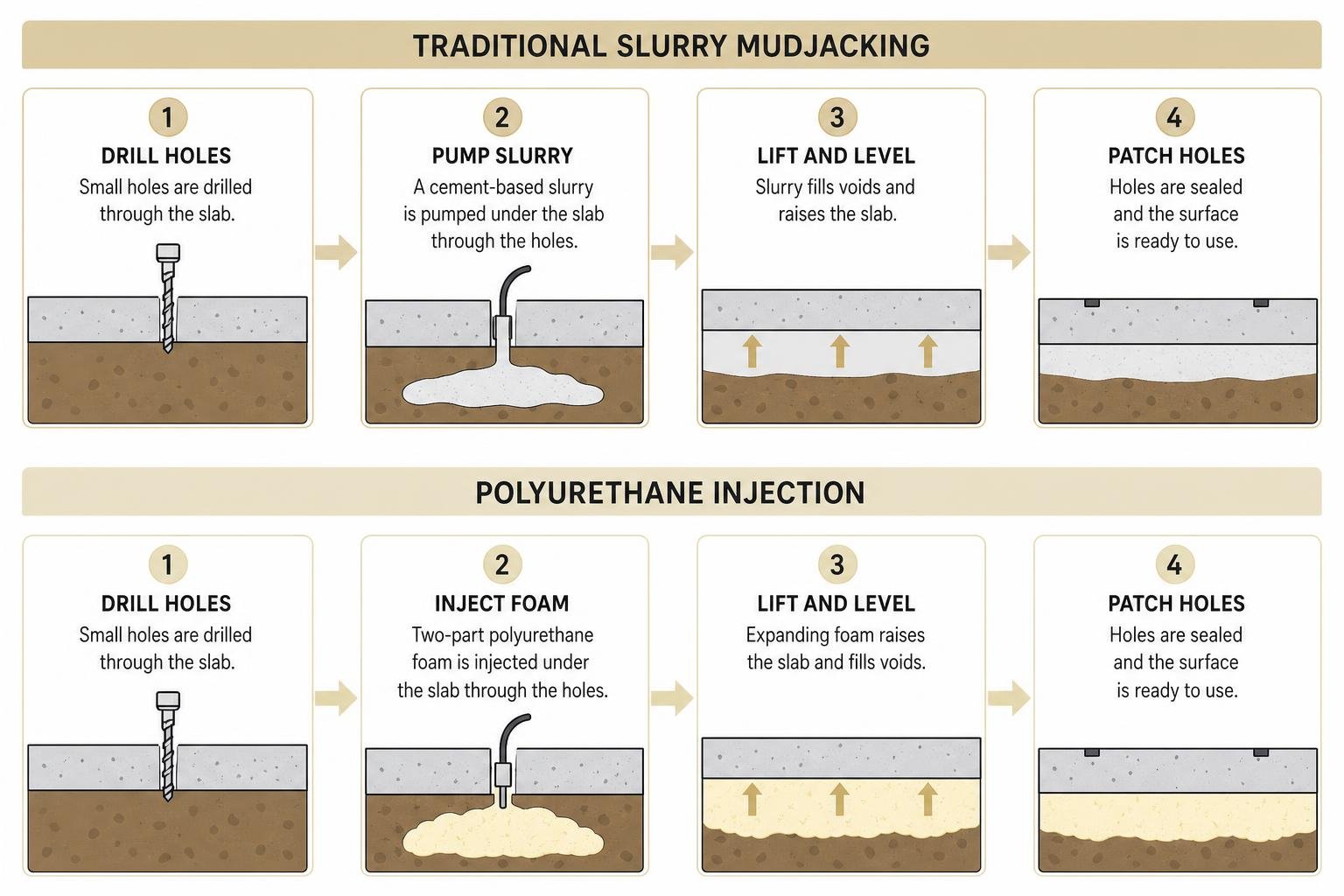
Why Polyurethane Foam Has Upfront Costs
The initial cost of polyjacking comes down to chemistry and specialized machinery:
- Engineered Polymers: Polyurethane is a specialized two-part closed-cell polymer formulated to expand rapidly and hold high compressive strength.
- Precision Mobile Equipment: Spray rigs feature heated proportioners and computer-calibrated injection guns to ensure proper expansion ratios.
- Micro-Invasive Installation: Foam requires drill holes that are only 5/8 of an inch in diameter (about the size of a dime).
Long-Term Value and ROI of Foam Leveling
Polyurethane foam solves several root causes of concrete settlement:
- Minimal Weight on Weak Soils: Polyurethane foam weighs approximately 3.5 to 5 pounds per cubic foot, making it exceptionally lightweight. Adding heavy fill material on top of already failing, soft soil often causes the slab to sink again years down the road.
- Hydrophobic Water Barrier: Closed-cell polyurethane is water-impervious. It does not wash away during heavy rainstorms or break down during harsh freeze-thaw cycles.
- Rapid Cure Times: Polyurethane cures within 15 to 30 minutes, allowing immediate vehicular traffic.
- High ROI and Curb Appeal: Eliminating tripping hazards and correcting slopes protects property value and prevents water from pooling near your foundation.
For critical areas next to basement walls, utilizing foam for stabilizing concrete lifting foundations prevents chronic moisture issues and shifting support footers.
Key Factors That Influence Your Concrete Foam Leveling Estimate
When our team evaluates a sunken slab, we review several factors beyond simple surface dimensions to build an accurate estimate:
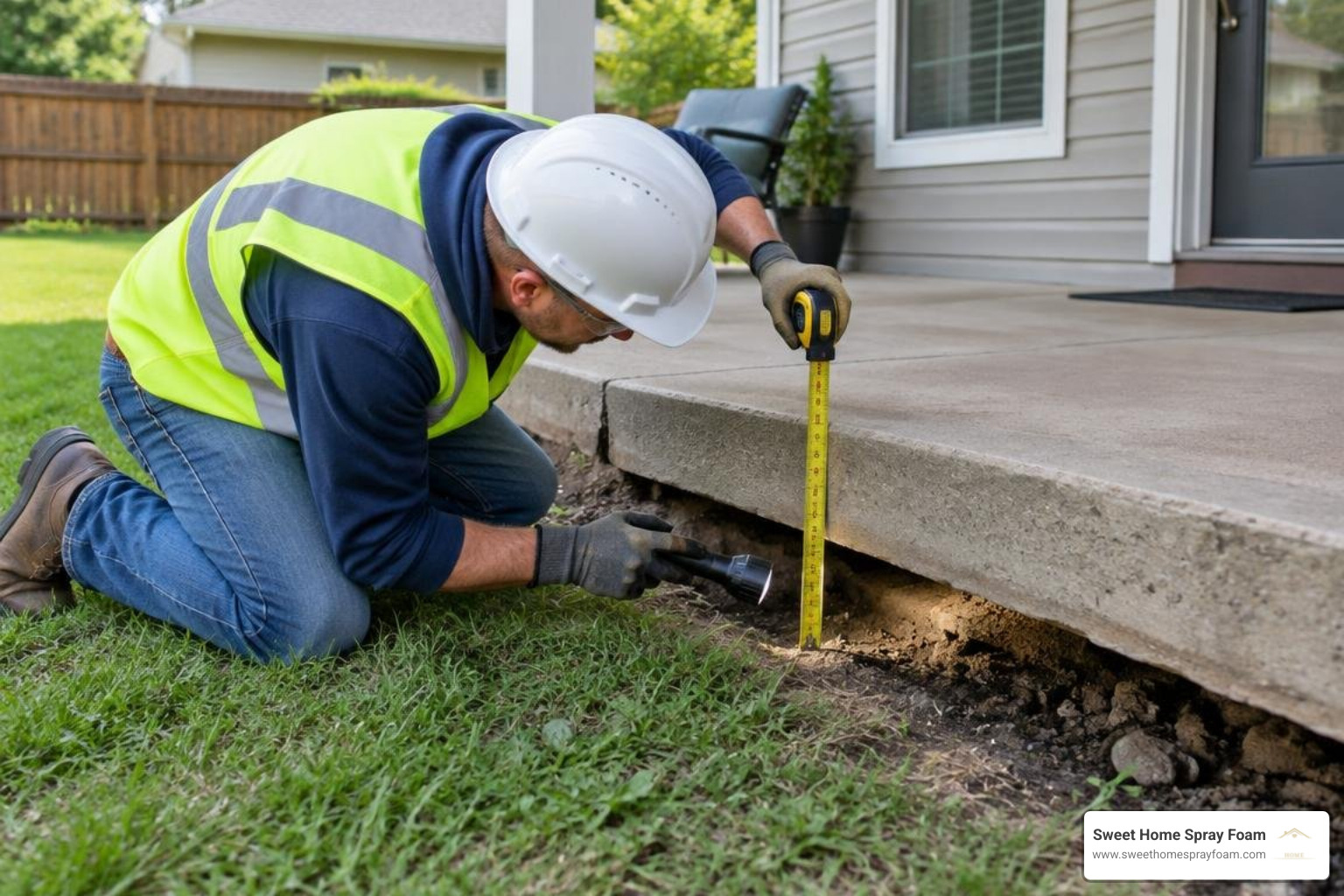
- Slab Surface Area: While square footage sets the baseline, it is calculated alongside settlement depth to determine the volume of foam needed.
- Injection Port Density: Highly uneven, cracked sections need more injection ports to raise each segment evenly without causing new structural cracks.
- Crack Stitching and Joint Sealing: Proper sealing stops water from seeping back under the slab. Combining joint sealing with foam injection helps protect the repair.
- Site Preparation: Moving vehicles, trimming overgrown root networks, or clearing mud from the joint line ensures smooth injection work.
- Permitting Considerations: Simple sidewalk or driveway lifts rarely require permits, but structural foundation stabilization or commercial ramps may involve local building codes.
Working with licensed concrete leveling contractors ensures that lifting pressures are managed safely to protect your slabs from cracking during injection.
How to Budget and Save on Polyurethane Foam Lifting
Repairing uneven concrete should not break the bank. Here are practical ways to manage costs while achieving durable results:
- Act at the First Sign of Settling: A concrete slab that has sunk half an inch takes far less polymer to level than one that has dropped three inches into an expanded void. Catching it early prevents cracking and lowers material costs.
- Bundle Slabs Together: Because contractor mobilization makes up a noticeable portion of the base charge, fixing your front walkway, back patio, and settled driveway apron during the same visit offers substantial savings compared to scheduling three separate service calls.
- Clear the Work Area: Save labor time by clearing outdoor furniture, planters, trash cans, and vehicles before the crew arrives with the injection hoses.
- Compare Written Estimates Carefully: Ensure quotes specify hole size, cleanup procedures, joint sealing options, and warranty coverage so you can compare equal services.
- Hire Local Professionals: Choosing a reputable service for cement lifting near me avoids extra travel fees from long-distance providers.
Frequently Asked Questions About Concrete Leveling Costs
How long does polyurethane foam concrete leveling last?
High-density closed-cell polyurethane foam is chemically inert and does not degrade in soil moisture. Once cured, it typically lasts for the remaining operational life of the concrete slab itself. Because it resists water erosion and will not wash away, it provides stable support for decades as long as underlying drainage issues are addressed.
What is the typical minimum service charge for foam concrete lifting?
Most professional concrete foam lifting companies set a minimum service charge ranging between $300 and $1,000. This charge covers technician travel, equipment setup, power mobilization, hole drilling, and baseline chemical quantities.
Conclusion
Uneven, sunken concrete does not always require an expensive, messy tear-out and replacement. Polyurethane foam leveling provides a fast, clean, and durable way to restore your concrete surfaces at roughly half the cost of pouring new slabs.
At Sweet Home Spray Foam, we believe in straightforward communication, clear upfront pricing, and long-lasting repair methods. Whether you have a settled walkway in Lynchburg, a sinking driveway in Richmond, or an uneven patio in Charlottesville or Roanoke, our experienced team is here to help.
Contact our certified concrete lifting foam experts today to schedule your free, no-obligation onsite inspection and get an accurate estimate for your home.