
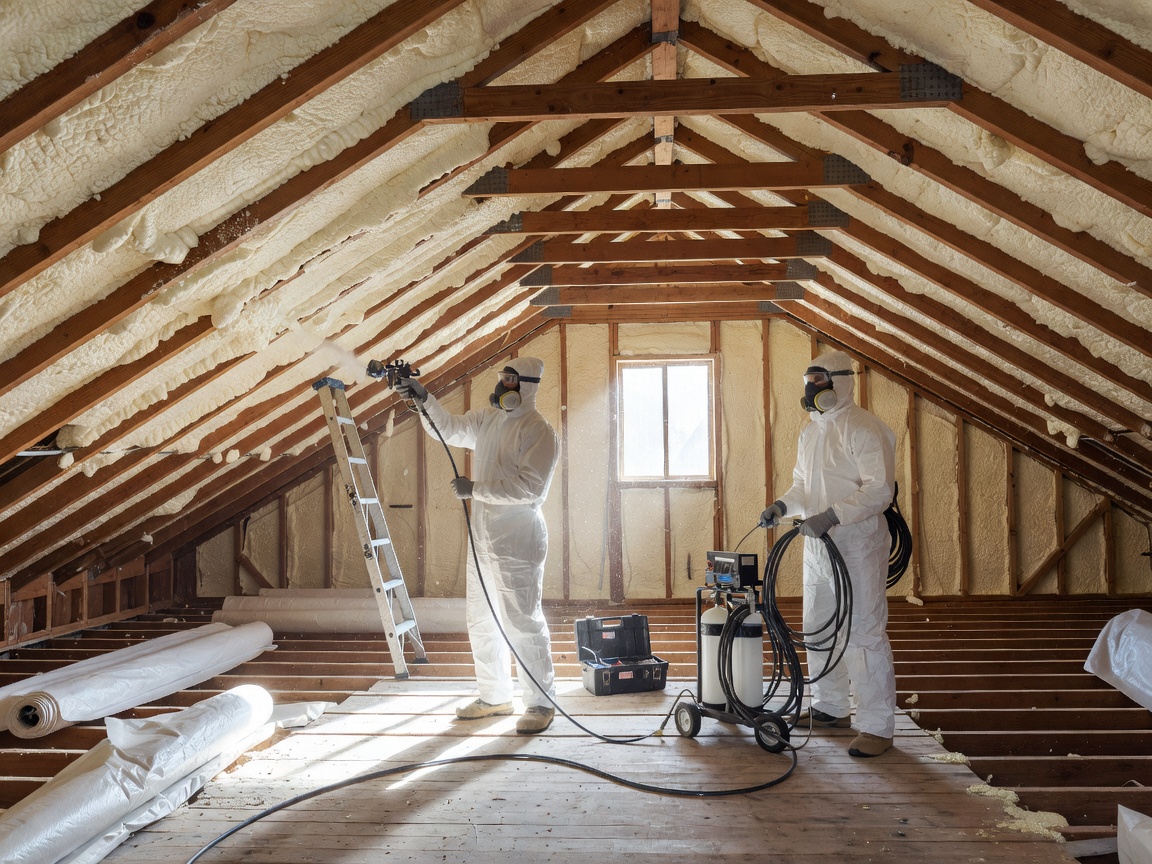
Find Reliable Attic Spray Foam Insulation Near You
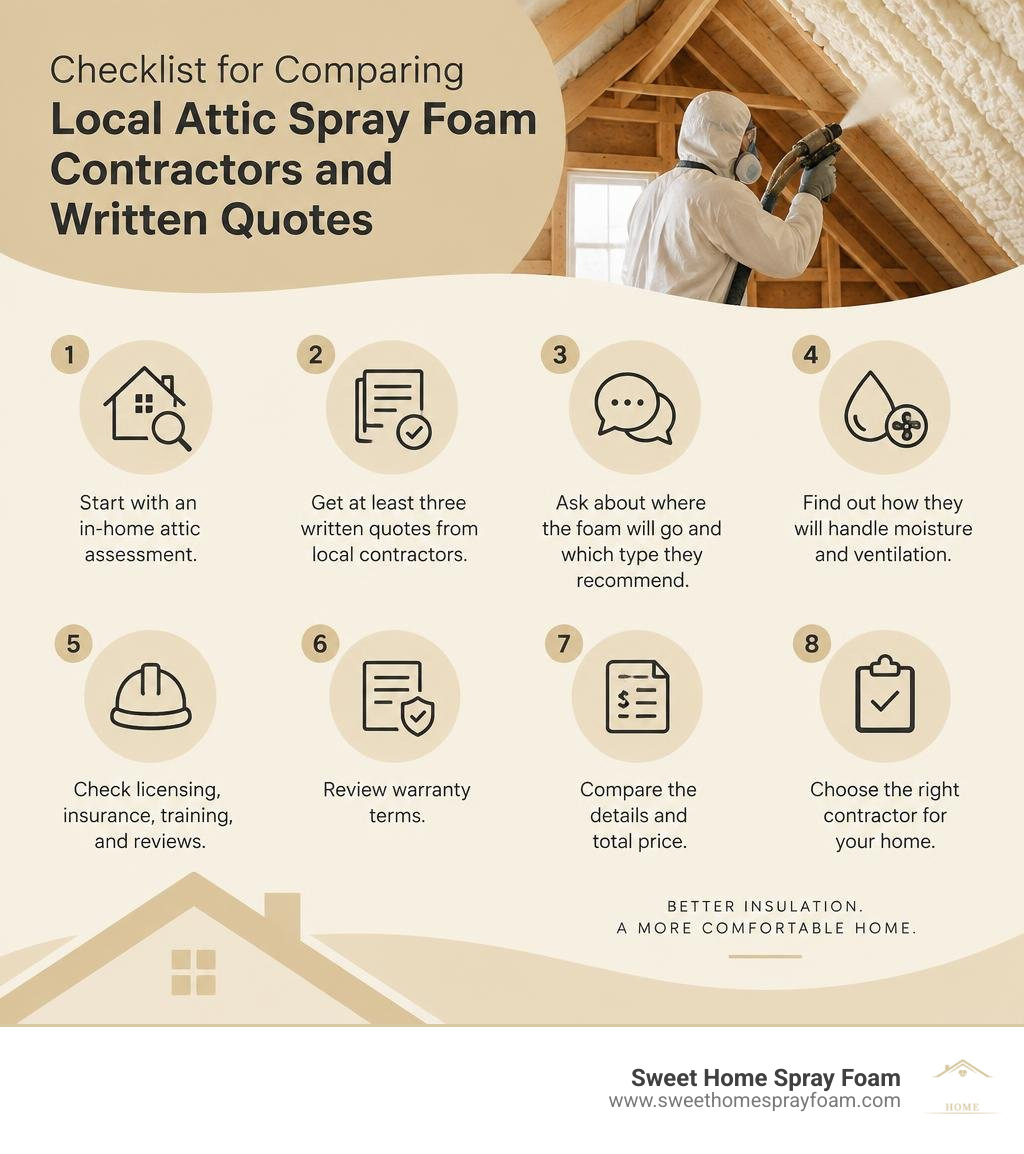
Start with an in-home attic assessment, then get at least three written quotes from local spray foam contractors. Ask each contractor to explain where the foam will go, which type they recommend, how they will handle moisture and ventilation, and what prep work the price includes. Check licensing, insurance, training, reviews, and warranty terms before you hire.
If your Virginia home has high energy bills, drafts, or rooms that never feel quite right, attic air leaks may be part of the problem. Spray foam can seal those leaks while adding insulation. The right plan depends on your attic, not just the product. According to the U.S. Department of Energy, air leaks can account for 25% to 40% of the energy used for heating and cooling a typical home, which is why sealing the attic is such a high-impact upgrade.
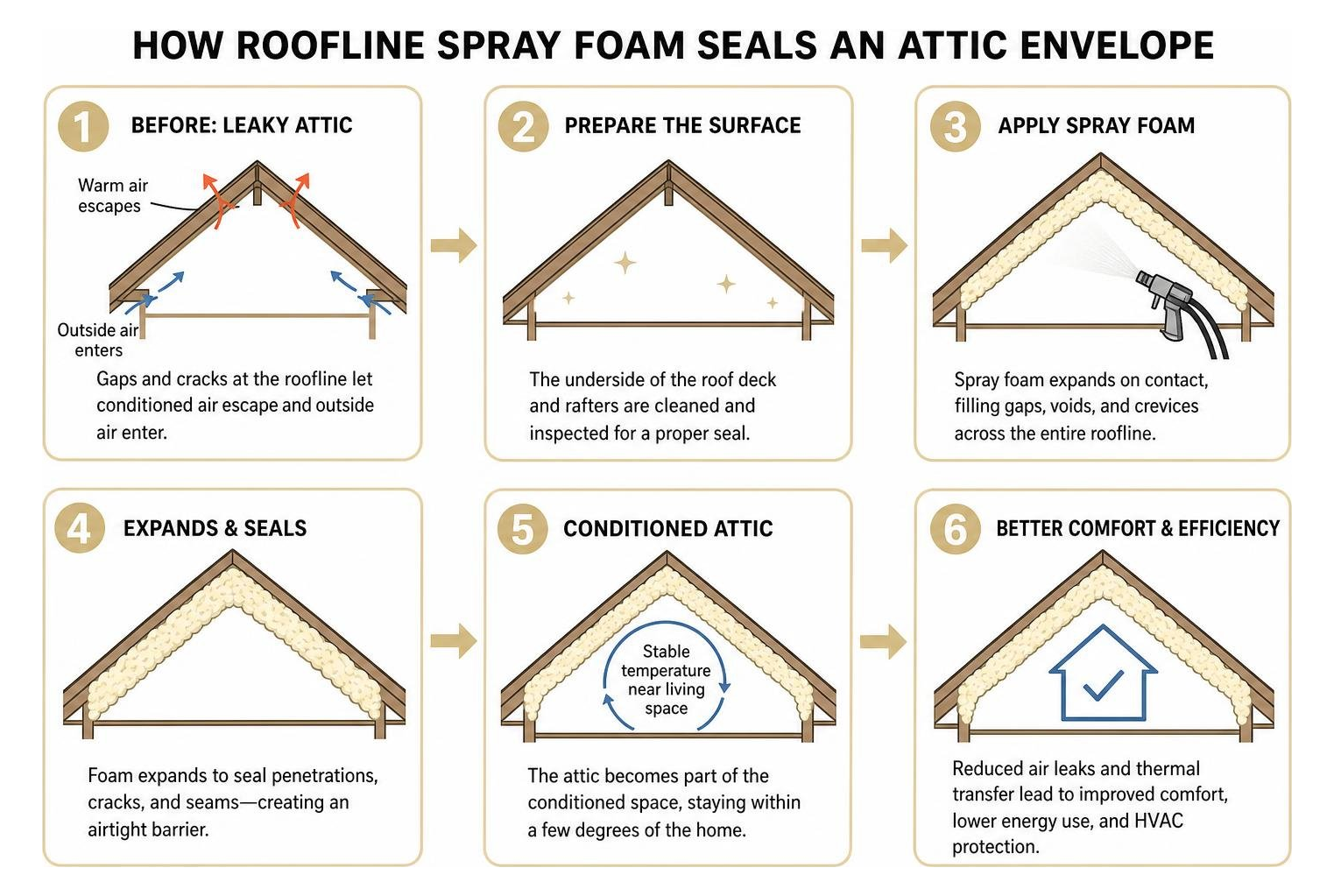
When homeowners search for attic foam insulation near me, they are often wrestling with uncomfortable rooms, spikes in their monthly heating and cooling bills, and an HVAC system that seems to run constantly. In most homes across Richmond, Charlottesville, Lynchburg, and Roanoke, the culprit sits right above your ceiling. The stack effect causes warm indoor air to rise and escape through hidden attic gaps in winter, pulling cold drafts in at the ground level. In the summer, scorching attic heat radiates downward, turning your top floor into a sauna. Standard insulation materials slow down conductive heat, but air leakage and thermal bridging still allow conditioned air to bypass your defenses. High-performance spray foam insulation addresses both thermal transfer and air leakage in one comprehensive step.
Understanding Spray Foam Attic Insulation and How It Works
Spray polyurethane foam expands on contact to fill gaps, voids, and crevices that other insulation materials cannot seal. Instead of resting loosely on the attic floor, spray foam can be applied directly to the underside of the roof deck.
Applying foam to the roofline brings your attic inside the conditioned thermal envelope of your home. Instead of having an unconditioned attic that reaches 130 degrees Fahrenheit in a Virginia summer, your attic temperature stays within a few degrees of your living space. This protects HVAC equipment and ductwork housed in the attic from extreme thermal stress, lowering energy demand and extending equipment life.
Choosing the right material begins with evaluating the best spray foam insulation for attic spaces, taking into account your home's roof construction, moisture levels, and storage needs.
| Performance Metric | Open-Cell Spray Foam | Closed-Cell Spray Foam |
|---|---|---|
| Density | Approx. 0.5 lbs/cu. ft. | Approx. 2.0 lbs/cu. ft. |
| R-Value per Inch | R-3.6 to R-3.8 | R-6.5 to R-7.0 |
| Expansion Rate | High (expands up to 100x) | Moderate (expands up to 30x) |
| Moisture Permeability | Vapor-permeable (breathable) | Vapor-impermeable (built-in vapor barrier) |
| Structural Rigidity | Flexible, soft texture | Hard, adds structural strength |
| Primary Attic Application | Rooflines, rafters, sound deadening | Roof decks, damp areas, moisture-prone zones |
Open-Cell vs. Closed-Cell Foam Performance
Open-cell spray foam uses tiny, pliable cells that remain open to create an expansive, lightweight cushion. Because it expands rapidly to fill deep rafter cavities, it excels at dampening outdoor sound and creating an airtight seal at an economical price point. Its water-blown composition provides natural breathability, allowing moisture vapor to dry without getting trapped inside wooden framing.
Closed-cell spray foam features dense, tightly packed microscopic cells containing specialized blowing agents. This structure gives it exceptional thermal resistance per inch and prevents liquid moisture and water vapor from passing through. In roofline assemblies, closed-cell foam adds significant racking strength to the roof deck while acting as an air and vapor barrier.
Signs Your Attic Requires an Insulation Upgrade
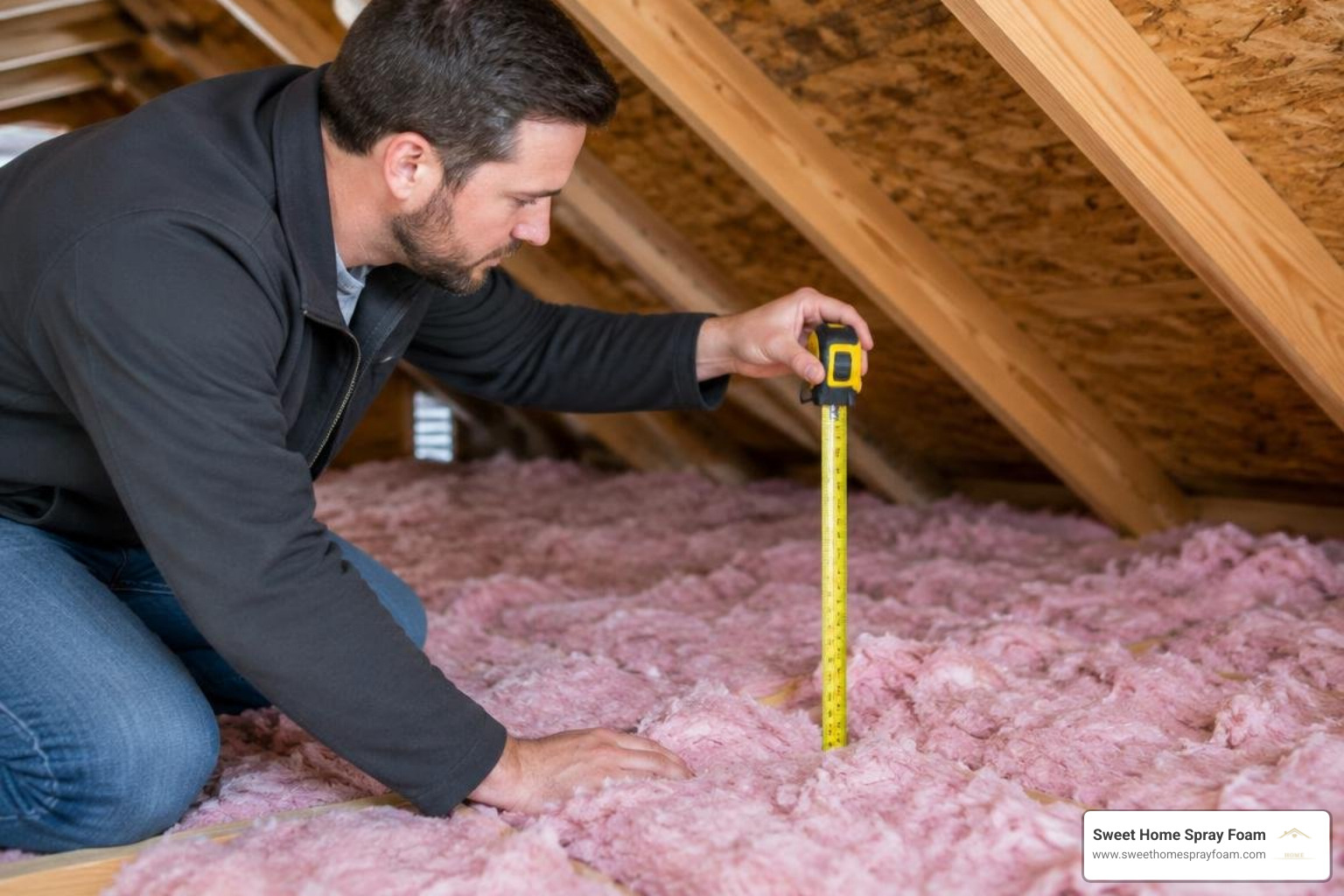
Homeowners frequently live with underperforming insulation for years without realizing why their house feels uncomfortable. If your attic has insufficient insulation depth or air leaks, you are likely losing substantial energy and money every month.
Common warning signs that your attic needs attention include:
- Uneven Room Temperatures: Upper floors feel hot in the summer and chilly in the winter compared to ground-level rooms.
- Ice Dam Formation: In cold winter snaps, heat escaping into the attic melts snow on your roof deck, creating ice ridges along the eaves that back up under shingles.
- Drafty Ceilings and Recessed Lights: Air leaking around light fixtures, attic hatches, and ceiling junctions indicates an unsealed attic floor.
- HVAC Systems Running Constantly: Heating and cooling equipment struggles to reach the thermostat setpoint during temperature extremes.
Comprehensive energy upgrades frequently pair attic improvements with lower-level air sealing, so evaluating attic and crawl space insulation together helps balance pressure throughout the entire structure.
Cost Factors and Grants for Attic Foam Insulation
The average investment for attic insulation projects varies based on property conditions, with whole-attic spray foam retrofits tailored to specific home requirements. Key variables that impact your investment include total square footage, roof pitch, existing insulation removal, and accessibility.
In homes with major air leakage or neglected insulation, sealing and insulating the attic can produce heating and cooling savings of up to 50% under optimal whole-home conditions. To plan your budget accurately, review our detailed cost to spray foam attic breakdown.
Maximizing 2026 Energy Rebates and Incentives
Taking advantage of current incentives can lower your upfront investment:
- Federal Tax Credits (Inflation Reduction Act): Homeowners can claim Energy Efficient Home Improvement Credits (Section 25C) covering up to 30% of eligible insulation and air-sealing project costs, up to annual caps. Full program details are available directly from the U.S. Department of Energy.
- Utility Rebates: Local electric and natural gas utilities across Virginia offer cash rebates for comprehensive air sealing and insulation upgrades that meet Energy Star standards.
- Seasonal Scheduling: Booking work during moderate spring or autumn weather often unlocks flexible contractor scheduling.
Review our comprehensive attic insulation guide 2026 for updated details on claiming regional incentives.
How to Select the Right Contractor for Your Home
Selecting an experienced contractor ensures that chemical proportions, ventilation strategies, and thermal boundaries are executed safely and effectively. Reputable insulation contractors conduct thorough in-home evaluations rather than giving phone estimates based solely on square footage.
To ensure your home receives quality workmanship, consult our guide on finding the best spray foam insulation contractors near you before signing any agreement.
How to Vet Local Attic Foam Insulation Installers
When vetting prospective installers in Central and Southwest Virginia, verify these key qualifications:
- Industry Certifications: Look for installers certified by the Spray Polyurethane Foam Alliance (SPFA) or Building Performance Institute (BPI).
- Diagnostic Testing Capability: Ask if they utilize blower door tests or thermal imaging cameras to verify air sealing performance.
- Written Warranties: Secure clear workmanship and manufacturer warranties protecting against material delamination or settling.
- Local References: Check verified reviews from homeowners in your immediate area, such as our regional attic insulation expertise in Lynchburg.
Key Red Flags When Sourcing Attic Foam Insulation
Protect your home by watching for these warning signs:
- Lack of State Licensing and Insurance: Never hire an installer who cannot provide an active contractor license and comprehensive liability insurance.
- Skipping Air Sealing: Applying foam without addressing major thermal bypasses, wiring chases, or plumbing stacks compromises thermal performance.
- Ignoring Ventilation Needs: Converting an attic to an unvented assembly without checking combustion appliance venting can create indoor air hazards.
- High-Pressure Sales Tactics: Avoid companies demanding same-day signatures or refusing to detail prep work in writing.
The Attic Foam Installation Process and Timeline
A professional attic insulation process follows disciplined stages to ensure safety, quality, and complete thermal coverage:
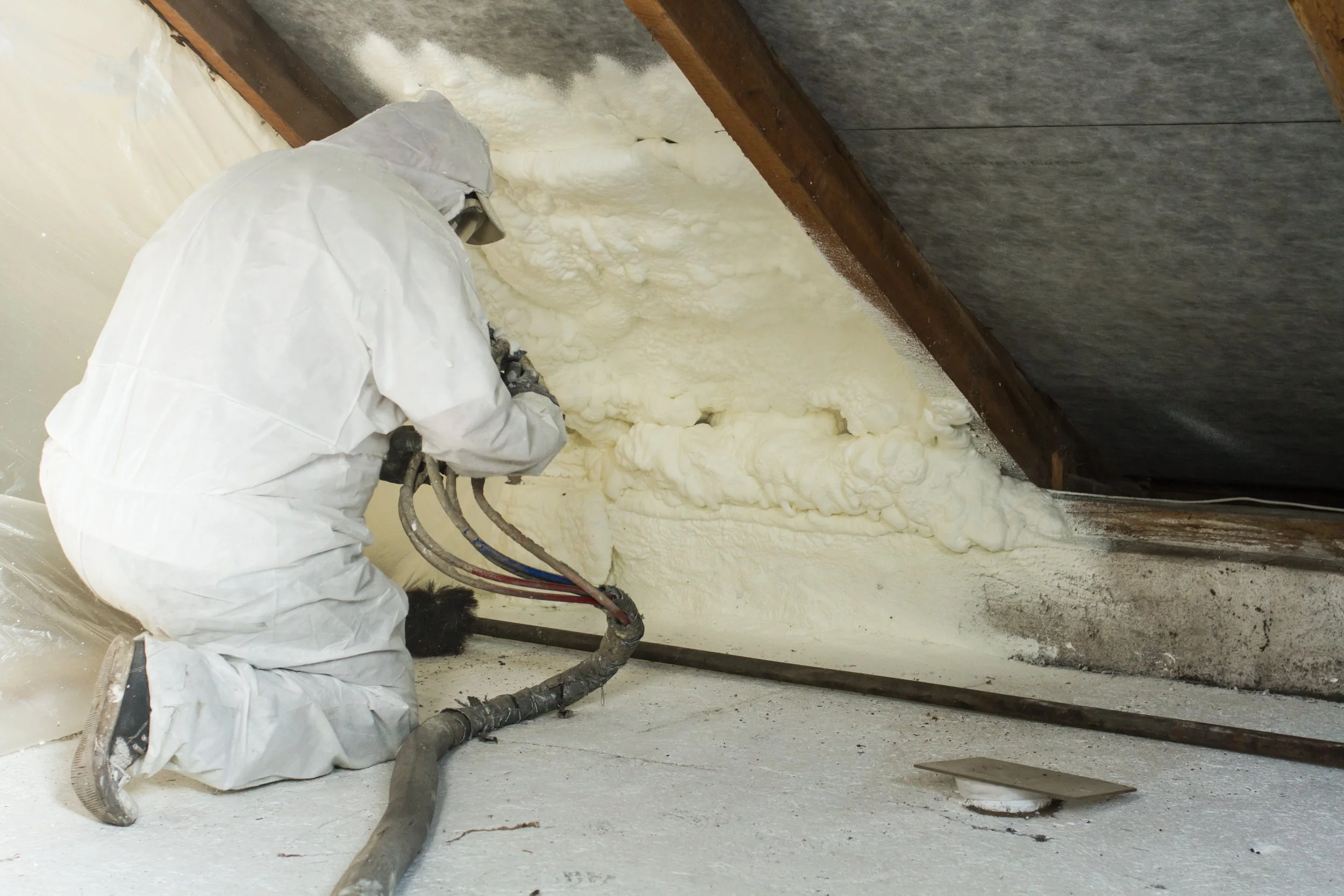
- Site Preparation and Protection: Floors, furniture, and access paths are covered with protective sheeting. Technicians set up negative-air exhaust fans to route fumes outdoors.
- Old Insulation Extraction: Contaminated, pest-damaged, or compressed insulation is vacuumed out to clean the workspace.
- Air Barrier and Ventilation Prep: Rafter baffles or ventilation cards are installed where needed to preserve roof drainage paths.
- Foam Application: Certified technicians spray the two-part liquid polyurethane formulation at precise temperatures and pressures, building up foam to your target depth.
- Curing and Re-entry: The foam expands rapidly, becomes tack-free in seconds, and finishes its 24-hour off-gassing and curing window.
Learn more about how our team handles complete professional attic spray foam insulation across Virginia.
Frequently Asked Questions About Attic Foam Insulation
Can I install attic spray foam myself or should I hire a professional?
Whole-attic spray foam requires professional equipment and certified handling. Professional rigs heat and pressurize liquid chemical components to precise ratios. Applying large volumes of spray foam generates significant exothermic heat, and improper application ratios or thicknesses can lead to incomplete curing, lingering odors, or fire hazards. Professional crews use specialized personal protective equipment and fresh-air respirators to ensure safe, compliant results.
How long does an attic spray foam project take?
Most residential attic spray foam installations take one to two days. Small attics with easy access and minimal prep can be sprayed in a single day. Larger projects requiring extensive old insulation extraction or complicated rooflines take two days. Occupants and pets typically leave the home during spraying and return after the standard 24-hour curing window.
What R-value is recommended for residential attic insulation?
In Virginia (Climate Zone 4), building codes recommend an overall attic insulation level of R-38 to R-49 for traditional vented attic floors. However, when spray foam is applied directly to the roof deck to create an unvented conditioned attic, an effective assembly R-value of R-30 to R-38 provides superior real-world performance. Because spray foam combines high thermal resistance with an unbroken air barrier, it prevents air convection through the insulation layer. Read our localized breakdown of insulation standards for attic insulation in Richmond VA for municipal code specifications.
Conclusion: Upgrade Your Attic with Confidence
Upgrading your attic insulation is one of the most effective home improvements you can make to cut energy waste, stop drafts, and protect your roof. By understanding how spray foam seals your building envelope and working with verified local professionals, you can enjoy a quieter, more comfortable home year-round.
At Sweet Home Spray Foam, we deliver clear upfront pricing, rapid scheduling, and expert guidance on local Virginia rebates across Richmond, Charlottesville, Lynchburg, Roanoke, and Smith Mountain Lake. Take the first step toward year-round comfort and get an attic foam insulation assessment with our team today.