
Why Your Attic Insulation Quote May Be Higher Than Expected
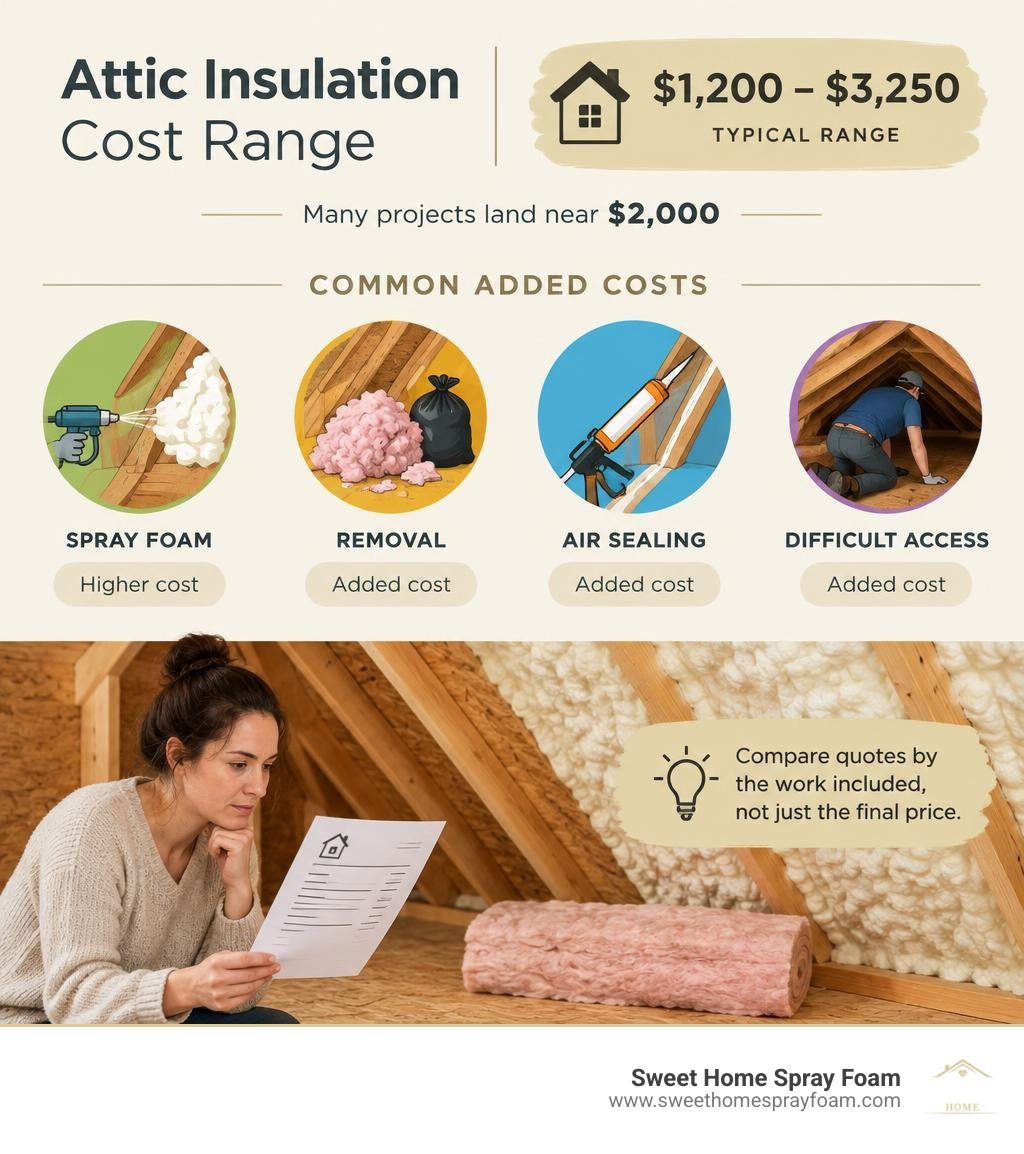
Attic insulation typically costs $1,200 to $3,250, with many projects landing near $2,000. A quote can run higher if it includes spray foam, removal of damaged insulation, air sealing, or work in a cramped attic.
For a Virginia homeowner dealing with drafts and high energy bills, the cheapest quote may not cover everything the attic needs. Compare quotes by the work included, not just the final price. This guide will help you spot the costs that are easy to miss.
Understanding Average Attic Insulation Cost and Pricing Benchmarks
When you start gathering estimates, you will quickly notice that attic insulation costs span a wide spectrum. While national averages fall between $1,200 and $3,250—with an overall benchmark averaging around $1,973 to $2,200—whole-home projects or comprehensive overhauls often range from $1,500 to $4,000 or more.
Why is there such a broad spread? The total square footage of your attic floor or roof deck plays the most obvious role, but labor rates, material quality, and necessary preparation work dictate the final line items. Evaluating an attic insulation cost requires looking closely at the specific scope of work rather than just the bottom line number.
| Attic Size (Sq. Ft.) | Basic Top-Up / Blown-In | Air Sealing + Blown-In (R-49) | High-Performance Spray Foam |
|---|---|---|---|
| 500 sq. ft. | $600 – $1,200 | $1,200 – $2,000 | $1,500 – $3,000 |
| 1,000 sq. ft. | $1,200 – $2,400 | $2,200 – $3,800 | $2,500 – $5,500 |
| 1,200 sq. ft. | $1,500 – $2,800 | $2,500 – $4,500 | $3,000 – $6,500 |
| 1,500 sq. ft. | $1,800 – $3,500 | $3,200 – $5,500 | $3,800 – $8,000 |
| 2,000 sq. ft. | $2,400 – $4,600 | $4,200 – $7,200 | $5,000 – $10,500+ |
Contractors who provide low-end bids frequently quote only the bare minimum: adding loose material over existing dust without addressing thermal bypasses or existing structural flaws. A comprehensive quote accounts for labor minimums, proper prep work, and material density needed for genuine performance.
Comparing Spray Foam Insulation Types
If your quote came back higher than basic loose-fill estimates, there is a strong chance it includes high-performance spray foam. Spray polyurethane foam delivers an air barrier and thermal boundary in one application, eliminating the draftiness common in traditional systems.
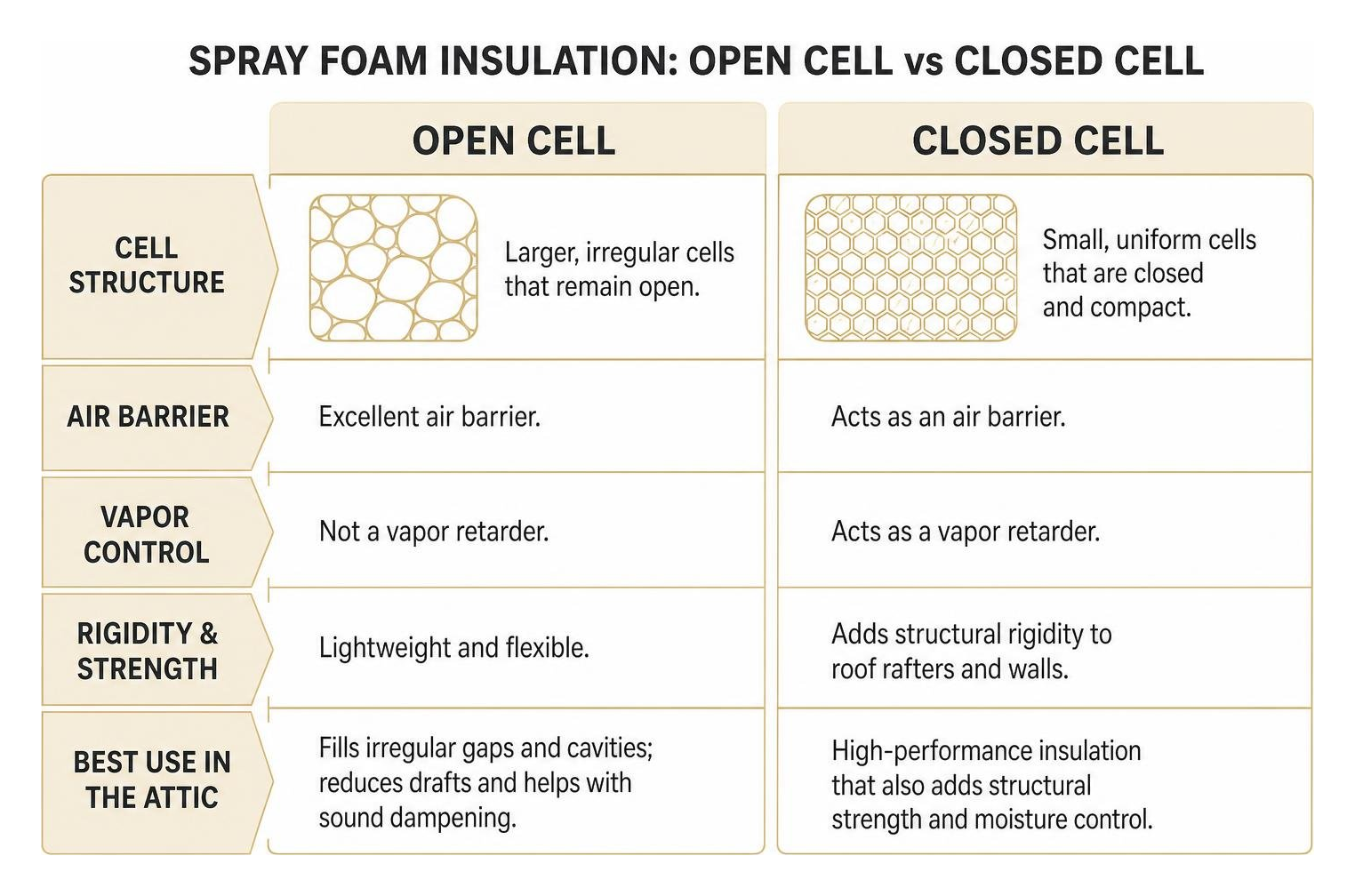
There are two primary types of spray foam used in residential attics:
- Open-Cell Spray Foam: Expands rapidly to fill irregular gaps, cracks, and framing cavities. It is lightweight, flexible, and serves as an exceptional air barrier and sound dampener.
- Closed-Cell Spray Foam: Much denser with a compact cell structure. It acts as both an air barrier and a vapor retarder while adding structural rigidity to roof rafters and exterior walls.
| Feature / Metric | Open-Cell Spray Foam | Closed-Cell Spray Foam |
|---|---|---|
| Average Cost per Sq. Ft. | $1.00 – $2.00 per board foot | $2.50 – $3.50+ per board foot |
| R-Value per Inch | R-3.6 to R-3.8 | R-6.5 to R-7.0 |
| Moisture / Vapor Retarder | Permeable (allows drying) | Impermeable (vapor barrier at 2"+) |
| Air Sealing Capability | Excellent (expands into voids) | Superior (dense, rigid seal) |
| Expected Lifespan | 80+ years (lifetime of structure) | 80+ years (lifetime of structure) |
How R-Value Requirements Impact Attic Insulation Cost
R-value measures thermal resistance—the capacity of a material to resist conductive heat flow. The higher the R-value, the greater the insulating effectiveness. Building codes and Department of Energy guidelines specify target R-values based on regional climate zones.
In our part of Virginia, homes generally require an attic insulation level of R-38 to R-49. If an older home currently has 6 inches of settled fiberglass batts (around R-19), bringing that attic up to code requires adding R-30 or more of thermal resistance.
Moving from a baseline R-19 up to R-49 can reduce heating energy loss through the ceiling by 50% to 60%. However, thermal performance follows a curve of diminishing returns: the initial jump from R-11 to R-49 stops roughly 78% of heat flow through the floor, whereas pushing from R-49 to R-60 only addresses a fraction of the remaining heat transfer. We walk through these climate-specific targets in our comprehensive attic insulation guide for 2026, helping you select the right depth without overpaying for marginal gains.
Hidden Scope Factors That Inflate Contractor Quotes
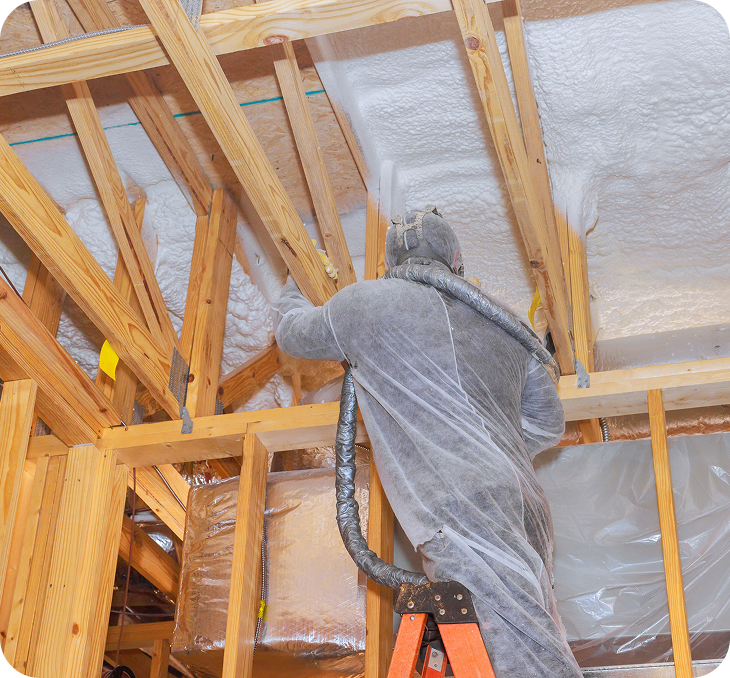
When two quotes for the same home differ by several thousand dollars, the disparity almost always lies within the hidden scope factors. Reputable contractors price the complete assembly, whereas discount bids often ignore essential prep work that protects your home.
Old Insulation Removal and Contamination Cleanup
Blown-in or spray insulation should never be installed over contaminated materials. If your attic has sustained roof leaks, rodent infestation, or toxic mold spores, the existing insulation must be completely extracted using specialized HEPA vacuums.
Removing damaged material safeguards your family's respiratory health and prevents trapping rot against structural framing. You can learn more about assessing the cost to replace damaged insulation when planning your project budget. Disposal fees, personal protective gear, and sanitization treatments add legitimate labor and material costs to your initial estimate.
Critical Air Sealing and Baffle Installation
Insulation restricts conductive heat flow, but it does not stop moving air. Warm household air naturally rises through tiny gaps around wiring penetrations, plumbing stacks, drywall top plates, and recessed light fixtures—a phenomenon known as the stack effect.
Without air sealing, conditioned air simply drafts through loose insulation like air through a wool sweater. Professional quotes include:
- Sealing all attic bypasses and chases with expanding foam.
- Building fire-safe enclosures around non-IC-rated recessed lighting.
- Installing rigid cardboard or foam baffles at every soffit vent to maintain attic ventilation without washing away floor insulation.
These techniques ensure proper performance during any attic floor installation, preventing moisture accumulation and hot spots.
Difficult Accessibility and Structural Obstacles
Not all attics are wide, open spaces. Low roof pitches, tight truss designs, HVAC ductwork running through framing, and vaulted ceilings make maneuvering difficult.
Contractors must lay temporary walkboards across open framing around attic floor joists to navigate safely without damaging ceiling drywall below. Restricted access increases project time, safety equipment requirements, and labor hours, which naturally reflects in your estimate.
Evaluating ROI, Energy Savings, and Long-Term Value

While upfront numbers can cause initial hesitation, upgrading your attic's thermal envelope represents one of the highest-yield investments you can make in your home. Reviewing a detailed insulation ROI breakdown shows that unlike cosmetic remodels, quality insulation pays you back every single month.
Energy Bill Reductions and Resale Value
According to EPA estimates, sealing air leaks and properly insulating attics saves homeowners an average of 15% on heating and cooling bills annually. In a typical home, moving from R-19 to R-49 saves between $300 and $600 per year on heating alone. A $2,000 project delivering $400 in annual utility savings earns a 20% annual return, paying for itself in approximately five years.
Furthermore, a classic Remodeling Magazine Cost vs. Value report noted that fiberglass attic insulation upgrades recouped 117% of their installed cost at resale—making it one of the rare home improvements that can return more than its cost when selling. When evaluating spray foam attic investments, homeowners also benefit from reduced wear on HVAC systems, extended roof deck life, and superior indoor comfort.
Navigating Local Utility Rebates and Assistance Programs
Upfront expenses can often be offset by local incentives. While the federal Section 25C tax credit expired at the end of 2025, Virginia homeowners can still take advantage of municipal and electric utility rebates.
For instance, qualifying residents can apply for the Charlottesville municipal attic insulation rebate or tap into local energy-efficiency programs offered by regional power companies across Central and Southwest Virginia. Income-eligible households may also qualify for no-cost upgrades through the Weatherization Assistance Program (WAP).
Professional Installation vs. DIY: What Are You Actually Paying For?
It is tempting to look at big-box store rental machines and consider handling the job yourself. DIY material costs for a basic top-up might run $500 to $1,000. However, DIY installations frequently miss critical details:
- Air Leakage Blindspots: Overlooking wire penetrations and top plates leaves drafts unsealed.
- Ventilation Blockages: Blowing insulation over soffit vents cuts off roof airflow, causing moisture buildup, mold, and winter ice dams.
- Compression Losses: Compressed batt insulation loses roughly one R-value point for every 10% it is squeezed down.
- Safety Risks: Navigating unfinished joists without safety gear poses fall hazards and risks stepping through ceilings.
Professional attic spray foam insulation solutions utilize specialized proportioner rigs, calibrated temperatures, and experienced crews who ensure complete air sealing and uniform depth without compromising roof ventilation.
Frequently Asked Questions About Attic Insulation
Is it worth removing old insulation before adding new layers?
If your existing insulation is dry, mold-free, and undamaged by pests, new blown material can often be added directly over it to preserve existing R-value. However, if the material has suffered water leaks, animal waste, or severe settling, full removal is necessary to avoid trapping odors and contaminants against your living space.
What factors affect spray foam insulation pricing?
Pricing depends on whether you choose open-cell or closed-cell foam, the total board footage required, roof deck pitch, and masking requirements around existing HVAC ducts or electrical boxes. Choosing the best spray foam insulation for attic spaces ensures balanced air barrier performance, moisture management, and structural efficiency tailored to your home layout.
How much can proper air sealing and insulation save annually?
The EPA estimates that comprehensive air sealing combined with proper attic insulation saves up to 15% on overall heating and cooling costs. For most homes in Virginia, this equates to $300 to $600 in utility savings each year, alongside improved indoor humidity control and balanced room-to-room temperatures.
Conclusion
A higher-than-expected attic insulation quote often reflects a contractor doing the job right—addressing hidden air leaks, clearing ventilation paths, remediating damaged materials, and applying high-performance insulation. Cutting corners on prep work might save money today, but it costs more in energy waste and comfort issues over time.
At Sweet Home Spray Foam, we believe in clear, upfront pricing with zero high-pressure sales tactics. We serve homeowners across Virginia—including Richmond, Charlottesville, Lynchburg, and Roanoke—helping you build a durable, energy-efficient thermal envelope. Ready to make your home comfortable year-round? Contact us today to schedule a professional attic insulation consultation.