
Comprehensive Crawl Space Repair vs. Encapsulation: Key Differences and Sequences
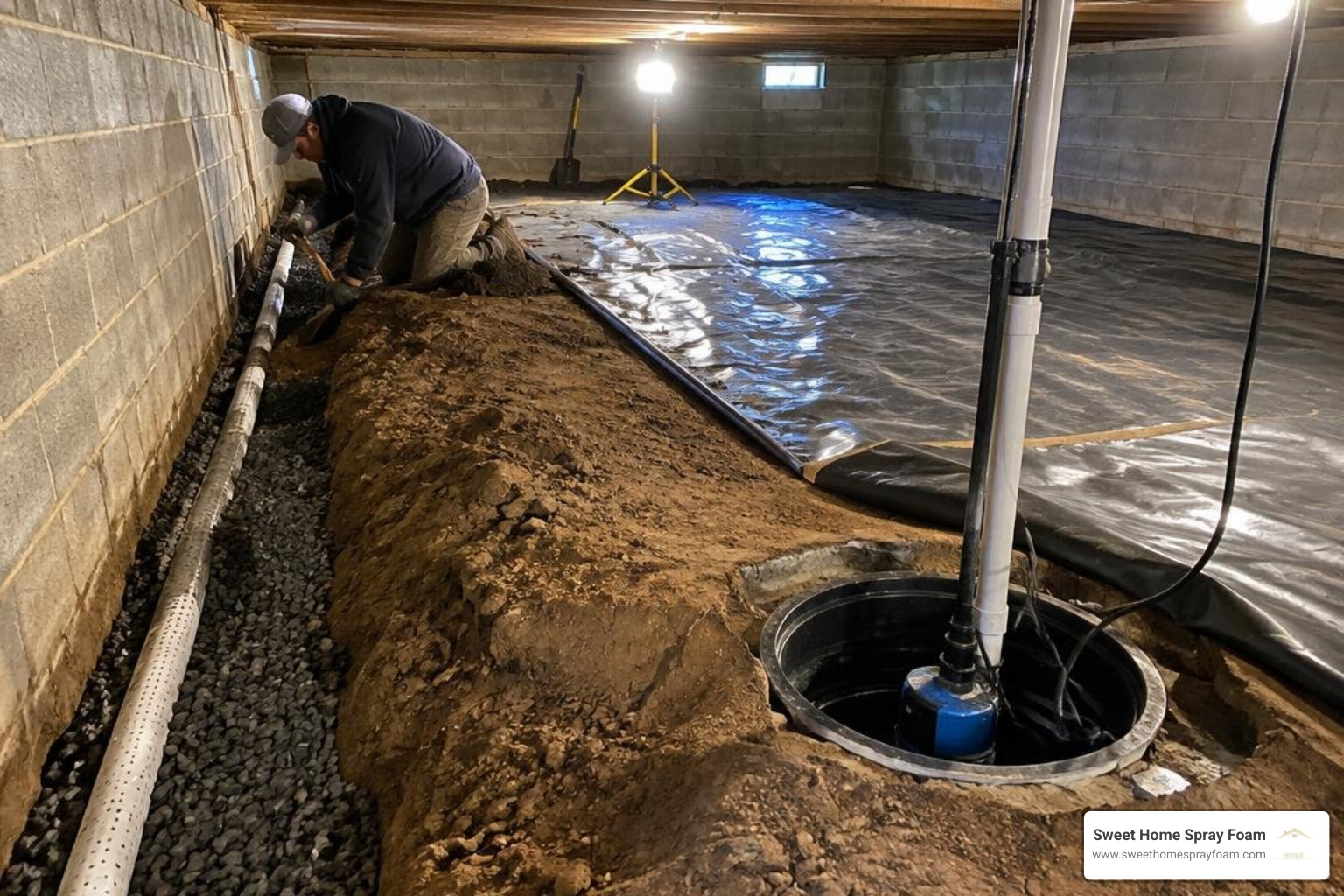
To solve crawl space repair problems for good, start by managing drainage and standing water, then sister damaged joists, treat mold, insulate rim joists, and finish with encapsulation. Homeowners often ask us whether they need basic repairs or a full encapsulation. While they are closely related, they solve different parts of the problem:
- Crawl Space Repair targets active, physical failures. This includes fixing plumbing leaks, excavating drainage trenches, sistering rotted floor joists, replacing settled pier posts, and remediating toxic mold colonies. Repair work restores structural stability and stops bulk water intrusion.
- Crawl Space Encapsulation is the long-term protective shield. It involves sealing the dirt floor and masonry walls with a thick, heavy-duty vapor barrier, sealing off open foundation vents, insulating the perimeter, and installing dedicated dehumidification. Encapsulation transforms a damp, vented under-floor cavity into a clean, conditioned space.
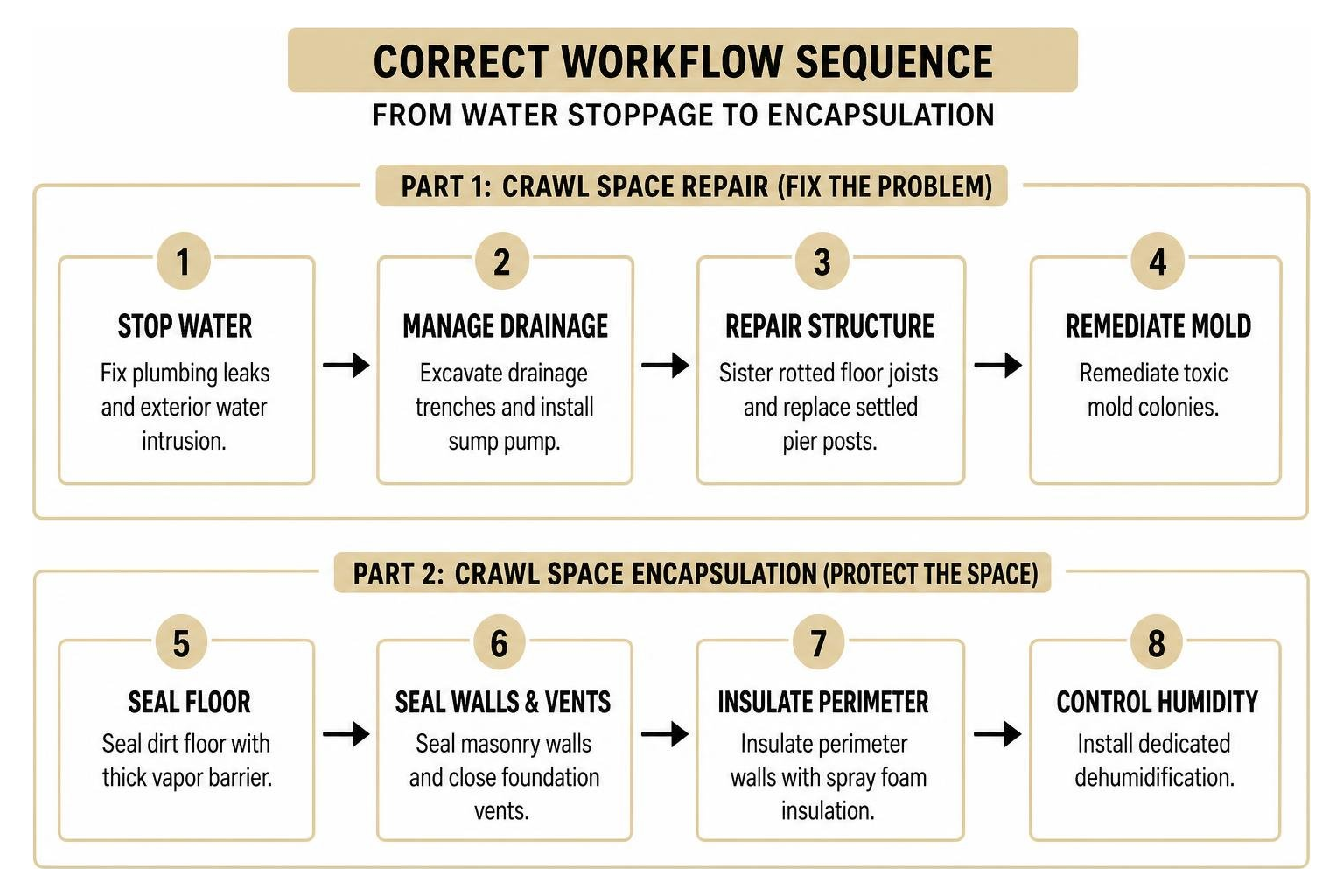
Attempting to encapsulate before completing structural and moisture repairs traps decay underneath the liner. According to this guide to repair sequencing and rot treatments, following a strict order of operations prevents recurring mold and costly tear-outs.
| Feature / Goal | Crawl Space Repair | Crawl Space Encapsulation |
|---|---|---|
| Primary Focus | Fixing active failures, standing water, and rot | Long-term humidity isolation and air quality |
| Common Components | Sump pumps, french drains, sistered joists, jacks | Heavy-duty liners (12–20 mil), sealed vents, dehumidifiers |
| Execution Timing | Phase 1 (Must be done first) | Phase 2 (Protective finish) |
| Impact on Structure | Restores load capacity and foundation stability | Preserves wood framing from future humidity spikes |
5 Practical Ways to Address and Fix Subfloor Damage
When a crawl space begins to fail, the symptoms echo upward through your entire home. Let's look at five practical ways to address and fix subfloor and crawl space damage permanently.
1. Water Intrusion Management and Drainage Solutions
You cannot fix wood framing or insulate over standing water. When surface runoff or rising water tables penetrate crawl space walls, hydrostatic pressure builds up against your foundation footing.
Permanent water mitigation requires a two-part defense:
- Perimeter French Drains: An interior trench dug along the foundation footing collects seepage from the walls and soil before it reaches the subfloor. A perforated pipe wrapped in filter fabric channels this water through a bed of washed aggregate.
- Submersible Sump Pump Systems: The drainage line routes groundwater into an airtight sump basin equipped with a check valve and a dedicated float switch. High-output pumps eject the water away from your foundation wall through a gravity discharge line. Adding a battery backup system ensures your crawl space stays completely dry even during severe storm outages.
2. Wood Rot Treatment and Structural Crawl Space Repair
Chronic relative humidity above 60% causes wood moisture content (WMC) to surge past 19%—the critical threshold where wood-decay fungi feast on structural lumber. When joists and sill plates lose density, your living room floors develop bouncy spots, spongy steps, and unsightly dips.
Restoring subfloor integrity requires several precise structural steps:
- Moisture Elimination: The timber must be dried below 19% WMC using industrial air movers and temporary dehumidification.
- Structural Sistering: Weakened framing is reinforced by sistering new, pressure-treated lumber alongside damaged joists, fastened with structural screws.
- Adjustable Steel Support Posts: Failing masonry piers or settled wooden posts are replaced with heavy-duty, adjustable steel columns installed on cast concrete footings. These posts allow technicians to slowly lift sagging girders back to level without cracking upper drywall.
- Borate Wood Preservative Application: Exposed structural framing is coated with a penetrating, water-soluble borate solution. This treatment kills lingering fungal spores and provides ongoing protection against wood-boring insects and termites.
3. Mold Remediation and Air Quality Restoration
Due to the natural "stack effect," up to 50% of the air on your first floor rises directly from your crawl space. When mold colonies fester underneath, airborne spores, mycotoxins, and earthy odors infiltrate your HVAC ducts and living quarters.
Professional mold remediation follows rigorous IICRC S520 protocols:
- Negative Air & HEPA Containment: Industrial air scrubbers exhaust contaminated air to the exterior, preventing mold spores from migrating upstairs during cleaning.
- Antimicrobial Surface Scrubbing: Technicians scrub all contaminated floor joists, girders, and subfloor sheathing with EPA-registered antimicrobial washes to eradicate active growth.
- HEPA Vacuuming: Surfaces are vacuumed using commercial HEPA systems to capture microscopic dead spores, clearing the framing before applying sealants or insulation.
4. Thermal Sealing and Rim Joist Insulation Upgrades
Traditional fiberglass batt insulation installed between floor joists acts like a sponge in damp crawl spaces. Over time, gravity and moisture pull the batts down, leaving the wood subfloor exposed to seasonal drafts while trapping condensation against the timber.
Upgrading to closed-cell spray foam insulation changes everything:
- Band Board & Rim Joist Sealing: Applying closed-cell foam along the perimeter creates an impermeable air barrier. Learn more about how basement rim joist insulation stops cold winter drafts and outside humidity right at the structural rim.
- Continuous Wall Insulation: Spraying closed-cell foam directly to interior foundation walls provides high thermal resistance (R-value) while functioning as a secondary moisture barrier. Explore our specialized crawl space spray foam insulation options to understand how seamless foam seals your home's envelope.
5. Full Encapsulation and Dehumidification Systems
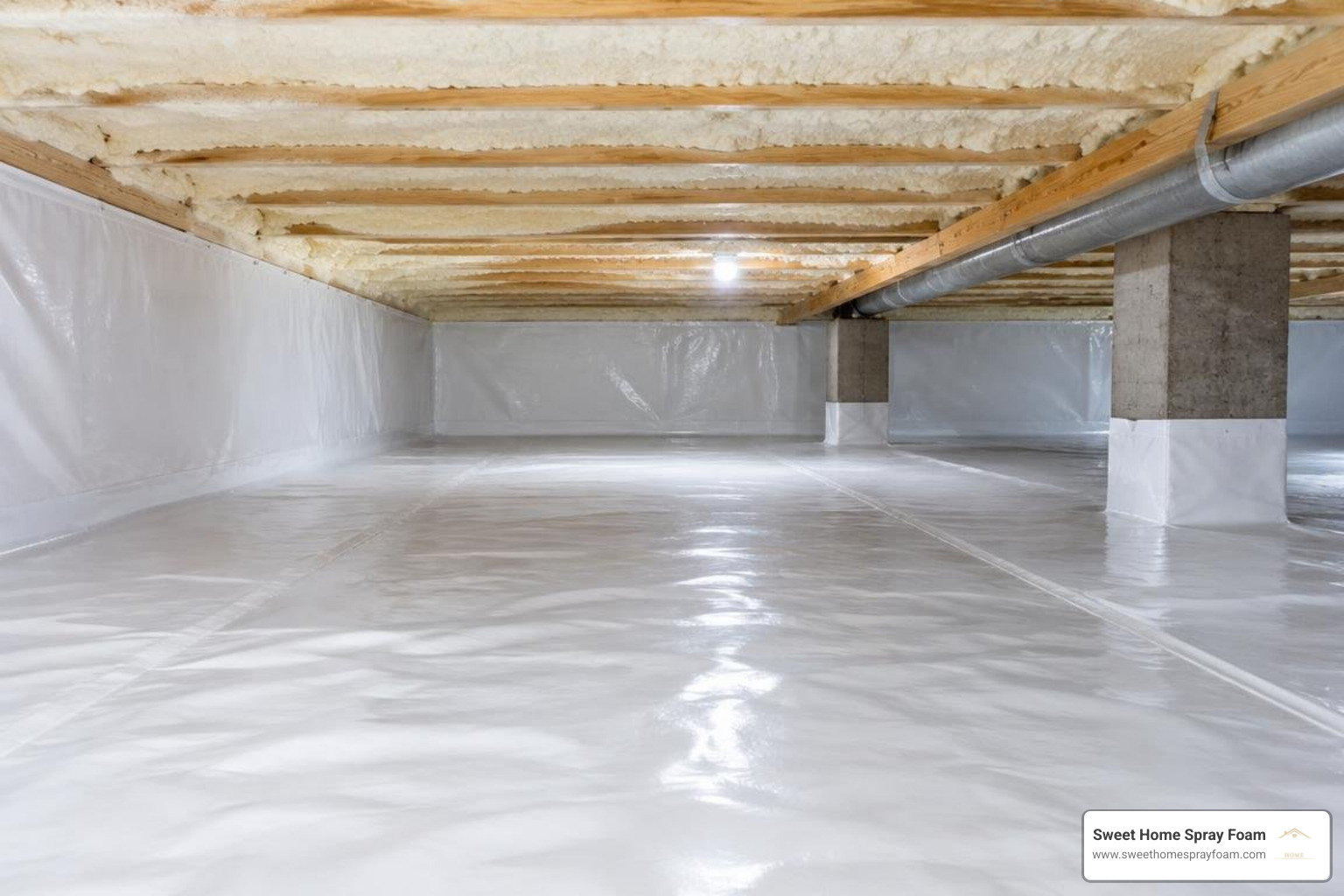
Once structural repairs and waterproofing are complete, full encapsulation provides the final line of defense against recurring decay.
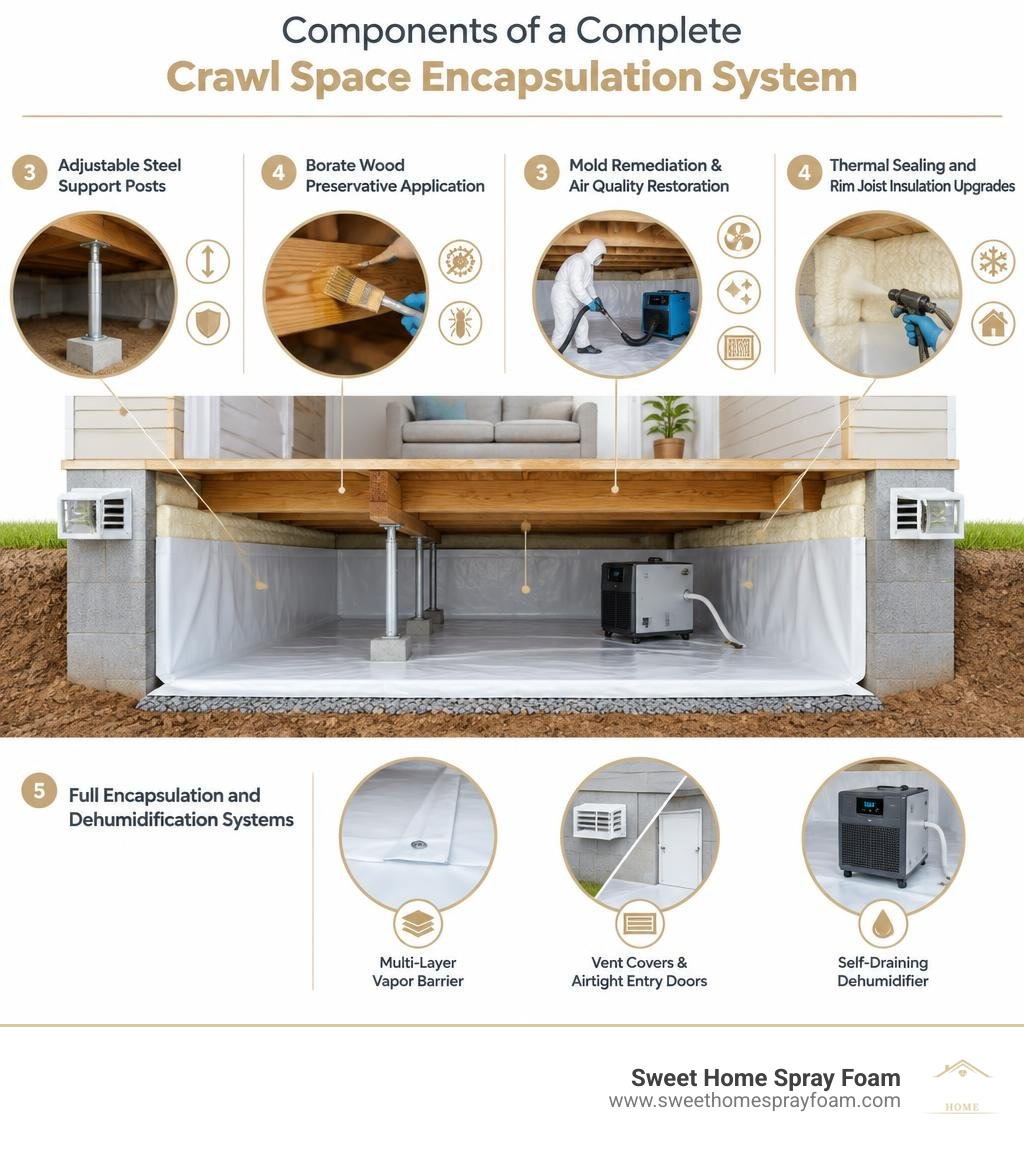
A comprehensive encapsulation system incorporates:
- Heavy-Duty Multi-Layer Vapor Barrier: Unlike thin 6-mil poly sheets that puncture easily, high-performance 12-mil to 20-mil reinforced liners are pinned and sealed across the dirt floor and up foundation walls.
- Vent Covers & Airtight Entry Doors: Open foundation vents let in warm, moisture-laden outdoor air during the summer. Sealing them with insulated foam covers stops exterior moisture loads.
- Self-Draining Commercial Dehumidifier: Installing an energy-efficient dehumidifier keeps crawl space relative humidity reliably between 45% and 55% year-round.
Review our complete guide to average crawl space encapsulation cost to understand how different square footages and material grades impact overall pricing.
Cost Breakdown, Warranties, and Project Timelines
Planning for crawl space work requires transparent budgeting. Below is an overview of standard repair scopes, investment ranges, and expectations for 2026.
What Does Crawl Space Work Cost?
- Mold Remediation: Expect to invest $1,500 to $5,000 for standard residential crawl spaces, with extensive, whole-home contamination ranging from $6,000 to $8,000.
- Structural Joist Sistering: Typically runs $100 to $300 per joist, with typical project clusters costing $800 to $3,000.
- Interior French Drain & Sump Pump: Comprehensive drainage channels run between $3,000 and $8,000 depending on linear perimeter footage and pump capacity.
- Vapor Barrier Replacement: Installing a clean, sealed barrier costs roughly $1,500 to $4,500.
- Full Scope (Repair + Encapsulation): A wet crawl space requiring water drainage, structural post adjustments, mold remediation, and complete multi-layer encapsulation averages $8,000 to $18,000.
| Project Scope | Average Cost Range | Expected Timeline | Primary Benefit |
|---|---|---|---|
| Isolated Joist & Floor Repair | $800 – $3,000 | 1 – 2 Days | Stops floor sag and bounce |
| Mold Remediation | $1,500 – $5,000 | 1 – 3 Days | Restores indoor air quality |
| Drainage System & Sump Pump | $3,000 – $8,000 | 2 – 4 Days | Eliminates standing groundwater |
| Full Repair & Encapsulation | $8,000 – $18,000 | 5 – 10 Days | Complete, permanent moisture control |
Warranties and Timelines
Top-tier encapsulation liners (such as 20-mil multi-layer membranes) frequently carry a 25-year transferable warranty, protecting your investment even if you sell your home. While minor barrier replacements finish in 1–2 days, extensive multi-step structural repairs coupled with complete encapsulation generally take 5 to 10 working days.
Frequently Asked Questions About Subfloor and Foundation Care
When should I hire a structural engineer for crawl space repair?
You should consult a licensed structural engineer whenever you notice major structural shifts: severe floor slope, exterior foundation cracking (such as stair-step masonry cracks), or rotted main carrying girders. A structural engineer provides unbiased, stamped repair plans and load calculations that your contractor can execute precisely.
Can I repair my crawl space myself, or should I hire a professional?
While a handy homeowner can easily patch a minor tear in a vapor barrier or clear debris, major structural lifting, subfloor replacement, electrical sump wiring, and chemical mold treatments are dangerous. Professional crews possess the specialized personal protective equipment (PPE), confined-space equipment, laser levels, and warranty-backed materials required to perform the job safely.
How much can fixing my crawl space lower my monthly energy bills?
A fully encapsulated and insulated crawl space stops convective air loops and lowers ambient humidity. Because dry air is significantly easier to cool and heat, most homeowners experience a 10% to 25% reduction in heating and cooling costs, alongside less wear and tear on their HVAC equipment.
Conclusion
Your crawl space forms the structural and environmental bedrock of your home. Letting moisture linger under your floorboards invites fungal rot, sinking floor systems, pest infestations, and poor indoor air quality. By stopping water entry, sistering weak framing, spraying seamless insulation, and securing the foundation with heavy-duty encapsulation, you protect your family's health and property value for decades to come.
Ready to transform your crawl space into a clean, dry, energy-efficient foundation? Connect with the experienced team at Sweet Home Spray Foam today for straightforward pricing, honest guidance, and lasting peace of mind.