
Best Insulation for Garage Walls: Start With How You Use the Space

The best insulation for garage walls depends on your budget and whether you heat the space. Fiberglass batts are a low-cost choice for open stud walls. Closed-cell spray foam costs more but adds insulation and seals air leaks in one step. Rigid foam board can reduce heat loss through studs, while mineral wool is worth considering when noise control matters.
For a Virginia garage, start by sealing gaps and fixing any moisture problems. Then choose insulation that fits your wall depth and plans for the space. If the garage is attached, pay special attention to the wall and ceiling shared with your home.
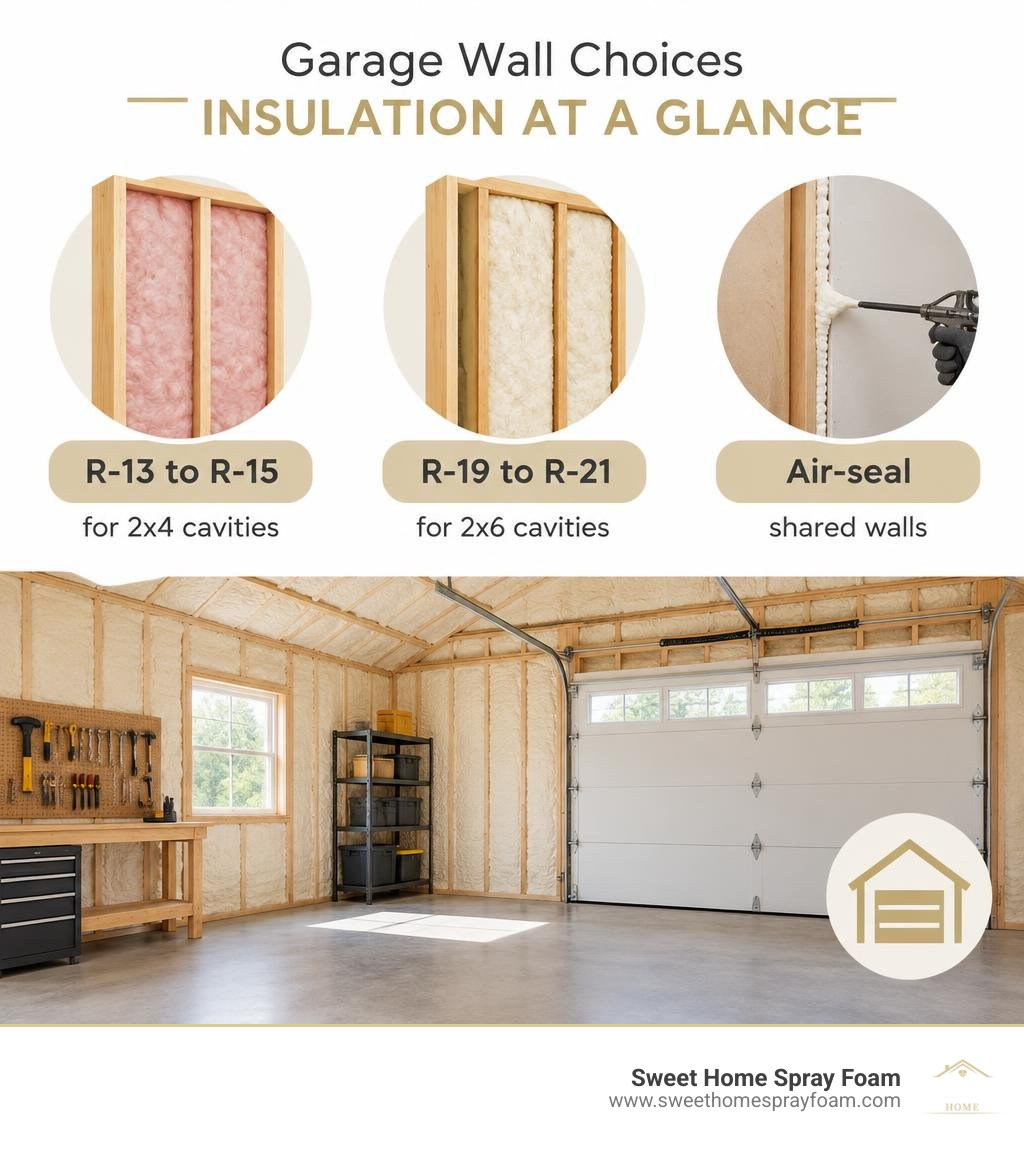
Evaluating the Best Insulation for Garage Walls: Top 5 Materials
Finding the right material comes down to balancing installation ease, thermal resistance (measured in R-value per inch), moisture resistance, and cost. Garages in Virginia endure chilly winters in Roanoke and Lynchburg alongside humid, muggy summers in Richmond and Charlottesville.
An uninsulated garage envelope can lose substantial amounts of conditioned air within an hour, pulling comfortable temperatures right out of your home. You can project your project scope quickly with an online garage insulation cost estimator.
| Material Type | Typical R-Value Per Inch | Average Material & Install Cost (per sq. ft.) | Moisture Resistance | Best Application |
|---|---|---|---|---|
| Closed-Cell Spray Foam | R-6.0 to R-7.0 | $1.65 – $3.80 | High (Built-in Vapor Barrier) | Year-round workshops, living spaces, maximum air seal |
| Open-Cell Spray Foam | R-3.5 to R-3.8 | $1.20 – $2.20 | Moderate (Air barrier, vapor permeable) | Interior garage partitions, sound reduction |
| Rigid Foam Board (XPS/Polyiso) | R-4.5 to R-6.0 | $0.60 – $2.00 | High (Water-resistant surfaces) | Concrete/block walls, exterior continuous insulation |
| Fiberglass Batts | R-3.1 to R-3.7 | $0.30 – $1.50 | Low (Absorbs moisture, loses R-value) | Budget-conscious standard 2x4/2x6 stud bays |
| Mineral Wool Batts | R-4.0 to R-4.2 | $1.00 – $2.10 | Moderate to High (Hydrophobic) | Fire separation walls, acoustic soundproofing |
| Blown-In Cellulose | R-3.2 to R-3.8 | $0.60 – $1.80 | Moderate (Borate treated, retains moisture) | Retrofitting closed, finished drywall cavities |
1. Closed-Cell and Open-Cell Spray Foam
Spray-applied polyurethane foam provides an impenetrable thermal envelope. Unlike fibrous insulation types that allow air to pass between fibers, spray foam expands on contact to fill every nook, seam, and hairline fracture.
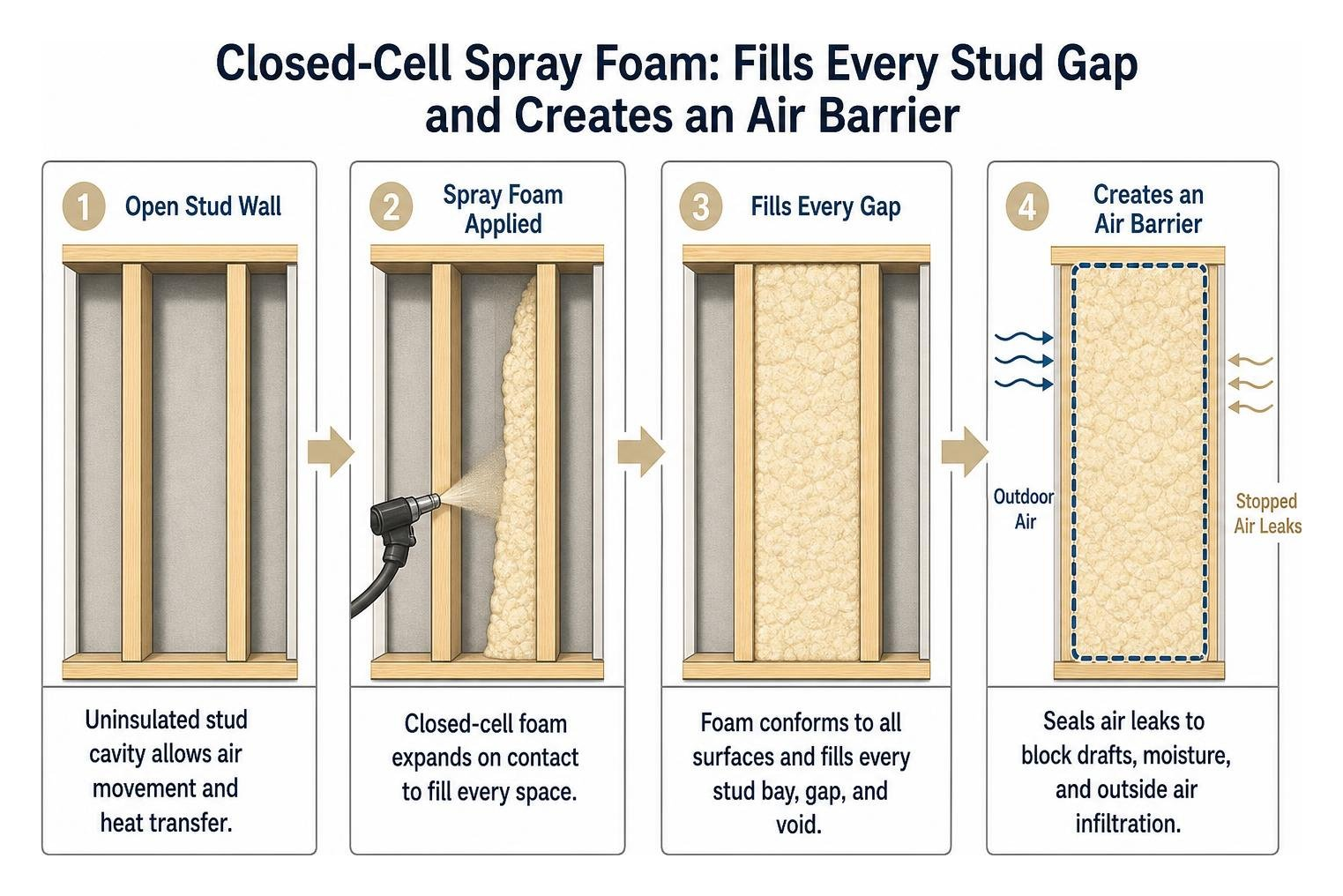
Applying wall spray foam insulation creates an airtight seal that eliminates outdoor drafts and automotive exhaust transfer into living areas. Closed-cell spray foam delivers a density that adds structural racking strength to exterior walls while acting as a class-II vapor retarder at two inches of thickness.
When evaluating traditional vs spray foam insulation, spray foam consistently outperforms by blocking conductive and convective heat transfer without settling, slumping, or degrading over decades.
2. Rigid Foam Board (EPS, XPS, and Polyiso)
Rigid foam insulation comes in dense sheets—primarily Expanded Polystyrene (EPS), Extruded Polystyrene (XPS), and Polyisocyanurate (Polyiso).
- Polyisocyanurate: Delivers up to R-6.0 per inch at standard temperatures. Foil-faced options act as radiant barriers, deflecting radiant summer heat. Reviewing polyisocyanurate rigid foam specifications can help you decide if it fits your wall assembly.
- Extruded Polystyrene (XPS): Offers R-5.0 per inch with strong water resistance, making it an excellent choice for damp basement garages or continuous exterior wall sheathing.
- Expanded Polystyrene (EPS): The most economical rigid board at roughly R-3.8 per inch, ideal for thin wall build-outs.
Rigid foam boards prevent thermal bridging when fastened across the face of wooden studs, eliminating heat loss through wall framing.
3. Fiberglass Batt and Roll Insulation
Fiberglass remains common because of its low cost and DIY accessibility. Spun from fine glass fibers, rolls and batts come pre-cut to standard 16-inch or 24-inch stud cavity widths.
- Kraft-Faced Batts: Feature an asphalt-coated paper backing that acts as a vapor retarder in heating climates.
- Unfaced Batts: Installed directly into open cavities when paired with a separate interior vapor barrier or open drying assemblies.
While fiberglass provides an economical R-13 in 2x4 cavities and R-19 to R-21 in 2x6 cavities, it requires careful cutting. Compressing batts around wires or crushing them into corners reduces their effective R-value and creates pathways for air leakage.
4. Mineral Wool Batt Insulation
Manufactured from basalt rock and recycled slag, mineral wool (or rockwool) is a step up from fiberglass. It provides approximately R-4.0 per inch, repels moisture naturally, and does not support mold growth.
Mineral wool fits tightly between framing without stapling and offers remarkable non-combustible performance, resisting temperatures over 2,000 degrees Fahrenheit. It also excels at sound absorption, making it one of the best internal wall insulation choices for attached garage walls that separate a loud workshop from your home's main living areas.
5. Blown-In Cellulose Insulation
Made from recycled newspaper treated with fire-retardant borates, dense-pack cellulose is the preferred material for finished garages that already have drywall installed.
Technicians drill small holes into existing drywall bays, feed a flexible hose inside, and blow the material into the cavity at high density. Dense-packing prevents future settling, creates a decent air barrier, and provides around R-3.5 per inch without the expense of demolishing your walls.
Recommended R-Values and Climate Considerations for Garage Walls
The Department of Energy sets climate zones to guide insulation efficiency. Across central Virginia and the Blue Ridge region, local building codes generally mandate a baseline thermal resistance:
- 2x4 Stud Framing: Target an R-13 to R-15 cavity fill.
- 2x6 Stud Framing: Target an R-19 to R-21 cavity fill.
- Exterior Living Overlap / Code Upgrades: R-20 cavity insulation or R-13 cavity fill paired with R-5 continuous exterior rigid foam.
- Garage Ceilings (Unheated Space Above): R-38 to R-60 depending on attic configurations.
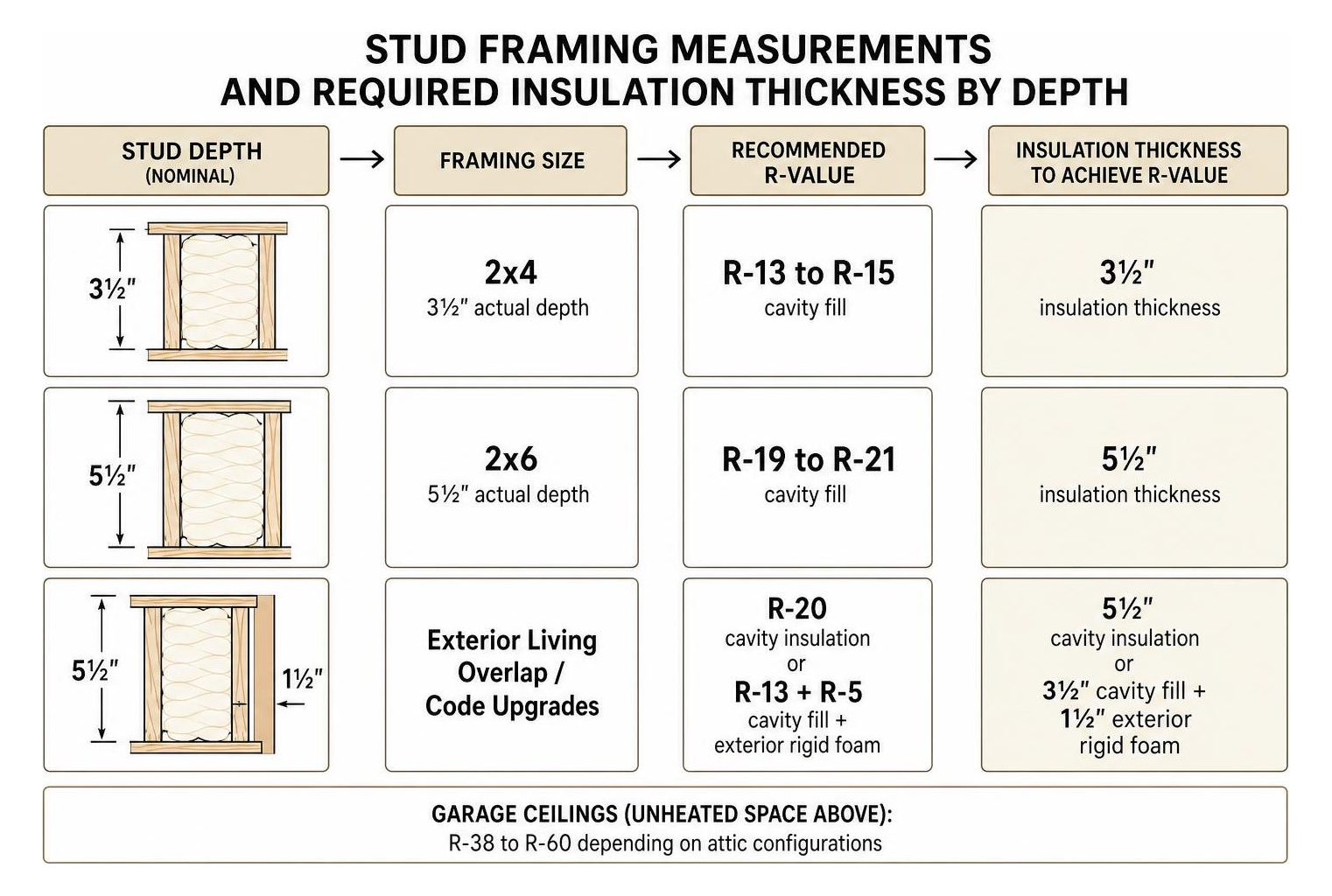
Wood studs conduct heat faster than insulated cavities—a concept known as thermal bridging. Installing continuous insulation or spray foam helps break this thermal bridge across your building's frame.
Determining R-Value Needs for Heated vs. Unheated Garages
If your garage is purely for parking cars and storing tools, an unheated design with an R-13 wall buffer helps moderate extreme temperature swings, preventing paint, chemicals, and vehicle batteries from freezing.
If you plan to condition the garage with a mini-split heat pump for year-round work, maximizing your wall R-value (R-15 to R-21) and air sealing will lower your monthly utility bills and reduce strain on your HVAC equipment.
Practical Strategies for Selecting Wall Insulation
Choosing the right approach requires reviewing your timeline, renovation budget, and garage use. When factoring in contractor costs, consulting an internal wall insulation cost guide helps balance initial expenses against lifetime energy savings.
Key Factors to Choose the Best Insulation for Garage Walls
- Air Sealing Performance: Materials that expand or form continuous sheets prevent draft entry better than fibrous batts.
- Moisture and Pest Resistance: Garages handle high humidity, road slush, and insects; pick inorganic, moisture-tolerant materials.
- Durability: Open walls need rigid or dense materials that won't tear or slump when bumped by lawn equipment.
Finding the Best Insulation for Garage Walls with Obstructions and Moisture
Garages feature complex obstacles, including surface-mounted conduit, electrical boxes, gas meters, plumbing lines, and uneven masonry.
Rigid board requires precise scribing around these obstructions. Fibrous batts must be split—never compressed—around wiring and plumbing.
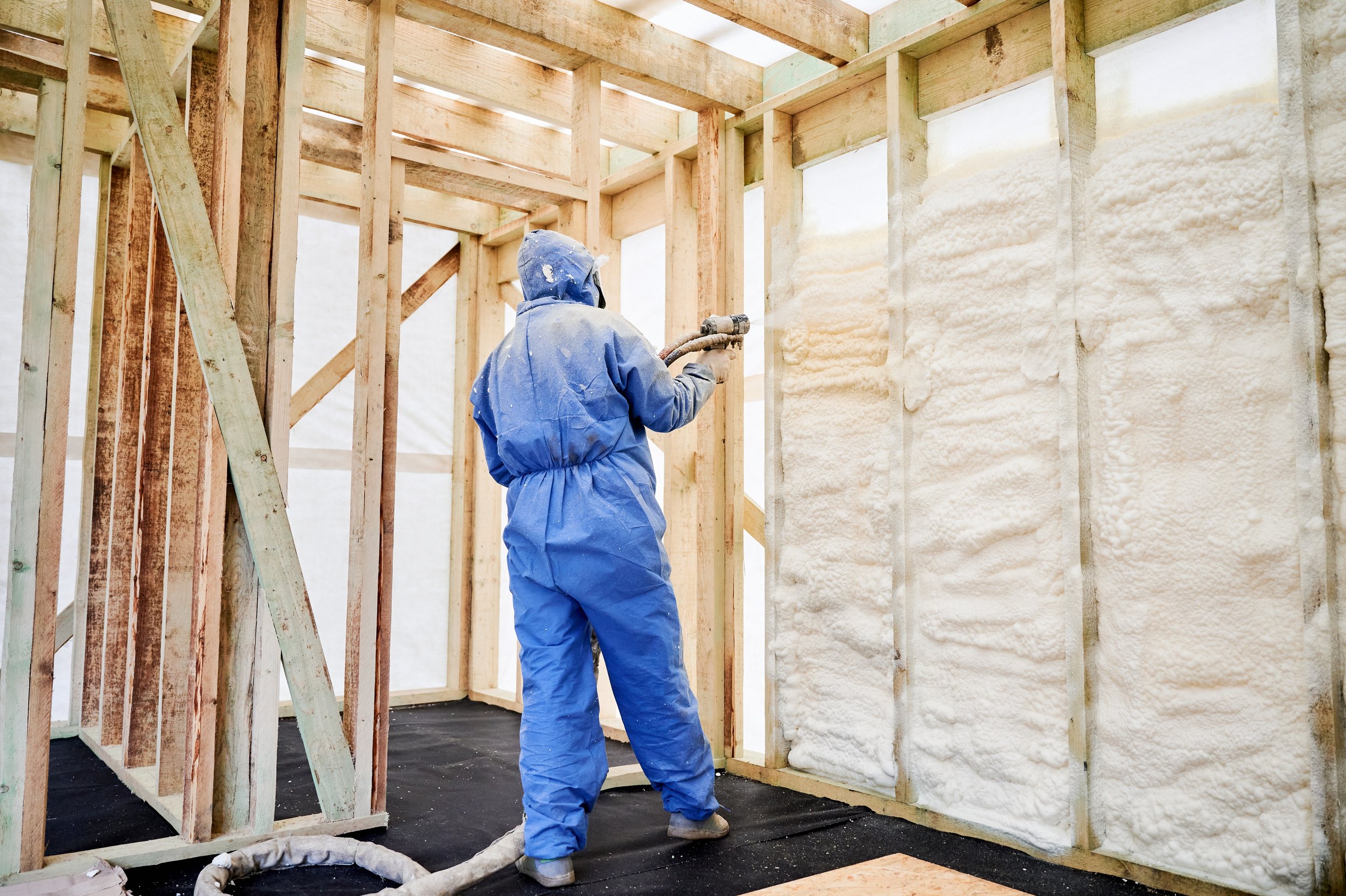
Spray foam easily fills irregular stud bays, sealing around junction boxes and framing gaps without custom cuts. For damp concrete or block foundations, review our breathable wall insulation guide to manage vapor transfer properly.
Step-by-Step Preparation, Air Sealing, and Installation
Insulation works best when paired with comprehensive air sealing. Following the checklist outlined by the Department of Energy on Air Leakage and Air Transfer Between Garage and Living Space ensures that fumes, carbon monoxide, and drafts do not leak into living spaces.
- Clear and Inspect: Remove dust, oil, and loose debris from framing. Inspect for mold, plumbing leaks, or wood rot and make repairs before insulating.
- Phase 0 Air Sealing: Use expanding polyurethane canned foam and acoustical caulk to seal top and bottom wall plates, window frames, door headers, and penetrations for wiring or pipes.
- Seal the Rim Joists: In attached garages, insulate and seal the rim joist along foundation edges with spray foam or cut-and-cobble rigid foam sealed with expanding foam.
- Fit the Insulation:
- Batts: Cut batts one inch wider than the stud bay for a snug friction fit without compressing the material.
- Rigid Foam: Adhere panels using foam-compatible adhesive, then seal board joints with matching vapor-barrier tape.
- Spray Foam: Apply in layers according to manufacturer guidelines to ensure proper curing and prevent off-ratio mixes.
- Manage the Vapor Barrier: In mixed heating and cooling climates like Virginia, ensure vapor retarders are placed correctly to allow seasonal drying.
DIY Installation Safety and Tool Requirements
Working with insulation requires proper personal protective equipment (PPE):
- Protective Wear: N95 respirator mask (or full-face fresh-air respirator for spray foam), safety glasses, heavy gloves, and long sleeves to prevent skin irritation.
- Essential Tools: Utility knife with spare blades, straight edge, tape measure, heavy-duty staple gun, and caulk gun.
For open stud bays, following a complete DIY wall insulation guide helps you install batts cleanly. If your garage demands complex coverage, finding certified spray foam contractors ensures a safe, code-compliant chemical application.
Building Codes and Fire Safety for Garage Walls
Building codes enforce fire separation between an attached garage and living spaces:
- Fire Separation Walls: Shared walls typically require 1/2-inch or 5/8-inch Type X gypsum board to provide a 20-to-60-minute fire barrier.
- Thermal Barriers for Foams: Exposed spray foam or rigid plastic foam must be covered with an approved 15-minute thermal barrier, such as 1/2-inch drywall, to meet residential building codes.
- Airtight Penetrations: Any ductwork, access hatches, or electrical boxes penetrating the shared wall must be sealed with fire-rated caulk or foam.
Frequently Asked Questions About Garage Wall Insulation
Is it worth insulating the walls of an unheated garage?
Yes. Insulating an unheated garage stabilizes indoor temperatures, keeping the space 10 to 20 degrees warmer in winter and cooler in summer. It protects tools from condensation and rust, preserves automotive fluids, prevents water pipes inside wall cavities from freezing, and dampens street noise.
Where should the vapor barrier face on garage walls?
In cold climates, face paper vapor retarders toward the heated interior. In hot, humid climates, face them toward the exterior. In mixed climates like Virginia, smart vapor retarders or closed-cell spray foam (which acts as its own vapor barrier) prevent trapped moisture regardless of the season.
How much does it cost to insulate garage walls per square foot?
Material costs for fiberglass batts range from $0.30 to $1.50 per square foot, rigid foam boards run from $0.60 to $2.00 per square foot, and professionally installed spray foam costs between $1.65 and $3.80 per square foot. DIY projects save on labor, while professional installation includes comprehensive air sealing and code certification.
Conclusion: Maximize Garage Comfort and Efficiency
Insulating your garage walls turns a drafty utility space into a comfortable workshop, home gym, or protected storage area while lowering your home's heating and cooling costs.
At Sweet Home Spray Foam, we help homeowners across Richmond, Charlottesville, Lynchburg, Roanoke, and Smith Mountain Lake upgrade their garages with high-performance insulation. We provide clear, upfront pricing, fast and pressure-free service, and practical guidance on local utility rebates.
Ready to transform your garage into an energy-efficient space? Connect with our team for professional garage insulation services and schedule your free, no-obligation estimate today.