
Is Closed-Cell Spray Foam Waterproof Enough for Your Home?

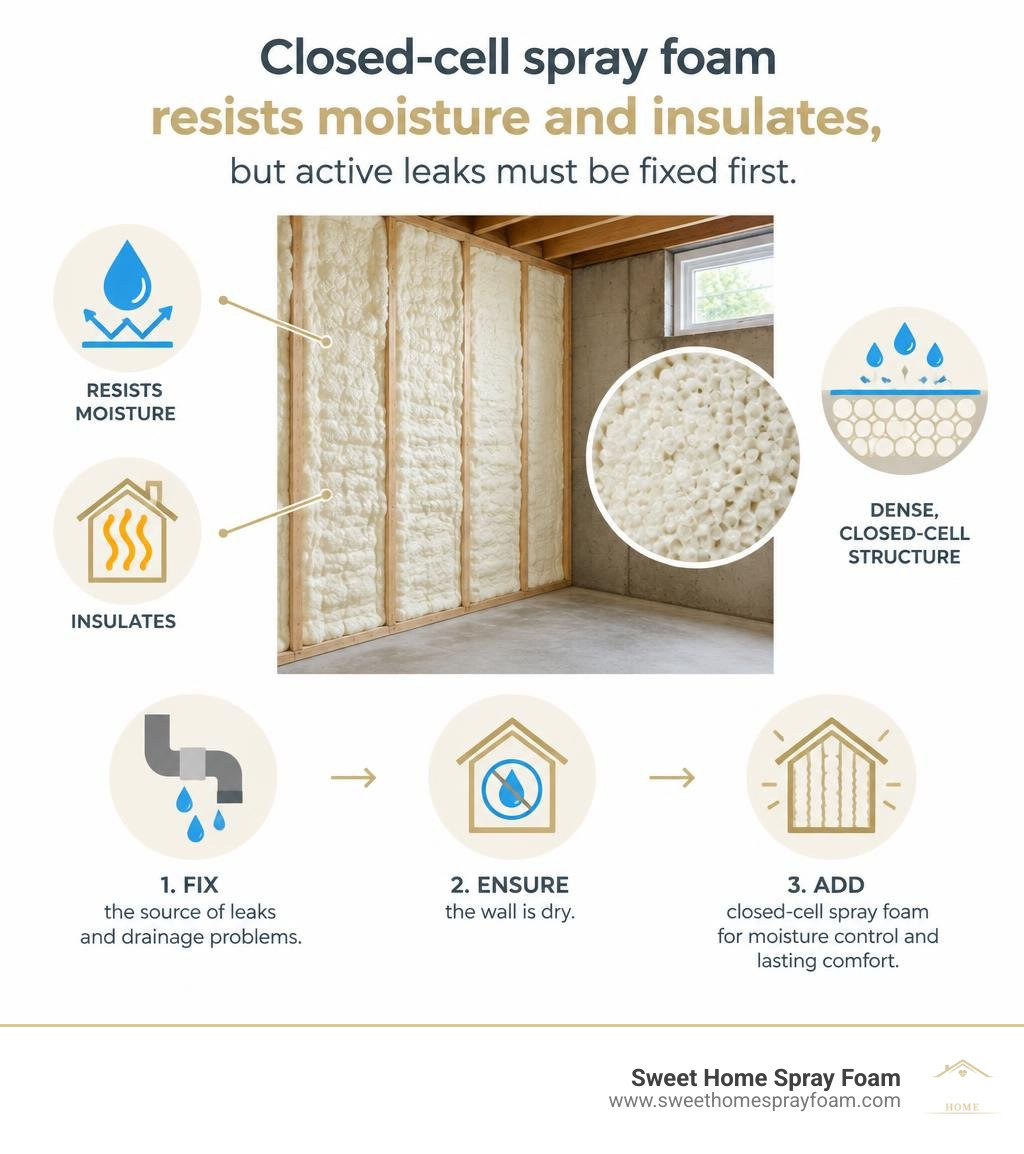
Closed-cell spray foam resists water, but it is not a stand-alone waterproofing system. It can help keep damp air out and insulate a dry basement wall. It cannot reliably stop an active leak or flooding. If water is coming in, fix the source and drainage problem before adding foam.
Once the wall is dry, closed-cell spray foam can seal air leaks and provide about R-6.5 of insulation per inch. That makes it useful for comfort and moisture control. In fact, many homeowners ask whether closed-cell spray foam is waterproof, and the practical answer is that it is water-resistant enough to manage vapor and incidental dampness, but it is not a replacement for exterior waterproofing or drainage. As long as it is not asked to do the job of a waterproofing system, it performs well.
Is Closed Cell Spray Foam Waterproof or Water-Resistant?
When homeowners explore ways to block groundwater or humid outdoor air, they often ask whether closed-cell foam creates an impenetrable shield against liquid water. In the insulation industry, there is an important technical distinction between a material that is water-resistant and one that acts as a structural waterproofing system.
Closed-cell polyurethane foam is inherently water-impermeable due to its dense, closed micro-cellular structure. The microscopic cells are packed tightly together and filled with an inert gas, which prevents bulk liquid from soaking through the core of the foam. Because of this structure, closed-cell foam exhibits exceptionally low water absorption rates and acts as a built-in vapor retarder.
However, calling a material water-impermeable is not the same as calling it a continuous, hydrostatic waterproofing barrier. When liquid water is placed under hydrostatic pressure—such as groundwater pressing against a subterranean foundation wall—it will search for any microscopic unbonded edge, crack, or seam. Spray foam is an insulation and air barrier first; it is not designed to hold back pressurized liquid intrusion like an exterior rubberized membrane or specialized expanding foam filler waterproof sealant system.
The perm rating measures how easily water vapor passes through a material. A lower number indicates a stronger barrier against moisture vapor. At approximately 1.5 to 2 inches of thickness, closed-cell spray foam achieves a perm rating below 1.0, qualifying it as a Class II vapor retarder. While it easily repels ambient humidity, splash water, and minor dampness, it should never be treated as a subterranean dam.
| Foam Material Type | Typical Density (lbs/cu ft) | Water Permeability / Absorption | Primary Uses |
|---|---|---|---|
| Closed-Cell Polyurethane (SPF) | 2.0 – 2.4 | Low (< 1.0 Perm at 2 inches) | Wall, attic, rim joist, and foundation insulation; air/vapor barrier |
| Polyethylene Foam (PE) | 1.5 – 6.0 | Extremely Low (< 0.5% absorption) | Marine flotation, joint backing rods, protective packaging |
| Neoprene (Polychloroprene) | 3.0 – 8.0 | Impermeable to bulk water | Industrial gasketing, wetsuits, expansion joint seals |
| Ethylene-Vinyl Acetate (EVA) | 2.0 – 5.0 | Highly Water-Resistant | Marine padding, shock-absorbing gaskets, specialized seals |
Comparing Closed Cell Spray Foam Waterproof Performance to Other Foam Types
Not all closed-cell polymers behave the same way when exposed to moisture. In industrial manufacturing and construction, different chemical matrices serve distinct roles:
- Polyurethane Spray Foam (SPF): Formed on-site via a chemical reaction between an isocyanate and a polyol resin blend. It adheres directly to structural surfaces, creating a continuous thermal and air-barrier envelope. While it stops vapor transmission and repels liquid water, it is designed for structural envelope insulation rather than constant underwater submersion.
- Polyethylene Foam: Extruded into dense, flexible sheets or rods. Because polyethylene is a non-polar hydrocarbon polymer, it has near-zero water absorption, making it ideal for marine flotation devices and expansion joints.
- Neoprene: A synthetic rubber foam that offers extreme chemical and liquid resistance. Its cellular elasticity allows it to form watertight seals under mechanical compression, which is why it is used in automotive gaskets and marine access hatches.
- Ethylene-Vinyl Acetate (EVA): A copolymer foam known for toughness and buoyancy. While exceptionally waterproof, it lacks the thermal insulation value (R-value per inch) and expansion capabilities needed to insulate building assemblies.
When evaluating whether closed cell spray foam waterproof qualities meet your project's demands, closed-cell polyurethane remains the undisputed leader for structural insulation and building envelope sealing.
Factors That Affect Water Resistance and Permeability
The ability of closed-cell foam to manage moisture relies on several physical and environmental variables:
- Core Density: Standard closed-cell polyurethane features a density between 2.0 and 2.4 pounds per cubic foot. Lower-density foams (such as 0.5 lb open-cell foam) have an open matrix that allows water to sponge inward, whereas 2.0 lb foam provides the necessary density to reject liquid absorption.
- Perm-Inch Ratings: The thickness of the installation dictates its vapor performance. A single thin pass may not achieve the continuous density required to block moisture drive, whereas an applied depth of 2 inches provides a robust vapor barrier.
- Substrate Preparation and Seam Integrity: If the surface is dusty, wet, or oily during application, the foam will fail to achieve an airtight bond. Gaps between the foam and the substrate can allow moisture to travel unchecked behind the insulation layer.
- Duration of Submersion: Closed-cell foam is engineered to resist intermittent moisture, rain splash, and elevated humidity. Prolonged, unmitigated exposure to pressurized standing water can eventually cause minimal edge absorption if the substrate drainage is nonexistent.
Will Spray Foam Stop Active Basement and Foundation Water Leaks?
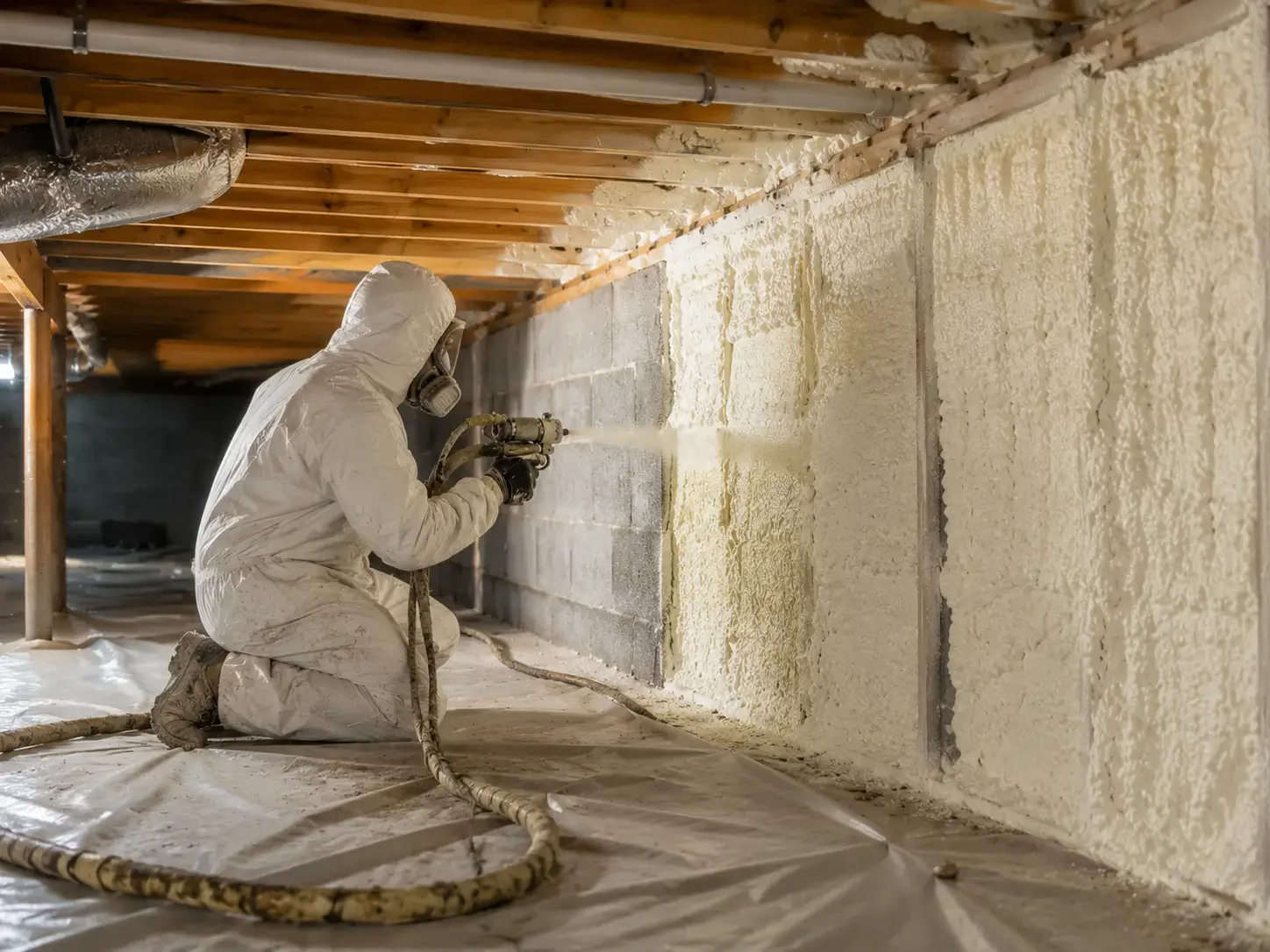
A frequent misconception among property owners is that applying spray foam directly over a weeping foundation crack will stop water leaks permanently. It will not.
Hydrostatic pressure is the force exerted by water accumulating in the soil around your foundation. When heavy rain saturates the ground, thousands of gallons of water press against concrete footings and masonry walls. If a crack exists, water will push through with immense force.
Applying an expanding foam layer on the interior side of that crack only masks the symptom. Spray foam lacks the sheer anchoring tensile strength required to fight subterranean hydrostatic head pressure. The incoming water will either push the foam away from the concrete or divert sideways along the foundation, emerging at the edges, base plates, or floor joints. Dedicated basement sealing foam products are designed to seal air leaks and stop ambient drafts across dry masonry—they cannot replace hydraulic cement or mechanical drainage systems.
The Hidden Structural Risks of Spraying Over Active Leaks
Covering an active moisture leak with closed-cell spray foam creates a false sense of security that can lead to severe structural damage:
- Trapped Liquid and Masonry Degradation: Trapping bulk water between the concrete wall and an impermeable foam layer forces the moisture to saturate the porous masonry. Over repeated freeze-thaw cycles, this leads to spalling, cracking, and structural weakening.
- Concealed Wood Framing Rot: If liquid water travels upward into the rim joist or along bottom plates, wood framing will slowly rot behind the foam envelope without any visible surface warning.
- Hidden Mold Amplification: While closed-cell foam itself does not provide an organic food source for mold, the trapped water can soak adjacent drywall, wood studs, and organic debris, generating hidden microbial colonies.
- Efflorescence Accumulation: As water continuously dissolves minerals within concrete and evaporates into unsealed micro-voids, crystalline salt deposits (efflorescence) build up, breaking the mechanical bond between the foam and the wall.
Essential Remediation Steps to Take Before Installing Foam
To protect your home and ensure your insulation lasts for decades, you must manage liquid water before applying spray foam.
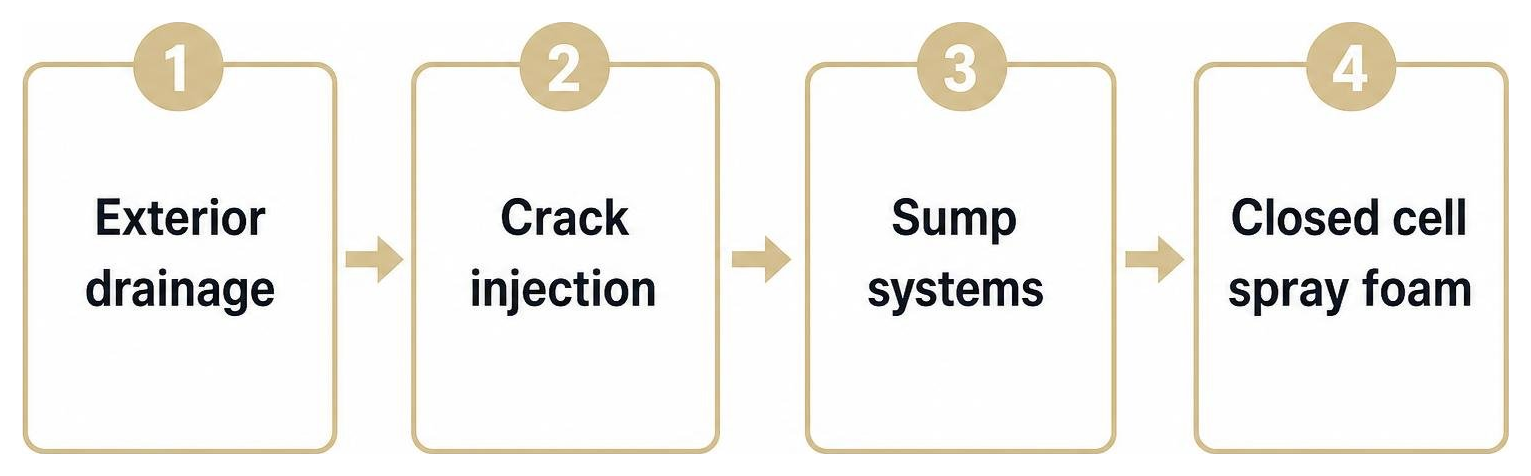
- Direct Surface Water Away: Ensure exterior ground grading slopes away from the foundation at a minimum slope of 6 inches over the first 10 feet. Clean gutters and install downspout extensions that discharge water at least 5 to 10 feet from the perimeter.
- Inject and Seal Foundation Cracks: Structural cracks must be permanently sealed using high-pressure polyurethane or epoxy injection from the interior, or excavated and repaired from the exterior.
- Install Active Groundwater Management: If your basement or crawl space suffers from a high water table, install a perimeter interior French drain tied into a heavy-duty sump pump basin with battery backup power.
- Allow Surfaces to Dry Thoroughly: Once drainage is established and masonry surfaces are dry, install continuous crawl space spray foam insulation or air-seal the upper perimeter with basement rim joist insulation.
Best Applications for Moisture Resistance in Residential Construction
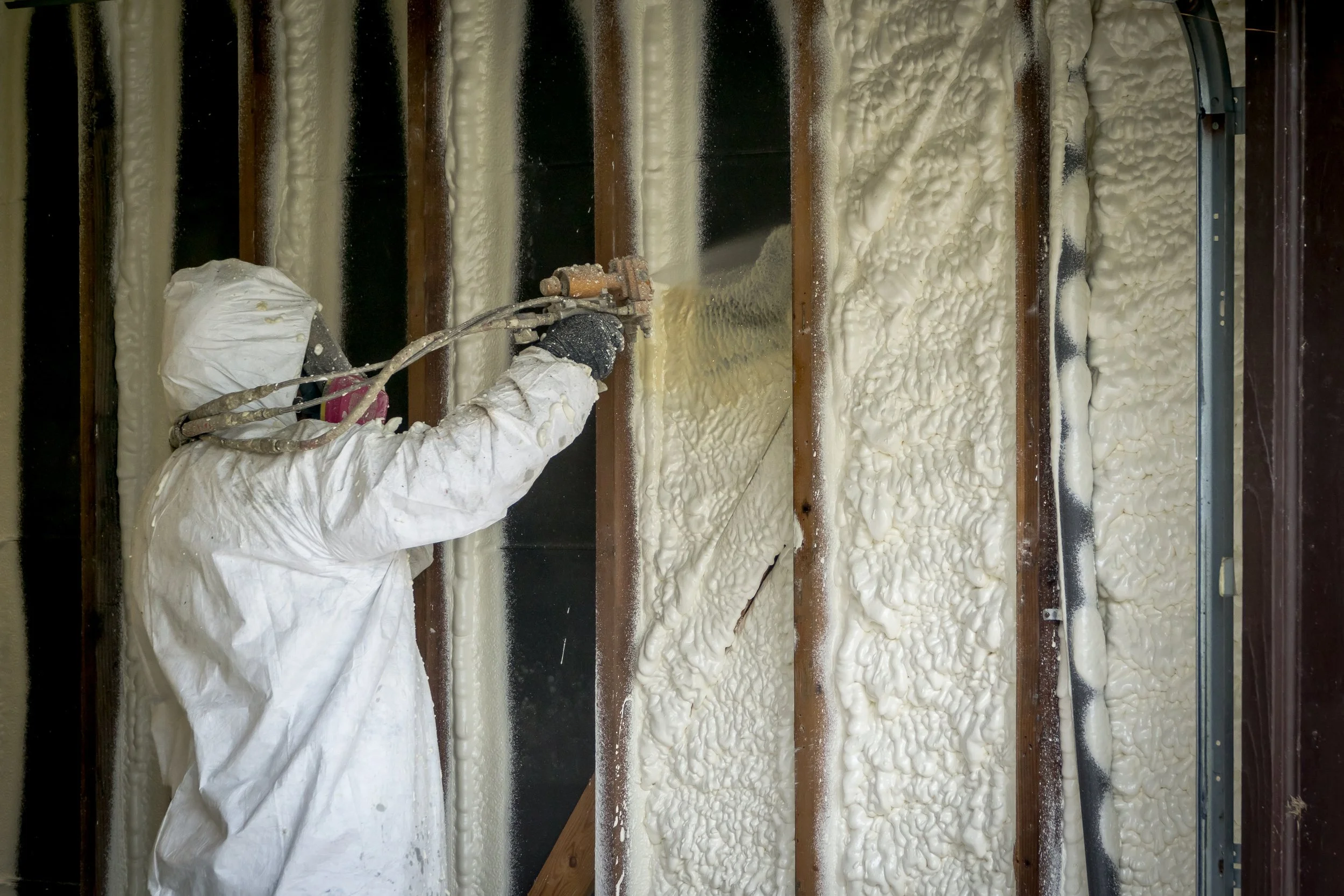
When integrated correctly into a building's thermal envelope, closed-cell spray foam provides unmatched moisture management, thermal protection, and structural racking strength.
Because closed-cell foam creates a seamless air barrier, it prevents warm, moisture-laden indoor air from reaching cold exterior sheathing in the winter. This stops interstitial condensation—the primary cause of hidden wall rot in traditionally insulated homes. In central and western Virginia, our humid summers and cold winters make air-tight moisture control essential.
We regularly install closed-cell solutions across multiple assemblies:
- High-performance wall spray foam insulation to stop drafty air infiltration and exterior humidity.
- Unvented attic spray foam insulation to bring ductwork into conditioned space and eliminate roof-deck condensation.
- Durable metal building spray foam insulation to eliminate condensation "sweating" on exposed steel panels.
When Closed Cell Spray Foam Is Waterproof Enough for Below-Grade Enclosures
For dry, below-grade foundation walls and crawl spaces, closed-cell spray foam serves as an exceptional protective thermal layer. Because it is recognized by FEMA as a flood-damage-resistant insulation material (Class 5 rating), it can withstand direct contact with floodwaters for up to 72 hours without sustaining significant permanent damage or requiring total replacement.
Applying 2 inches of closed-cell foam directly to the interior face of clean concrete or cinder block walls stops ground dampness, capillary vapor wicking, and soil gas infiltration. It transforms dark, damp basements into warm, conditioned living spaces while ensuring the building rim joists remain draft-free and dry.
Using Spray Foam in New Construction and High-Humidity Zones
In modern homebuilding, managing the building envelope requires continuous insulation that eliminates thermal bridging across wood and steel framing studs. During the framing phase, opting for new construction spray foam insulation allows builders to combine three critical functions into one step:
- Thermal Insulation: Providing an R-6.5 per inch thermal resistance rating.
- Continuous Air Barrier: Eliminating draft leakage and lowering HVAC sizing requirements.
- Class II Vapor Retarder: Preventing outdoor moisture vapor from driving into living spaces during peak summer humidity.
Achieving this balance requires strict technical precision. Choosing the best spray foam contractor ensures the chemical components are heated, proportioned, and sprayed at the exact ratios specified by the manufacturer for long-term safety and performance.
Enhancing Durability: Protective Coatings for Exposed Foam
While closed-cell polyurethane foam resists moisture and air movement, it has one major natural vulnerability: ultraviolet (UV) radiation from sunlight. When exposed to natural daylight, the polymer matrix degrades, turning brittle, discolored, and powdery over time.
Protective Elastomeric and Silicone Top Coatings
Whenever closed-cell foam is used in exposed applications—such as exterior roofing, commercial parapets, or mechanical wall chases—it must be protected by a specialized fluid-applied topcoat.
- Elastomeric Acrylic Coatings: Water-based coatings designed to form a flexible, rubber-like skin over the foam. They offer high solar reflectivity and basic weatherproofing protection.
- Silicone Coatings: Premium, moisture-curing membranes that resist standing water and ponding. Silicone does not degrade under heavy UV exposure, making it an exceptional choice for low-slope roof profiles.
- Polyurea and Polyurethane Membranes: High-tensile, impact-resistant protective layers commonly used where extreme chemical resistance, heavy foot traffic, or mechanical durability is needed. Special industrial membranes, such as VIPSHIELD systems, highlight the strength of combining high-performance coatings with spray-applied thermal substrates.
For commercial flat or low-slope roofs, spray polyurethane foam (SPF) combined with a high-grade elastomeric or silicone topcoat delivers an energy-efficient, seamless roofing system. In sunny or high-heat environments, SPF roofing can cut annual heating and cooling energy use by 20% to 30%. Furthermore, a commercial SPF roof adds minimal dead load—only 50 to 60 lbs per 100 sq ft—compared to built-up asphalt systems. As documented by roofing specialists like Vanguard Roofing AZ, a well-maintained SPF roof can last 20 to 30 years or more, provided the protective topcoat is inspected and renewed every 10 to 15 years.
Coating Limits and Foam Longevity
It is crucial to understand what protective coatings can and cannot do:
- They protect against solar degradation: Coatings block UV rays and prevent physical weathering.
- They are not a replacement for drainage: An elastomeric coating will not fix a roof that lacks proper slope, scuppers, or internal drains.
- Longevity requires proactive care: While the core polyurethane foam layer is essentially permanent when shielded, topcoats require periodic cleaning, elastomeric recoating every 10 to 15 years, and regular inspections to maintain seamless moisture protection.
Frequently Asked Questions About Closed Cell Foam Waterproofing
What happens if water gets trapped behind closed cell spray foam?
If closed-cell foam is sprayed over an active leak or saturated wood substrate, the water cannot evaporate outward through the foam. The trapped moisture remains pooled against the foundation masonry or wooden framing. Over time, this trapped water can cause framing rot, rust metal fasteners, cause concrete efflorescence, and support mold growth on adjacent porous building materials. Always dry and repair substrates before foam application.
Can closed cell spray foam be submerged underwater permanently?
No. While closed-cell polyurethane foam is used in marine flotation compartments due to its low water absorption rate, it is not engineered for perpetual deep-water submersion under hydrostatic pressure. Prolonged submersion without an exterior liquid barrier can lead to slow saturation at the foam's cut edges.
How thick does closed cell spray foam need to be to create a vapor barrier?
To function as a code-compliant Class II vapor retarder (perm rating under 1.0), closed-cell spray foam is typically installed at a minimum thickness of 1.5 to 2 inches. At this depth, it effectively stops vapor diffusion through wall assemblies, crawl spaces, and concrete masonry foundations.
Conclusion
Closed-cell spray foam insulation is one of the most capable building envelope materials on the market today. It provides an impressive R-6.5 per inch, stops air drafts entirely, and creates a dependable vapor retarder that keeps ambient humidity out of your home.
However, foam insulation cannot replace fundamental drainage and waterproofing systems. Stopping bulk groundwater intrusion requires proper exterior grading, functional gutters, crack injection, and interior sump basins. Once those water management systems are in place, closed-cell foam provides the ultimate airtight, moisture-resistant thermal blanket your home needs.
At Sweet Home Spray Foam, we believe in giving property owners clear upfront pricing, pressure-free advice, and expert installation tailored to local building codes and climate conditions. Whether you live in Richmond, Charlottesville, Lynchburg, Roanoke, or around Smith Mountain Lake, our team can help you navigate local utility rebate programs and ensure your home stays dry, comfortable, and energy-efficient year-round.
Ready to protect your home's foundation, walls, or attic with industry-leading insulation? Explore our spray foam insulation solutions or schedule a free assessment with our team today!