
What Is the Best Insulation for an Unfinished Attic Floor?
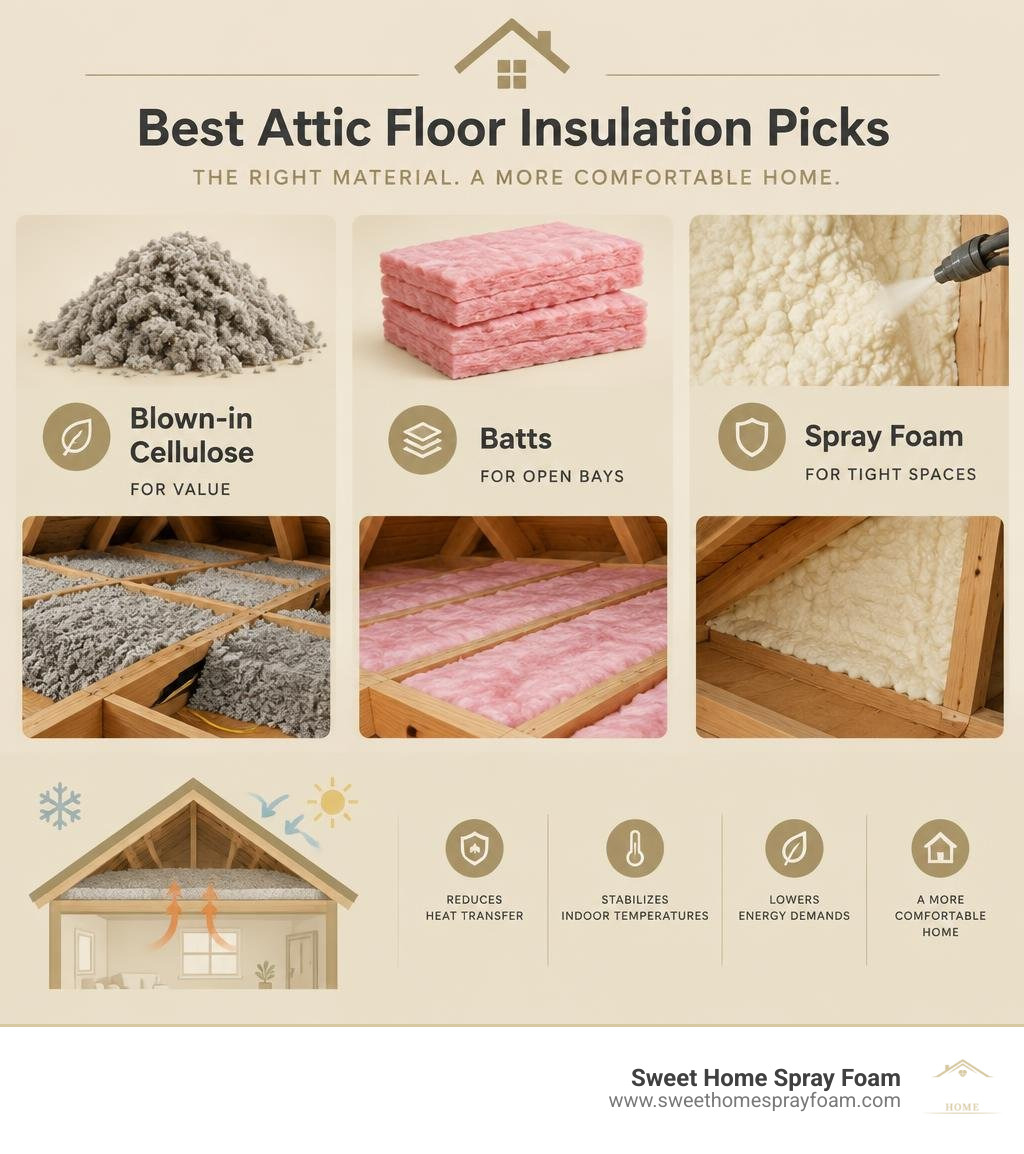
Blown-in cellulose is the best value for most unfinished, vented attic floors. It fills gaps around joists and wiring and costs less than insulating the whole floor with spray foam. Fiberglass batts can work well in open, easy-to-reach joist bays. Spray foam is worth considering when air leaks or limited space make a higher-cost option practical.
For a Virginia home with drafts or high energy bills, seal attic-floor air leaks first, then choose insulation that reaches the right R-value for your location. If your HVAC ducts are in the attic, it is also worth comparing floor insulation with insulating the roofline.
When you look at your unfinished attic, you are looking at the primary boundary between your conditioned living space and the outdoor elements. Due to the "stack effect," heated indoor air naturally rises during winter, searching for every unsealed crack, wire penetration, and plumbing chase to escape into the attic. In summer, the dynamic flips: a sunbaked roof deck can push attic temperatures above 130°F, turning your attic floor into a massive radiator that drives heat directly into your living spaces. Upgrading your thermal envelope here prevents dramatic heat transfer, stabilizes indoor temperatures, and drastically reduces heating and cooling demands.
Choosing the Best Insulation for Attic Floor Installations: Material Breakdown
Selecting the right product requires balancing thermal resistance (R-value per inch), material density, settling rates, and upfront installation costs. Not all materials perform identically once placed between floor joists.
Finding the best insulation for attic floor upgrades depends on the geometry of your framing, whether air leaks have been properly addressed, and your overall project budget.
| Insulation Material | R-Value Per Inch | Est. Cost (1,000 sq. ft. at R-49) | Lifespan | Best Application |
|---|---|---|---|---|
| Blown-In Cellulose | R-3.6 – R-3.8 | $1,200 – $3,500 | 20–30+ Years | Standard vented attic floors with irregular framing |
| Blown-In Fiberglass | R-2.5 – R-2.9 | $1,200 – $2,800 | 30–50 Years | Budget-conscious DIY retrofits with low weight tolerances |
| Fiberglass Batts | R-2.9 – R-3.7 | $800 – $2,000 | 15–25 Years | Brand-new construction with standard, unobstructed joist bays |
| Mineral Wool Batts | R-3.3 – R-4.2 | $1,800 – $3,800 | 30–50+ Years | Areas requiring high fire resistance and acoustic deadening |
| Closed-Cell Spray Foam | R-6.0 – R-6.5 | $3,000 – $7,000 | 50+ Years (Lifetime) | Hybrid flash-and-batt floor systems or roofline conversions |
Blown-In Cellulose: The Best Insulation for Attic Floor Value
Blown-in cellulose is manufactured from post-consumer recycled newsprint and paper fiber treated with non-toxic borate salts for flame resistance, pest deterrence, and mold control. When reviewing a standard ranking attic insulation materials guide, cellulose frequently ranks at the top for unfinished floors.
Delivering roughly R-3.7 per inch, cellulose forms a dense, monolithic blanket over your ceiling joists. Its loose fibers flow easily around structural cross-bracing, electrical wiring, and odd-sized joist bays, preventing the voids that compromise rigid products. Installers account for a natural settling rate of roughly 10% by blowing the material slightly deeper than the target thickness, ensuring that you maintain the desired thermal performance over decades.
Blown-In Fiberglass vs. Fiberglass Batts
Fiberglass remains one of the most widely recognized insulation materials. When deciding between loose-fill and pre-cut rolls, comparing traditional vs spray foam insulation and loose-fill formats highlights critical performance gaps:
- Blown-In Loose-Fill Fiberglass: Spun glass fibers blown via an air machine provide roughly R-2.5 to R-2.9 per inch. It is lightweight, naturally noncombustible, and simple to distribute over existing insulation, though it requires greater depth than cellulose to hit identical thermal targets.
- Pre-Cut Fiberglass Batts: Batts offer R-2.9 to R-3.7 per inch, but they rely on precise installation. If batts are compressed over ceiling joists or cut unevenly around electrical boxes, air bypasses the material, causing substantial loss in real-world thermal resistance.
Mineral Wool (Rockwool) Batts and Boards
Spun from molten basalt rock and steel slag, mineral wool delivers an impressive R-3.3 to R-4.2 per inch. Its extreme density makes it impervious to fire, capable of withstanding temperatures exceeding 1,800°F.
Mineral wool naturally sheds water without losing its structural integrity and provides superior acoustic dampening against exterior roof noise. While heavier and more expensive than standard fiberglass, following professional tips on floor insulation selection and installation makes dense mineral wool batts an outstanding solution for compartmentalizing floor bays.
Spray Foam and Hybrid Flash-and-Batt Systems
Spray polyurethane foam provides thermal performance and continuous air sealing in a single step. Closed-cell spray foam yields an industry-leading R-6.0 to R-6.5 per inch and serves as a Class II vapor retarder, while open-cell foam yields roughly R-3.7 per inch.
For homeowners who want maximum thermal integrity without filling the entire floor depth with polyurethane, our team frequently installs hybrid "flash-and-batt" systems. In this setup, we apply a 1- to 2-inch flash layer of closed-cell foam directly to the drywall floor to establish an airtight, vapor-tight seal, then cap it with cost-effective cellulose or mineral wool. You can explore our dedicated attic spray foam insulation solutions and review current data on the cost to spray foam attic spaces to determine if full or hybrid foam fits your goals.
Recommended R-Values and Depth Requirements by Climate Zone
To optimize whole-home efficiency, the U.S. Department of Energy (DOE) establishes minimum R-value standards for attic spaces based on regional climate zones.
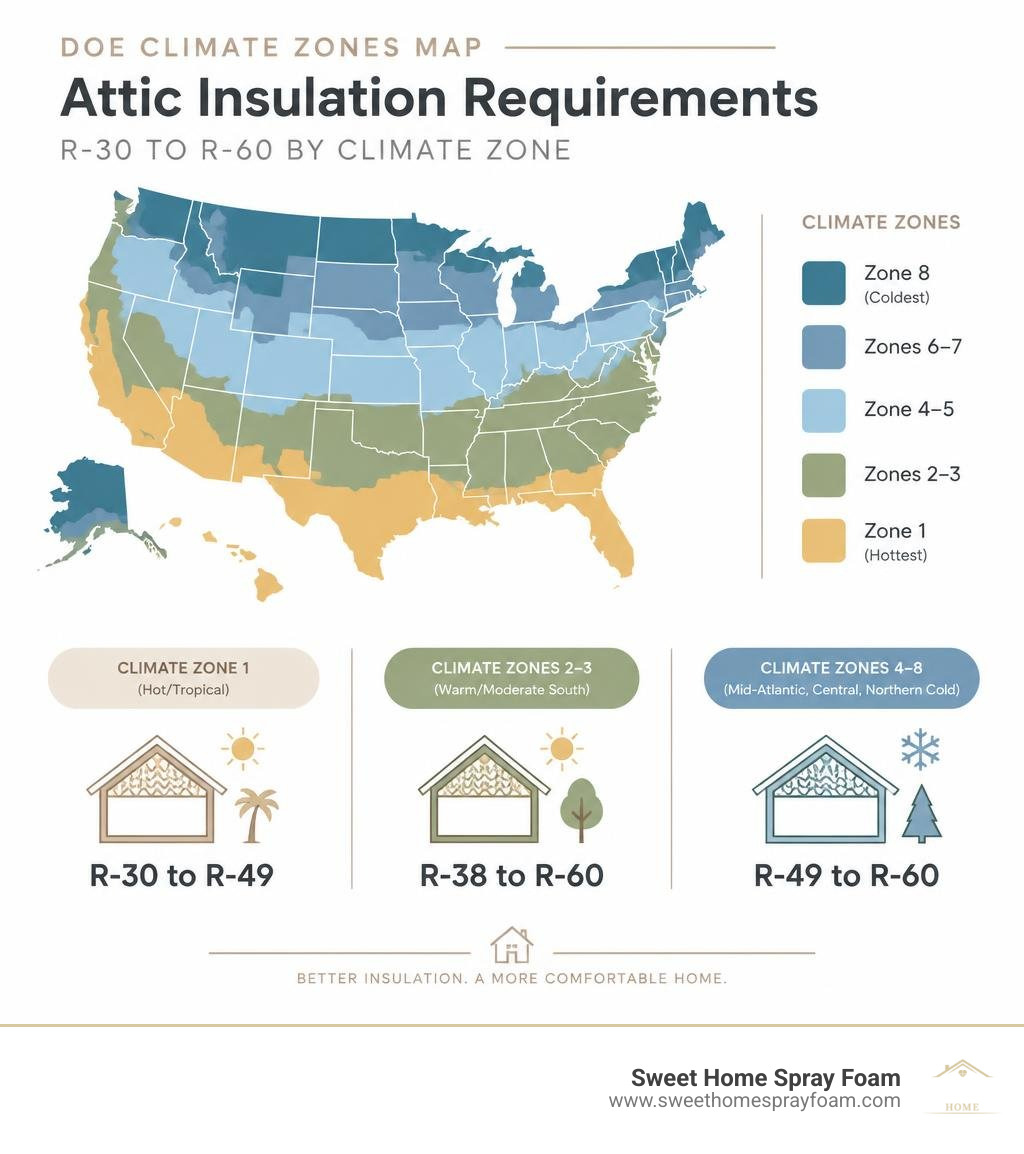
Selecting the Best Insulation for Attic Floor Depths from R-30 to R-60
Reaching code compliance requires translating target R-values into real physical depths:
- R-30 (Warm Climates): Achieved with roughly 8 to 9 inches of cellulose, 11 to 12 inches of blown fiberglass, or 5 inches of closed-cell spray foam.
- R-49 (National Efficiency Benchmark): Requires 13 to 14 inches of blown cellulose, 17 to 19 inches of blown fiberglass, or 7.5 to 8 inches of closed-cell foam. Detailed technical requirements are explained in our guide to understanding R-49 insulation depth.
- R-60 (Cold Climate Standard): Requires 16 to 17 inches of cellulose or up to 22 inches of blown fiberglass to eliminate roofline snow-melt and ice dams, as outlined in our comprehensive attic insulation guide 2026.
Attic Floor vs. Roofline: Which Approach Fits Your Home?
Should you insulate the floor or the underside of the roof deck? The answer comes down to what lives inside your attic:
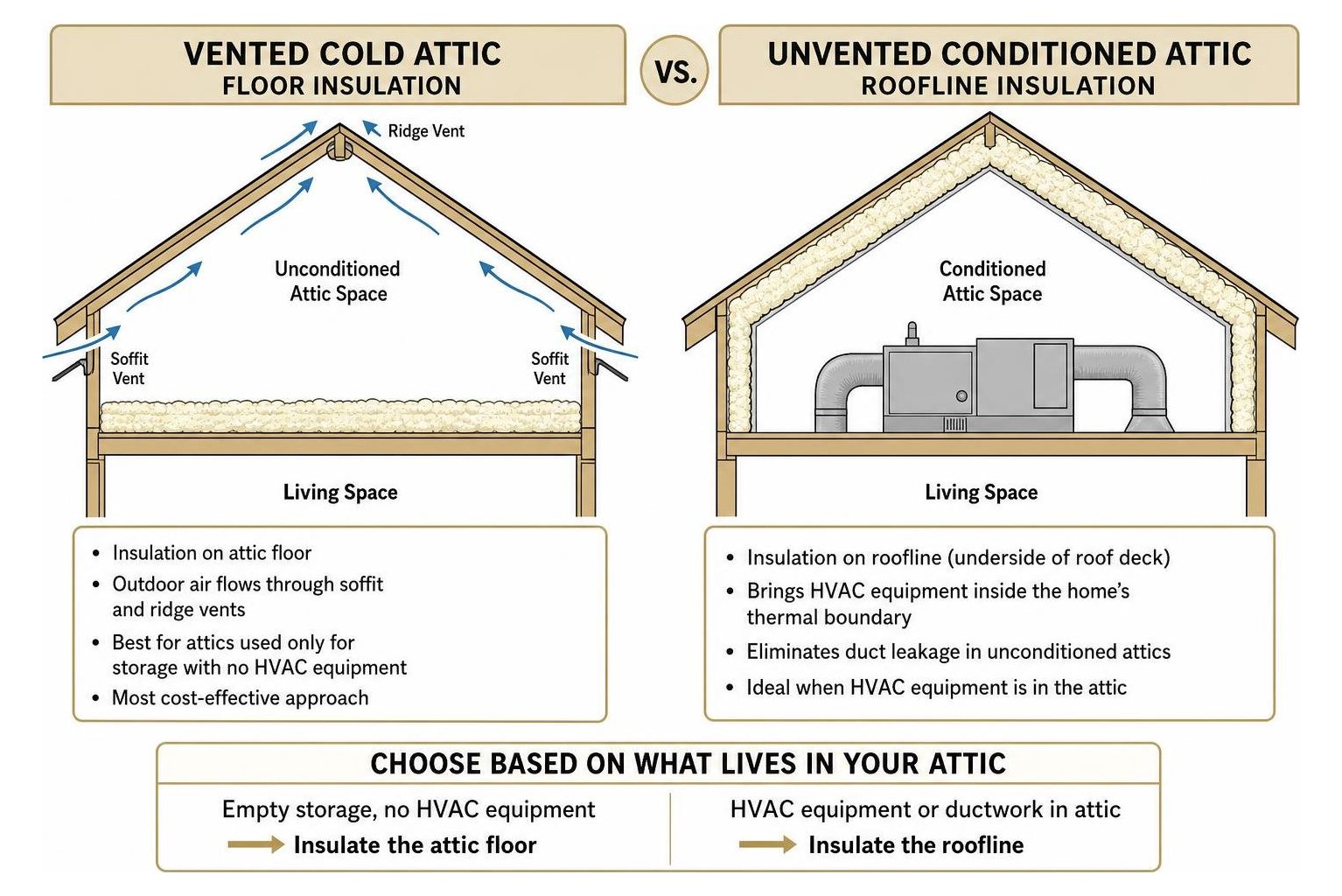
- Vented Cold Attic (Floor Insulation): If your attic is purely empty storage and contains no HVAC equipment, insulating the floor is the most cost-effective path. Outdoor air moves freely through soffit and ridge vents, carrying away excess moisture and heat.
- Conditioned Unvented Attic (Roofline Insulation): If your air handler, furnace, or ductwork is located in the attic, placing insulation on the roofline brings that equipment inside your home's thermal boundary. Air leakage through unconditioned attic ducts accounts for 20% to 30% of total HVAC system losses. Insulating the roof deck stops that thermal penalty completely.
Critical Pre-Installation Steps: Air Sealing, Baffles, and Hazard Removal
Throwing fresh insulation over an unsealed attic floor is like wearing a thick wool sweater on a windy day without a windbreaker underneath. Air passes straight through fibrous materials, dragging heat and moisture with it.
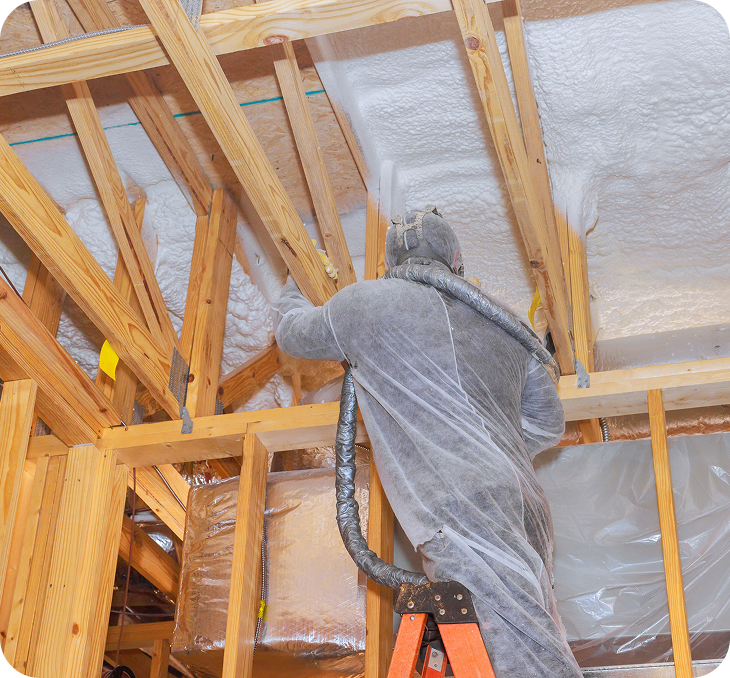
Following proven attic floor installation guidelines ensures that every prep step is executed in the proper sequence before any bulk insulation is blown or laid.
Air Sealing the Floor Before Adding Insulation
ENERGY STAR estimates that properly air sealing and insulating an attic saves homeowners an average of 15% on heating and cooling costs. Sealing must occur before adding material.
Focus your air sealing on these primary leakage points:
- Framing Top Plates: The joints where drywall meets wood wall framing across every interior and exterior wall.
- Electrical & Plumbing Chases: Holes cut for wiring runs, junction boxes, and drain-waste-vent pipes.
- Recessed Can Lights & Flues: Non-IC rated fixtures require fire-rated rockwool/sheet metal boxes sealed with fire-rated caulk.
- Attic Access Hatches: Weatherstrip the perimeter lip and attach a 4-inch rigid foam panel to the back of the hatch door.
For an in-depth breakdown of these prep techniques, consult our reference on attic floor insulation and sealing techniques.
Maintaining Soffit Ventilation and Rafter Baffles
In a traditional vented attic, fresh air must enter through perimeter soffits and exit through the continuous ridge vent. If blown loose-fill spills over the edges and chokes the soffits, moisture builds up, leading to structural wood rot and roof decking mold.
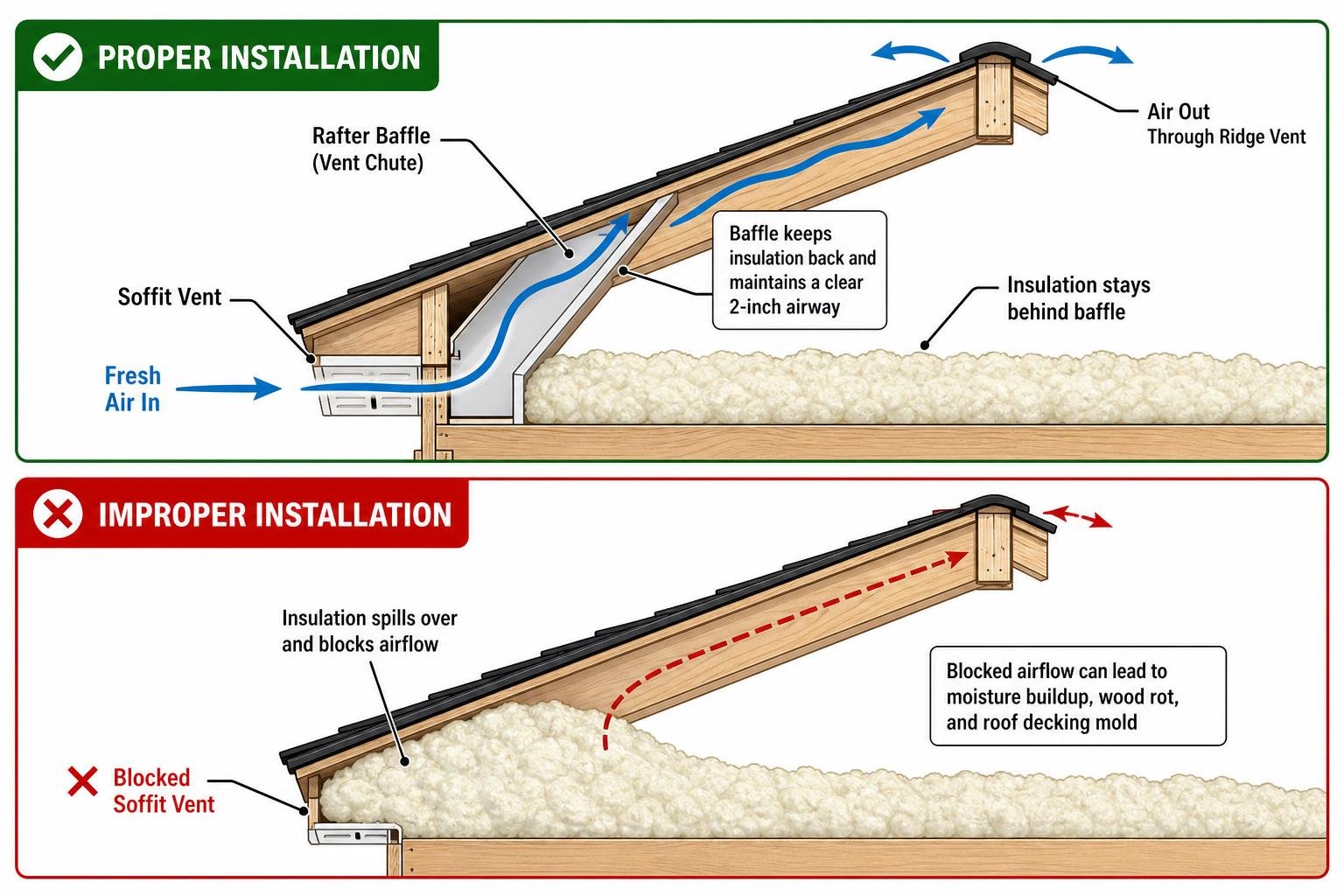
Always staple rigid plastic or foam rafter baffles (vent chutes) into every rafter bay at the eaves. These baffles create a clear 2-inch airway for incoming air while acting as a physical dam that holds your insulation in place.
Navigating Knob-and-Tube Wiring and Vermiculite Risks
Before disturbing an older attic, check for these hazards:
- Knob-and-Tube Wiring: Common in homes built before 1950, these porcelain-insulated wires rely on open air to dissipate electrical heat. Burying live knob-and-tube wiring under insulation creates a severe fire hazard. An electrician must inspect, decommission, or replace active lines before insulation begins.
- Vermiculite Insulation: A pebble-like, accordion-shaped mineral insulation that frequently contains Libby amphibole asbestos. If you suspect vermiculite, do not vacuum, sweep, or disturb it. Have it professionally sampled and tested.
2026 Attic Insulation Costs, DIY Feasibility, and Tax Credits
Installed costs for upgrading an attic floor vary based on material type, prep requirements, and square footage.
Homeowners tackling a DIY blown-in job can frequently borrow the blowing machine at no cost from home centers when purchasing a minimum volume of insulation bags. However, DIY work requires maneuvering across open ceiling joists, wearing proper PPE, and handling thorough air sealing.
Financial Incentives & Rebates
Under the Inflation Reduction Act (Section 25C Energy Efficient Home Improvement Credit), homeowners can claim a federal tax credit covering 30% of insulation and air-sealing materials, up to an annual maximum of $1,200.
In addition to federal credits, local electric utilities offer substantial cash rebates for verified attic R-value upgrades. If you are local to Virginia, check out our localized breakdowns for regional attic insulation in Richmond and our complete Lynchburg insulation guide 2026 to see what utility incentives apply to your address.
Frequently Asked Questions About Attic Floor Insulation
Can I Add New Insulation Over Existing Attic Floor Insulation?
Yes, provided the existing material is completely dry, free of mold, and not contaminated with vermiculite. If you are adding batts over an existing layer, always use unfaced insulation. Adding a faced batt (with paper vapor retarder) on top of old insulation creates a vapor trap in the middle of your insulation blanket, capturing rising condensation and causing mildew. Lay new batts perpendicular across the floor joists to bridge thermal gaps.
How Does Attic Floor Insulation Affect HVAC Performance?
Upgrading your floor insulation from an under-insulated R-19 to an energy-code R-49 can reduce heating and cooling costs by up to 20%. By keeping conditioned air in the living space, your air conditioner and furnace cycle on less frequently, reducing wear and tear on compressors and fan motors. Combining attic upgrades with comprehensive attic and crawl space insulation creates a complete envelope that balances comfort across every floor.
What Safety Gear Is Required for DIY Attic Floor Installation?
Attic spaces concentrate heat, dust, and airborne fibers. When performing a DIY installation, always wear:
- A tight-fitting NIOSH-approved N95 or P100 respirator
- Safety glasses with side shields
- A disposable Tyvek protective suit with hood
- Heavy-duty work gloves
- Temporary 3/4-inch plywood walk boards placed across joists to prevent falling through drywall ceilings
Conclusion
Upgrading your unfinished attic floor with high-performance insulation is one of the highest-return investments you can make in your home's comfort and long-term value. Whether you opt for dense blown-in cellulose for unbeatable cost-per-R-value, install a hybrid flash-and-batt system, or seal your roofline, air sealing first is the golden rule for performance.
At Sweet Home Spray Foam, we believe in making home performance upgrades straightforward. We provide homeowners across Virginia—including Richmond, Roanoke, Lynchburg, and Smith Mountain Lake—with transparent upfront pricing, pressure-free assessments, and complete support in capturing every available 2026 federal tax credit and local utility rebate.
Ready to lower your energy bills and stop attic drafts for good? Request a free attic assessment from Sweet Home Spray Foam today, and let our insulation team tailor the perfect thermal solution for your home.